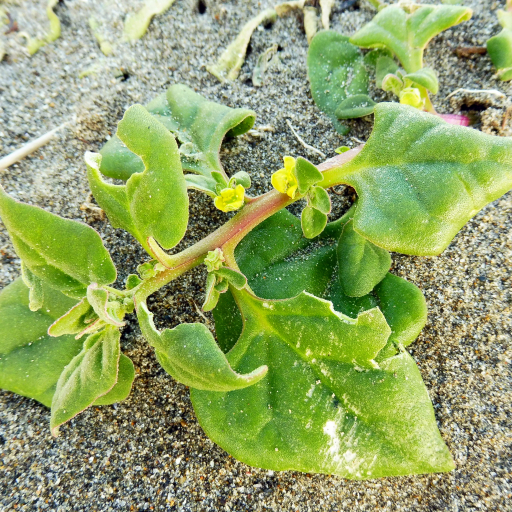
Plant Overview
Often called New Zealand Spinach, Warrigal Greens, or Sea Spinach, Tetragonia tetragonioides is the ultimate "summer survivalist" of the leafy green world. While true spinach wilts and turns bitter the moment the sun comes out, this resilient groundcover thrives in the sweltering heat. Famous for saving Captain Cook’s crew from scurvy in the 18th century, it has transitioned from a coastal wild edible to a gourmet favorite in modern "bush tucker" cuisine.
🔍 How to Identify
- 💎 The Leaves: Look for thick, succulent, triangular or diamond-shaped leaves. They have a distinct "crystalline" texture on the surface, looking as if they are permanently dusted with tiny ice crystals or water droplets.
- 🌼 The Flowers: The blooms are very small, yellow-green, and hide tucked away where the leaf meets the stem. They aren't showy, but they eventually turn into hard, horned seed pods.
- 🌿 Growth Habit: This is a sprawling plant. It doesn't grow tall; instead, it creates a lush, green carpet that can quickly cover a garden bed with its fleshy, brittle stems.
🏡 In Your Garden
- ☀️ Heat Hero: Unlike traditional spinach, this plant loves the sun. It won't "bolt" (go to seed) when the temperature rises, making it the perfect replacement for summer salads and stir-fries.
- 🏖️ Coastal Toughness: Because it originated on shorelines, it is highly salt-tolerant. It prefers sandy, well-draining soil and is surprisingly drought-resistant once its root system is established.
- 🌱 Slow Starter: Be patient with seeds! They have a hard outer shell and can take weeks to germinate. Many gardeners soak the seeds overnight or slightly nick the seed coat to help them wake up.
⚠️ Safety & Toxicity
- 🥗 Status: Edible and highly nutritious, but requires specific preparation.
- 🧪 Oxalate Content: Like regular spinach and rhubarb, this plant contains medium-to-high levels of oxalates. While fine for most people in moderation, it is highly recommended to blanch the leaves in boiling water for one minute and discard the water before eating. This removes the bitter edge and reduces the oxalate load.
- 🐾 Pets & Kids: It is generally considered non-toxic, but due to the oxalates, it shouldn't be consumed in large quantities by pets or individuals with kidney sensitivities.
✨ Fun Fact
When Captain James Cook landed in New Zealand and Australia in the 1770s, he forced his crew to eat Tetragonia to fight off scurvy. It became so popular for its health benefits that it was the first plant from the Southern Hemisphere to be introduced to English vegetable gardens!

Detailed Care Instructions
| Lighting | Full Sun |
| Hardiness Zones | 9A - 12 |
To grow Tetragonia tetragonioides, also known as New Zealand spinach or Tetragonia, follow these steps:
- Planting: Start by preparing a sunny location in your garden or a large pot. Ensure the soil is well-draining and preferably rich in organic matter. The plant is tolerant of various soil types but prefers soil with a pH between 6.0 and 7.5.
- Seed sowing: Soak the seeds in warm water for a few hours before sowing to enhance germination. Sow the seeds directly in the garden soil or plant them in pots or seed trays if starting indoors. Plant the seeds about 1/4 inch deep and space them 12-18 inches apart.
- Watering: Maintain consistent moisture in the soil while the seeds are germinating. Once the plants are established, water regularly to keep the soil moist but avoid overwatering, as excessively wet soil can lead to root rot.
- Sunlight: Tetragonia thrives in full sun exposure. Choose a location that receives at least 6-8 hours of direct sunlight daily.
- Mulching: Apply a layer of organic mulch around the base of the plants to help retain moisture, suppress weeds, and protect the roots from extreme temperatures.
- Fertilization: Use a balanced organic fertilizer during planting or incorporate compost or well-rotted manure into the soil before planting. Tetragonia is not a heavy feeder, so an additional application of fertilizer may not be required unless the plants are showing signs of nutrient deficiency.
- Pruning: Tetragonia does not typically require pruning, but you can pinch back the tips of the plant to encourage bushier growth and prevent legginess.
- Harvesting: Begin harvesting the leaves when they reach around 4-6 inches in length. Harvest by gently cutting the outer leaves, allowing the inner ones to continue growing. This constant harvesting will encourage the plant to produce new leaves and extend the harvest period.
Remember to check your local climate and growing conditions to ensure Tetragonia tetragonioides is suitable for your area.

Place in a bright room that is sun drenched almost all day. Or directly in a south-facing window.

Tetragonia Tetragonioides plants should be watered regularly, preferably once every two to three days during the growing season. When watering, take care not to overwater the plants, as this can lead to root rot and other problems. It is recommended to water the plants deeply and thoroughly, allowing water to reach the roots. In addition, ensure the soil is well-draining and does not get waterlogged. During hot weather, it may be necessary to water the plants more frequently to prevent them from drying out. It is also important to avoid watering the leaves, as this can increase the risk of disease.
To fertilize this plant, use a balanced fertilizer with equal amounts of nitrogen, phosphorus, and potassium. Apply the fertilizer every 4-6 weeks during the growing season, which is typically from spring to fall. Make sure to follow the instructions on the fertilizer package for the proper dosage and method of application. It's also important to water the plant well before and after fertilizing to prevent any potential damage to the roots.
The ideal soil for the Tetragonia Tetragonioides plant should have a neutral pH level, which is around 7.0, and be well-draining to prevent waterlogging. The soil should also contain a good amount of organic matter, such as compost or humus, to improve soil structure and fertility. It is recommended to mix a small amount of sand into the soil to improve drainage and prevent compacting. This type of plant thrives in sandy or loamy soil with good drainage. The addition of perlite or vermiculite can also help to improve drainage. Avoid using heavy clay soil or soil that is too rich in nutrients as this can limit the growth of the plant and lead to root rot. Overall, the soil should be well aerated, fertile, and have good drainage to help promote healthy growth of the Tetragonia Tetragonioides plant.
There are a few ways to propagate this plant. One method is to take stem cuttings from healthy, mature plants and dip the cut ends in rooting hormone before planting them in a well-draining soil mix. Another method is to collect seeds from mature plants and sow them in a pot or directly in the garden. To improve germination rates, the seeds can be soaked in water overnight before sowing. Once the seedlings have developed a few true leaves, they can be transplanted into their final growing location. This plant prefers well-draining soils and full sun to partial shade conditions. It can be grown as an ornamental plant or as a vegetable, and is popular in many traditional cuisines.
Common pests of the new zealand spinach include Thrips, whiteflies, larvae, snails. Make a habit of checking your new zealand spinach frequently for pests so that any infestations can be caught and managed early.








