Plant Overview
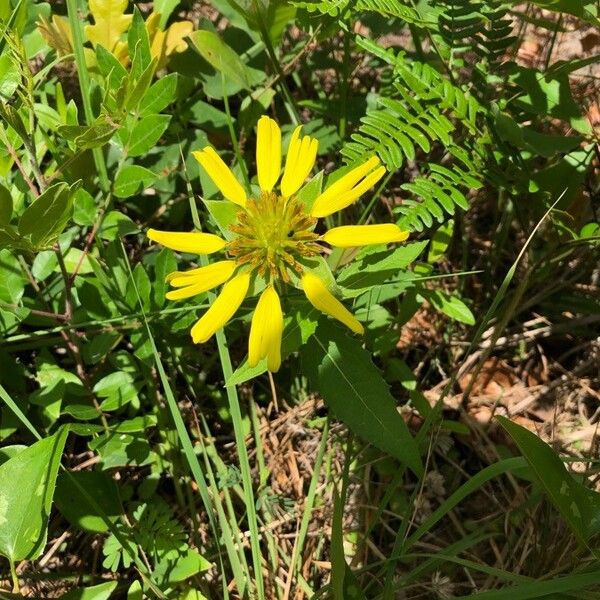
Often referred to as the Pineland Nerveray or simply Squarehead, this charming perennial is a true survivor of the American Southeast. It gets its unusual nickname from the four large, leafy green bracts that form a perfect square beneath the flower head before it blooms. If you spot one in a meadow, it looks like a sunflower that decided to wear a very structured, geometric collar.
🔍 How to Identify
- 🔲 The "Square" Base: The most striking feature is the four broad, green bracts (leaf-like structures) that enclose the flower bud, forming a distinct four-angled box.
- 🌻 Sunny Blooms: Once open, the flower features bright yellow ray petals surrounding a darker yellow central disk, reaching about 2 to 3 inches in diameter.
- 🍃 Textured Foliage: The leaves are large, broad, and covered in fine, raspy hairs, giving them a sandpaper-like feel. They often have wavy or "toothed" edges.
- 📏 Growth Habit: It typically grows as a low rosette of leaves early in the season before sending up a sturdy, hairy flowering stalk that can reach 2 feet in height.
🏡 In Your Garden
- 🏜️ Taproot Toughness: This plant develops a thick, woody taproot that allows it to survive intense droughts and even occasional wildfires. Because of this deep root, it hates being moved—choose its "forever home" in your garden carefully!
- ☀️ Sun & Sand Lover: To keep a Pineland Nerveray happy, mimic its natural home in the pine barrens. It requires excellent drainage and thrives in sandy, nutrient-poor soil where other plants might struggle.
- 🦋 Pollinator Magnet: It is a high-value plant for native bees and butterflies, providing a reliable source of nectar throughout the late spring and summer.
⚠️ Safety & Toxicity
- ✅ Safe Status: Tetragonotheca helianthoides is considered non-toxic to humans, dogs, and cats.
- 🧤 Skin Sensitivity: While not poisonous, the stiff, bristly hairs on the stems and leaves can be slightly abrasive. If you have sensitive skin, you might feel a mild itch after handling the plant without gloves.
✨ Fun Fact
The genus name Tetragonotheca comes from the Greek words tetra (four), gonia (angle), and theke (container). It literally translates to "four-angled box," perfectly describing the geometric bud that makes this wildflower so easy to identify!

Detailed Care Instructions
To grow Tetragonotheca Helianthoides, also known as Apache Plume, you can follow these steps:
- Choose the right location: The plant prefers full sun but can tolerate partial shade. It is drought-tolerant, so make sure the location has well-drained soil.
- Prepare the soil: Use a well-draining soil mix with good organic matter. If the soil is heavy or clayey, amend it with compost or sand to improve drainage.
- Planting: Dig a hole slightly larger and deeper than the plant's root ball. Place the plant in the hole, backfill with soil, and gently firm it around the roots. Make sure the root crown is level with or slightly above the soil surface.
- Watering: After planting, water the plant thoroughly to settle the soil. Once established, Apache Plume requires minimal watering. Water deeply but infrequently, allowing the soil to dry out between waterings.
- Mulching: Apply a layer of organic mulch around the plant to conserve moisture, suppress weeds, and provide insulation.
- Pruning: Prune Tetragonotheca Helianthoides in late winter or early spring before new growth emerges. Remove any dead or damaged branches, and shape the plant as desired. Pruning can also help maintain its compact, bushy form.
- Fertilization: Apache Plume generally does not require fertilization. However, you can apply a balanced, slow-release fertilizer in early spring if the plant shows signs of nutrient deficiency.
- Pests and diseases: This plant is generally resistant to pests and diseases. However, keep an eye out for aphids, spider mites, or powdery mildew. If necessary, treat with an appropriate insecticide or fungicide.
- Propagation: Tetragonotheca Helianthoides can be propagated from seeds or stem cuttings. Sow seeds in early spring or take stem cuttings in late spring or early summer. Provide proper growing conditions and care for successful propagation.
Remember to check your specific growing zone and climate conditions to ensure Tetragonotheca Helianthoides is suitable for your area.

Place in a bright room that is sun drenched almost all day. Or directly in a south-facing window.

To water this plant, it is recommended to first check the soil moisture level by inserting a finger about an inch into the soil. If the soil feels dry, it is time to water. Water the plant thoroughly, making sure the water reaches the roots. It is important not to overwater, as this can lead to root rot. Allow the soil to dry out slightly before watering again. It is also recommended to use room temperature water and to avoid getting water on the leaves, as this can cause fungal growth.
To fertilize this plant, you should use a balanced fertilizer with equal amounts of nitrogen, phosphorus, and potassium. Apply the fertilizer once per month throughout the growing season, which typically starts in early spring and lasts until late summer. Water the plant before and after applying the fertilizer to ensure the nutrients are evenly distributed throughout the soil. Avoid fertilizing during the dormant season or when the plant is suffering from stress, as this can further damage the plant.
Tetragonotheca Helianthoides plant prefers a neutral to slightly acidic, well-draining soil that is rich in organic matter. It grows well in loamy or sandy soils that are not too heavy or dense. Additionally, it prefers soils that are moist but not waterlogged, as excessive moisture can lead to root rot and other problems. It is recommended to mix in some compost or aged manure before planting to provide additional nutrients to the soil. Avoid using soils that are too alkaline or heavy in clay as they can cause issues with nutrient absorption and water retention. It is also important to monitor the soil pH regularly and adjust accordingly to ensure the best growing conditions for the plant.
One way to propagate this plant is by taking stem cuttings during the growing season, preferably in the early summer. Select a healthy stem that is at least 4-5 inches long and has several leaves. Make a clean cut just below a node with a sharp, sterilized knife. Remove the leaves from the bottom 2 inches of the stem and dip the cutting in rooting hormone powder. Plant the cutting in a pot filled with well-draining soil and keep it in a warm, bright location with consistent moisture. After a few weeks, the cutting should start growing roots and new shoots. Once it has developed a strong root system, it can be transplanted into a larger pot or directly into the ground.








