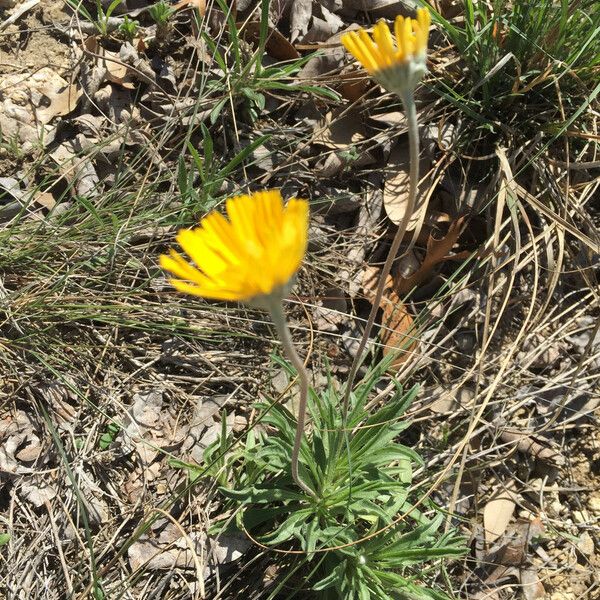
Plant Overview
Known as the Four-nerve Daisy or Stemmy Hymenoxys, this resilient little perennial is a treasure of the American Southwest and Great Plains. It is famous for its "never-say-die" attitude, often blooming in the cracks of dry, rocky soil where other plants would wither. Its cheery yellow faces are a staple for xeriscaping and rock gardens, offering a bright splash of color throughout most of the year.
🔍 How to Identify
- 🌼 The Petal Veins: The most distinct feature is the four dark, longitudinal "nerves" or veins visible on the underside of each yellow ray petal.
- 🌿 Silvery Foliage: The leaves are narrow, needle-like, and grow in a tight basal tuft. They often have a silvery or grey-green tint due to tiny, fine hairs.
- 📏 Leafless Stalks: The bright yellow, daisy-like flower heads sit atop solitary, leafless stems that can reach about 12 inches high, making the flowers look like they are floating above the foliage.
🏡 In Your Garden
- 🪨 The "Lean" Life: This plant thrives on neglect. It specifically hates "rich" garden soil and heavy fertilizers; it prefers rocky, calcareous, or sandy soil that drains very quickly.
- ☀️ Sun Worshiper: It requires full sun to stay compact and bloom profusely. In the shade, it will become leggy and lose its characteristic silver sheen.
- 💧 Drought Specialist: Because it has a deep taproot, it is incredibly drought-tolerant once established. It is an excellent choice for stabilizing slopes or adding color to "hellstrips" near hot pavement.
⚠️ Safety & Toxicity
- ✅ Safe Status: Tetraneuris scaposa is generally considered non-toxic to humans, dogs, and cats.
- 👅 Bitter Taste: While not poisonous, the plant contains bitter compounds that make it unappealing to deer and rabbits, acting as a natural pest deterrent in your landscape.
✨ Fun Fact
The Four-nerve Daisy is such a persistent bloomer that in warmer climates like Texas, it has been known to produce flowers in every single month of the year—even appearing through a light dusting of snow!

Detailed Care Instructions
| Humidity | Dry |
| Lighting | Full Sun |
| Difficulty | Easy |
| Hardiness Zones | 4 - 9 |
To grow Tetraneuris scaposa, also known as four-nerve daisy or Hymenoxys scaposa, you can follow the steps below:
- Climate: Evaluate if your climate is suitable for growing Tetraneuris scaposa. It is native to the southwestern United States and requires a sunny, dry, and warm environment. Ideal USDA hardiness zones for this plant are 5-10.
- Soil: Tetraneuris scaposa prefers well-draining soil. Amend the soil with organic matter like compost to improve drainage if needed. Sandy or loamy soil is ideal.
- Location: Choose a sunny spot in your garden for planting, as Tetraneuris scaposa thrives in full sun. Ensure there is enough space for the plant to spread out.
- Planting: Plant Tetraneuris scaposa seeds or small plants in late winter to early spring. Seeds can be sown directly into the ground or started indoors and transplanted later. If starting indoors, sow the seeds in seed-starting trays filled with well-draining potting mix. Keep the soil moist until the seedlings emerge.
- Watering: Once established, Tetraneuris scaposa is drought-tolerant and requires little to no supplemental watering. Water sparingly and deeply to encourage deep root growth. It is important not to overwater, as excessive moisture can lead to root rot.
- Mulching: Apply a layer of organic mulch around the base of the plant to help retain moisture and suppress weeds. Avoid mulching too close to the stem to prevent rot.
- Fertilization: Tetraneuris scaposa generally does not require fertilization. However, if your soil lacks nutrients, you can apply a balanced, slow-release fertilizer in early spring.
- Pruning: Regular deadheading or pruning spent flowers will promote continuous blooming and keep the plant looking tidy. Cut back any leggy or overgrown stems to promote bushier growth.
- Pests and diseases: Tetraneuris scaposa is relatively resistant to pests and diseases. However, occasional problems may include aphids or fungal diseases. Monitor regularly and take appropriate action if needed, such as using insecticidal soap for aphids or fungicides for fungal issues.
- Propagation: Tetraneuris scaposa can be propagated by dividing clumps in early spring. Dig up a clump and carefully separate the roots. Replant the divisions in suitable locations.
By following these guidelines, you can successfully grow Tetraneuris scaposa and enjoy its vibrant yellow flowers in your garden.

Place in a bright room that is sun drenched almost all day. Or directly in a south-facing window.

Tetraneuris Scaposa is a type of plant that requires regular watering to maintain good health. When watering this plant, it is important to avoid overwatering, which can result in root rot and other issues.
To water Tetraneuris Scaposa, it is recommended to provide the plant with a moderate amount of water on a regular basis. The soil should be kept slightly moist but not soaking wet. This can be achieved by watering the plant deeply once a week, or as needed, depending on the humidity and temperature of the environment.
It is also important to allow the soil to dry out slightly between waterings to prevent waterlogged soil conditions. When watering, it is best to avoid getting water on the leaves as this can promote fungal growth and other issues.
To ensure that the plant is receiving the right amount of water, it is recommended to use a well-draining soil mix and use a pot with drainage holes. Additionally, adding a layer of pebbles or gravel at the bottom of the pot can help to improve drainage.
Overall, watering Tetraneuris Scaposa requires a balance of providing enough moisture to maintain healthy growth while avoiding overwatering and promoting good drainage.
To fertilize this plant, use a balanced and water-soluble fertilizer with equal parts nitrogen, phosphorus, and potassium. Apply the fertilizer every two weeks during the growing season, which typically lasts from spring to fall. Always water the plant before fertilizing and avoid applying the fertilizer to dry soil. Be careful not to over-fertilize the plant, as this can lead to burning and damage.
When growing the plant known as Tetraneuris Scaposa, it is important to use a suitable soil type. The ideal soil for this plant should be well-draining and slightly acidic. As this plant prefers dry conditions, a sandy loam or gritty soil mix can be used with additional organic matter added for enrichment.
It is important to ensure that the soil is not too heavy or compacted, as this can hinder plant growth and lead to root rot. Additionally, regular watering is necessary, but the soil should be allowed to dry out completely between waterings.
When planting Tetraneuris Scaposa, it is recommended to add a layer of gravel or sand to the bottom of the pot to assist with drainage. Over time, the soil should be monitored and replenished as needed, and dead leaves or debris should be removed to prevent disease.
- The first step in propagating this plant is to collect fresh seeds from the flower heads.
- Once you have obtained the seeds, store them in a cool, dry place until you are ready to propagate them.
- In order to propagate Tetraneuris Scaposa, you can also take stem cuttings from mature plants. Use a clean, sharp pair of scissors or garden shears to cut a stem from the plant.
- Make sure the stem that you cut is at least 3-4 inches long and has several healthy leaves.
- Remove the lower leaves from the stem, leaving only 2-3 leaves at the top.
- Dip the cut end of the stem in rooting hormone, then insert it into a pot filled with moist potting soil.
- Water the soil thoroughly and keep it moist until the cutting has formed roots and starts to grow.
- You can also propagate Tetraneuris Scaposa by dividing the root ball of a mature plant. Dig up the plant and carefully separate the roots into several smaller sections.
- Replant each section in a separate pot filled with fresh potting soil, and water well.
- Keep the newly propagated plants in a warm, sunny location and water regularly until they are established.








