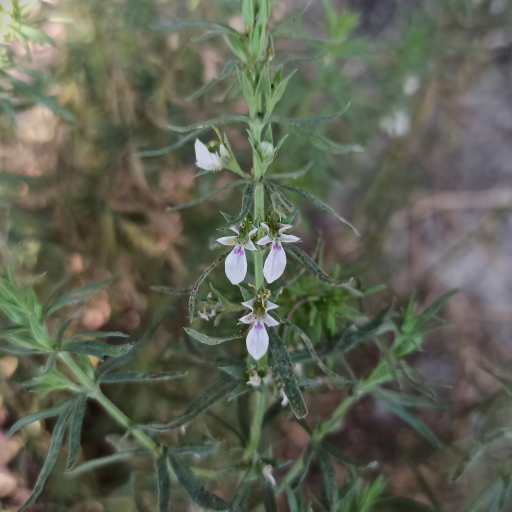
Plant Overview
Commonly known as the Small Coastal Germander or Dwarf Germander, this resilient little native is a hidden gem of the southern landscapes and Caribbean coasts. Often found clinging to rocky limestone or gracing the edges of coastal plains, it looks like a miniature wildflower meadow concentrated into a single, low-growing shrub. Its delicate white blooms carry a secret—tiny dashes of purple "paint" on the petals, appearing as if they were hand-dotted by a forest sprite.
🔍 How to Identify
- 🍃 Lobed Foliage: The leaves are deeply divided into three to five narrow lobes, giving the plant a textured, almost fern-like appearance that stays green year-round in warmer climates.
- 🌸 Ghostly Blooms: The flowers are distinctly "labiate" (lip-shaped). They are primarily snowy white, but the lower petal features intricate maroon or purple nectar guides to help insects find their way.
- 📏 Compact Stature: This germander rarely exceeds a foot in height. It grows in a mounding, woody-based habit that makes it an excellent ground-covering filler for gaps in a garden bed.
🏡 In Your Garden
- 🦋 The Butterfly Bar: This plant is a high-value nectar source. If you plant it, expect a constant parade of small bees, hairstreak butterflies, and skippers visiting the blossoms throughout the summer and fall.
- 🪨 Tough as Nails: Teucrium cubense is a champion of "problem areas." It thrives in thin, rocky, or sandy soils where other plants might wither. Because it has evolved for coastal and arid environments, it is exceptionally drought-tolerant once its root system is established.
- ✂️ Low Maintenance: It doesn't require heavy pruning, but a light "haircut" after the first flush of blooms can encourage a second wave of flowers and keep the plant from looking too leggy.
⚠️ Safety & Toxicity
- ✅ Generally Safe: This species is not considered a high-risk plant for humans or common household pets. It is often used in native restoration projects precisely because it is non-invasive and docile.
- 🌿 Liver Caution: While some European germanders have been used in traditional teas, you should never ingest Teucrium cubense. Some members of the germander genus contain compounds that can be stressful to the liver if consumed in large quantities.
- 👐 Sensitive Skin: While not a common irritant, the fine hairs on the stems may cause mild redness for those with very sensitive skin. Wearing gloves during pruning is always a good practice.
✨ Fun Fact
The genus name Teucrium is a tribute to King Teucer, the legendary first King of Troy. According to ancient lore, he was the first to discover the medicinal properties of these plants, using them to heal his soldiers during the Trojan War.

Detailed Care Instructions
To grow Teucrium Cubense (Cuban shrubby germander), follow these steps:
- Obtain seeds or cuttings: You can either purchase Teucrium Cubense seeds from a reputable nursery or collect them from an existing plant. Alternatively, you can take stem cuttings from a healthy Teucrium Cubense plant.
- Prepare the soil: The plant prefers well-draining soil with good fertility. Amend the soil with organic matter, such as compost or aged manure, to improve its structure and nutrient content.
- Start seeds indoors (optional): If you have seeds, start them indoors several weeks before the last frost date in your area. Plant the seeds in seed trays or pots filled with seed-starting mix. Keep the soil consistently moist and provide warmth and sufficient light until the seedlings emerge.
- Transplant seedlings or plant cuttings: Once the seedlings have grown a few inches in height or if you have cuttings, it's time to transfer them to their permanent location. Choose a sunny spot in your garden with well-drained soil.
- Planting: Dig a hole large enough to accommodate the roots of the seedling or cutting. Place the plant into the hole, backfill with soil, and gently firm it around the base of the plant. Water the plant thoroughly after planting.
- Watering: Teucrium Cubense prefers regular watering. Keep the soil consistently moist, but not waterlogged. Water deeply, allowing the top few inches of soil to dry out between watering.
- Pruning: Prune the plant regularly to maintain its shape and encourage bushier growth. This will also help prevent the plant from becoming leggy. Pruning should be done in spring or early summer before the plant sets flowers.
- Fertilizing: Apply a balanced slow-release fertilizer in the spring to promote healthy growth. Follow the instructions on the fertilizer package for application rates.
- Mulching: Apply a layer of organic mulch around the base of the plant to help retain moisture in the soil and suppress weed growth. Leave a gap between the mulch and the stem to avoid rotting.
- Pest and disease control: Monitor the plant regularly for common pests, such as aphids or mealybugs, and treat them accordingly with appropriate organic or chemical controls. Additionally, ensure good air circulation around the plant to prevent diseases like powdery mildew.
- Winter care (if applicable): Teucrium Cubense is a perennial plant but might not be cold-hardy in all regions. If you live in a colder climate, provide winter protection like mulching or bringing potted plants indoors.
By following these steps, you should be able to successfully grow Teucrium Cubense in your garden. Remember to provide the plant with adequate care, water, and attention to encourage healthy growth and flowering.

Place in a bright room that is sun drenched almost all day. Or directly in a south-facing window.

To properly water this plant, make sure to keep the soil consistently moist but not wet. Avoid letting the soil dry out completely or sit in standing water. Use room temperature water and water the plant deeply, allowing any excess water to drain out of the bottom of the pot. Depending on the size and environment of the plant, it may require watering every few days or once a week. Monitor the plant closely and adjust watering as needed based on its specific needs.
To fertilize this plant, use a balanced fertilizer with an N-P-K ratio of 10-10-10. Apply the fertilizer once a month during the growing season, which is between spring and fall. Follow the instructions on the fertilizer packaging for the exact amount and method of application. It is important not to over-fertilize, as it can lead to burned roots or reduced growth. Always water the plant thoroughly after fertilizing to help distribute the nutrients throughout the soil.
The best soil for the Teucrium Cubense plant is well-draining soil that is rich in nutrients. It is important that the soil has good drainage because the plant is prone to root rot. A mixture of sandy loam and clay soil is ideal. The pH of the soil should be acidic to neutral (between 5.5 to 7) for optimum growth. The soil should be moist but not waterlogged, so it is important to not let the soil dry out completely. The plant prefers full sun to partial shade, and it is recommended to fertilize the soil with a balanced fertilizer during the growing season.
To propagate this plant, you can take stem cuttings in spring or early summer. Cut a 4-6 inch stem with a sharp, sterilized pruning shears just below a leaf node. Remove the bottom set of leaves and any flowers or buds. Dip the cut end in rooting hormone powder and plant it in a well-draining soil mix. Water the cutting thoroughly and cover it with a plastic bag to increase humidity. Place the cutting in a warm and bright spot but avoid direct sunlight. Keep the soil moist but not waterlogged. In 3-4 weeks, the cutting should have taken root and can be transplanted to a bigger container or in the ground.








