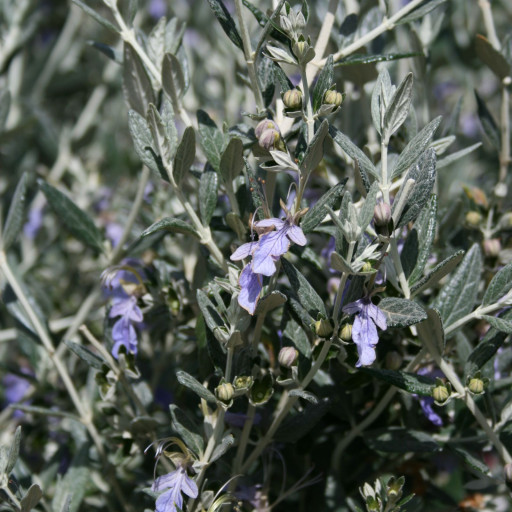
Plant Overview
Often called the Shrubby Germander or "Tree Germander," this Mediterranean native is a shimmering masterpiece of silver and blue. It is beloved by coastal gardeners for its "bulletproof" nature, standing strong against salty winds and searing heat where other plants might wither. With its cool-toned foliage and delicate azure flowers, it brings a serene, frosted look to any sunny landscape.
🔍 How to Identify
- 🍃 The Foliage: Small, oval-shaped leaves that are a deep grey-green on top but remarkably silvery-white underneath, giving the entire bush a shimmering, metallic appearance.
- 🌸 The Flowers: Unlike many garden shrubs, it produces pale lavender-blue, two-lipped flowers that lack an upper lip, making them look like tiny, elegant orchids scattered across the branches.
- 🧤 The Texture: The stems are square-shaped (characteristic of the mint family) and covered in a fine, white felt-like down that feels soft to the touch.
🏡 In Your Garden
- ✂️ Shape and Structure: This plant is a favorite for "topiary" or formal hedging. It responds exceptionally well to shearing, allowing you to create silver spheres or sharp geometric borders. If left unpruned, it takes on a loose, romantic, and wild shape.
- 🌊 Coastal & Drought Hero: Because of the silver "hairs" on its leaves, it is highly efficient at reflecting heat and resisting salt spray. It thrives in poor, rocky soils as long as they drain quickly; "wet feet" is the one thing this Mediterranean beauty cannot tolerate.
- 🐝 Pollinator Magnet: While it is drought-tolerant, its nectar-rich flowers are a vital pitstop for bees and butterflies throughout the summer months.
⚠️ Safety & Toxicity
- ✅ General Status: Teucrium fruticans is generally considered non-toxic to humans, cats, and dogs.
- ✋ Skin Sensitivity: While not poisonous, the fine hairs on the stems can occasionally cause mild skin irritation for people with very sensitive skin during heavy pruning sessions. Wearing gloves is recommended if you are shaping a large hedge.
✨ Fun Fact
The genus name Teucrium is believed to be a tribute to King Teucer, the first King of Troy, who according to legend, used plants from this family for their medicinal properties to heal his soldiers!

Detailed Care Instructions
| Humidity | Normal |
| Lighting | Part Sun |
| Difficulty | Easy |
| Temperature | 18°C - 30°C |
| Hardiness Zones | 8 - 9 |
To grow Teucrium fruticans, also known as bush germander, you can follow these steps:
- Choose a suitable location: Select a spot in your garden that receives full sun to part shade, as Teucrium fruticans prefers a sunny position. It can tolerate some shade but may not bloom as well.
- Soil preparation: Ensure that the soil is well-draining, as the plant doesn't like to be in soggy conditions. If your soil is heavy or clayey, you can improve drainage by adding organic matter like compost or well-rotted manure.
- Planting: Dig a hole that is slightly larger than the root ball of the plant. Place the plant in the hole, making sure the top of the root ball is level with or slightly above the soil surface. Backfill the hole with soil, gently firming it around the roots.
- Watering: Water the plant thoroughly after planting to settle the soil. Afterward, water regularly to keep the soil moist but not waterlogged. Once established, Teucrium fruticans is relatively drought-tolerant but will still benefit from regular watering during dry periods.
- Pruning: Prune the plant in late winter or early spring to maintain its size and shape. You can trim it back quite hard if needed, as it generally responds well to pruning. Regular pruning will also help promote bushier growth and more flowers.
- Fertilization: Apply a slow-release balanced fertilizer in spring to provide the plant with the necessary nutrients. Follow the instructions on the fertilizer package for proper application rates.
- Mulching: Apply a layer of organic mulch around the base of the plant, leaving a gap around the stem to prevent rotting. Mulching helps conserve moisture, suppress weeds, and insulate the roots during extreme temperatures.
- Pest and disease control: Teucrium fruticans is generally pest and disease-resistant. However, watch out for aphids, spider mites, and powdery mildew. If you spot any issues, treat them accordingly with insecticidal soap or horticultural oils, following the instructions on the product labels.
By following these steps, you should be able to successfully grow Teucrium fruticans and enjoy its attractive silver-gray foliage and lavender-blue flowers.

Place in a bright room that is sun drenched almost all day. Or directly in a south-facing window.

Watering instructions for this plant involve taking care to ensure it receives enough water during dry spells, but also not overwatering to the point of waterlogging. The soil around the plant should be kept slightly moist but not saturated, and watering should be done early in the morning or late in the day to prevent water evaporation. It is important to avoid getting water on the leaves or foliage, as this can encourage disease and fungal growth. In addition, it is recommended to use a mulch around the plant to help retain moisture in the soil. Finally, it is important to monitor the plant for signs of water stress, such as wilting or yellowing leaves, and adjust watering frequency as needed.
To fertilize this plant, apply a balanced granular fertilizer in early spring before new growth appears. Use a slow-release fertilizer with equal amounts of nitrogen, phosphorus, and potassium. Apply the fertilizer carefully around the base of the plant according to the instructions on the label. Water the plant thoroughly after fertilizing. Do not fertilize the plant during the winter season.
The ideal soil for this plant should be well-draining and slightly acidic to neutral in pH, with a mixture of sand, loam, and clay. It should be rich in organic matter and nutrients, but not overly fertile, as this can result in excessive vegetative growth at the expense of flowering. The soil should be kept moist but not waterlogged, and should never be allowed to dry out completely. Mulching around the base of the plant can help to retain moisture and suppress weeds. Regular fertilization with a balanced, slow-release fertilizer can help to promote healthy growth and flowering. Finally, it is important to avoid over-crowding this plant, as it requires plenty of space to spread out and thrive.
To propagate this plant, you will need to take semi-ripe cuttings from the current year's growth in the summer months. Make sure to choose healthy stems and cut them with a sharp, clean pair of pruning shears.
Remove the lower leaves from the cuttings, leaving 2-3 pairs of leaves at the top. Dip the end of the cutting in rooting hormone powder and plant in a well-draining potting mix. Water the cutting thoroughly and cover with a plastic bag or clear plastic container to create a mini greenhouse.
Place the cutting in a warm, bright area but out of direct sunlight. Monitor the cutting regularly and mist the leaves occasionally to keep them from drying out. After a few weeks, roots should begin to form and you will notice new growth.
Once the cutting has established roots, it can be transplanted into a larger pot or into the garden in a well-draining, sunny spot. Water regularly but avoid overwatering, as the plant prefers slightly drier conditions. With proper care, the plant will continue to grow and thrive.
Common pests of the tree germander include Spider mites, aphids. Make a habit of checking your tree germander frequently for pests so that any infestations can be caught and managed early.








