Plant Overview
Often called the Waxy Meadow-Rue or the slightly less flattering Skunk Meadow-Rue, this North American native is a master of disguise. While it looks like a delicate, lace-like fern from a distance, it is actually a tall, rugged perennial that can tower over other wildflowers. It is beloved by native gardeners for its architectural height and its "cloud-like" clusters of flowers that seem to float in the air.
🔍 How to Identify
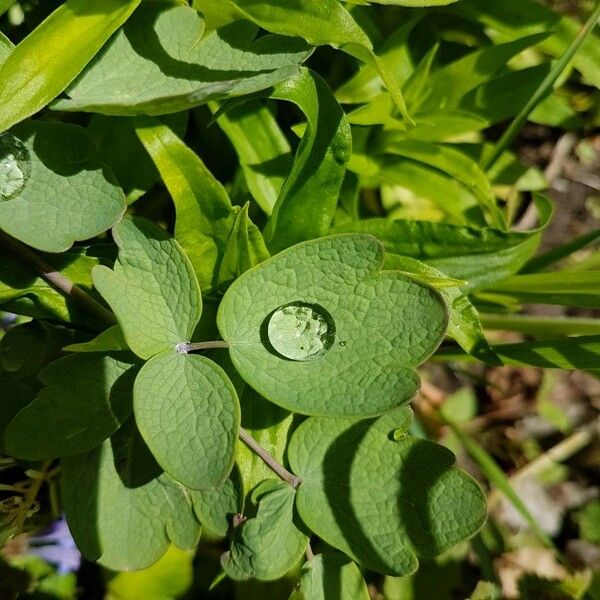
- 🍃 The Foliage: Leaves are bluish-green, divided into many small leaflets, and have a distinct leathery or "waxy" texture. If you look closely at the edges, they are often rolled slightly downward (revolute).
- 🌸 The "Fuzz" Flowers: Unlike traditional flowers with petals, these look like hanging tassels. The male plants are the showstoppers, featuring dangling, creamy-white to pale yellow filaments that quiver in the slightest breeze.
- 👃 The Scent Test: If you gently crush a leaf, it emits a pungent, skunky odor. This is the easiest way to tell it apart from its cousin, the Early Meadow-Rue.
🏡 In Your Garden
- 🌱 Positioning: This plant loves "edge" habitats—think of the spot where your lawn meets a wooded area. It prefers dappled sunlight and can handle both moist and surprisingly dry soils once its deep root system is established.
- 🦋 Pollinator Magnet: While it doesn't offer much nectar, it is a massive producer of pollen. It attracts a wide variety of native bees and is a host plant for several species of moths, making it a "must-have" for biodiversity-focused gardens.
⚠️ Safety & Toxicity
- 🐾 Mildly Toxic: Like many members of the Buttercup family, Thalictrum revolutum contains alkaloids that can be harmful if ingested in large quantities.
- 🖐️ Skin Irritation: The waxy coating and sap can cause mild skin irritation or a rash in sensitive individuals. It is best to wear gloves when pruning or transplanting. Keep curious pets and toddlers from snacking on the foliage.
✨ Fun Fact
The "Skunk" in its name isn't just a quirk—that pungent smell is a built-in security system! It makes the plant highly resistant to deer and rabbits, who find the scent and taste completely unappetizing.

Detailed Care Instructions
To successfully grow Thalictrum revolutum, also known as Western meadow-rue, follow these steps:
- Choose the right location: Thalictrum revolutum prefers partial shade to full sun. It thrives in moist, well-drained soil rich in organic matter. Make sure the location receives at least 4-6 hours of direct sunlight daily.
- Prepare the soil: Before planting, amend the soil with compost or well-rotted manure to improve its fertility and drainage. Thalictrum revolutum prefers slightly acidic to neutral soil with a pH range of 6.0-7.0.
- Planting: Dig a hole that is slightly wider and deeper than the root ball of the plant. Place the plant in the hole, ensuring that the crown of the plant (where the stem meets the roots) is level with or slightly above the soil surface. Backfill the hole with soil, gently firming it around the plant. Water thoroughly after planting.
- Watering: Thalictrum revolutum prefers consistently moist soil but does not tolerate waterlogged conditions. Water deeply and regularly, especially during dry periods, to keep the soil evenly moist but not saturated. Mulching around the plant can help retain moisture.
- Fertilizing: Thalictrum revolutum generally does not require a lot of fertilization. However, you can apply a balanced, slow-release fertilizer in spring to promote healthy growth. Follow the instructions on the fertilizer package for application rates.
- Pruning: In early spring, before new growth begins, prune back any dead or damaged stems. You can also cut the plant back by half if it becomes leggy or untidy during the growing season.
- Pests and diseases: Thalictrum revolutum is generally resistant to pests and diseases. However, it can be prone to powdery mildew if planted in a location with poor air circulation. To prevent this, ensure adequate spacing between plants and avoid overhead watering.
- Stake support: Thalictrum revolutum has tall, delicate stems that may require support. Using plant stakes or a plant support system can help prevent them from flopping over.
By following these guidelines, you should be able to successfully grow Thalictrum revolutum and enjoy its beautiful, feathery blooms in your garden.
The best way to water this plant is to check the soil every few days and water thoroughly when it feels dry. Allow the water to soak deeply into the soil. Do not let the plant sit in standing water, as this can cause rotting. It is also important to water the plant at the base, rather than overhead, to prevent damage to the delicate foliage. During hot and dry weather, the plant may require more frequent watering. Additionally, adding a layer of mulch around the base of the plant can help retain moisture in the soil.
When it comes to fertilizing this particular plant, it is important to choose a balanced fertilizer with equal parts of Nitrogen, Phosphorus, and Potassium. It is recommended to fertilize in the early spring, just as new growth begins. Apply the fertilizer according to the manufacturer's instructions, being careful not to over-fertilize as this can lead to leaf burn and potential plant damage. Additionally, you may want to consider adding a layer of organic compost or mulch around the base of the plant to help retain moisture and provide additional nutrients over time.
Thalictrum Revolutum plant prefers a well-draining soil that is rich in organic matter and has a slightly acidic to neutral pH. The soil should be kept evenly moist, but not waterlogged, as it can lead to root rot. A soil that is too sandy can dry out quickly, so adding compost or organic matter to improve water retention is necessary. The plant also benefits from a layer of mulch to conserve soil moisture and regulate temperature. Avoid using heavy clay soils, as they can inhibit proper root growth and water absorption.
Thalictrum Revolutum plant can be propagated by seed or division.
To propagate by seed, collect ripe seeds from the plant and plant them in a well-draining soil mix. Water the seeds lightly and keep them in a warm, bright location, such as a windowsill. The seeds should germinate in a few weeks, and when they have grown enough, they can be transplanted into individual pots.
To propagate by division, carefully remove the plant from the soil and separate the roots into smaller pieces. Each piece should have some roots and shoots. Plant the divided sections in well-draining soil and water lightly until they are established.
Propagation of Thalictrum Revolutum plant can be done in spring or fall, depending on the climate. It is important to choose healthy plants for propagation to ensure the success of the process.








