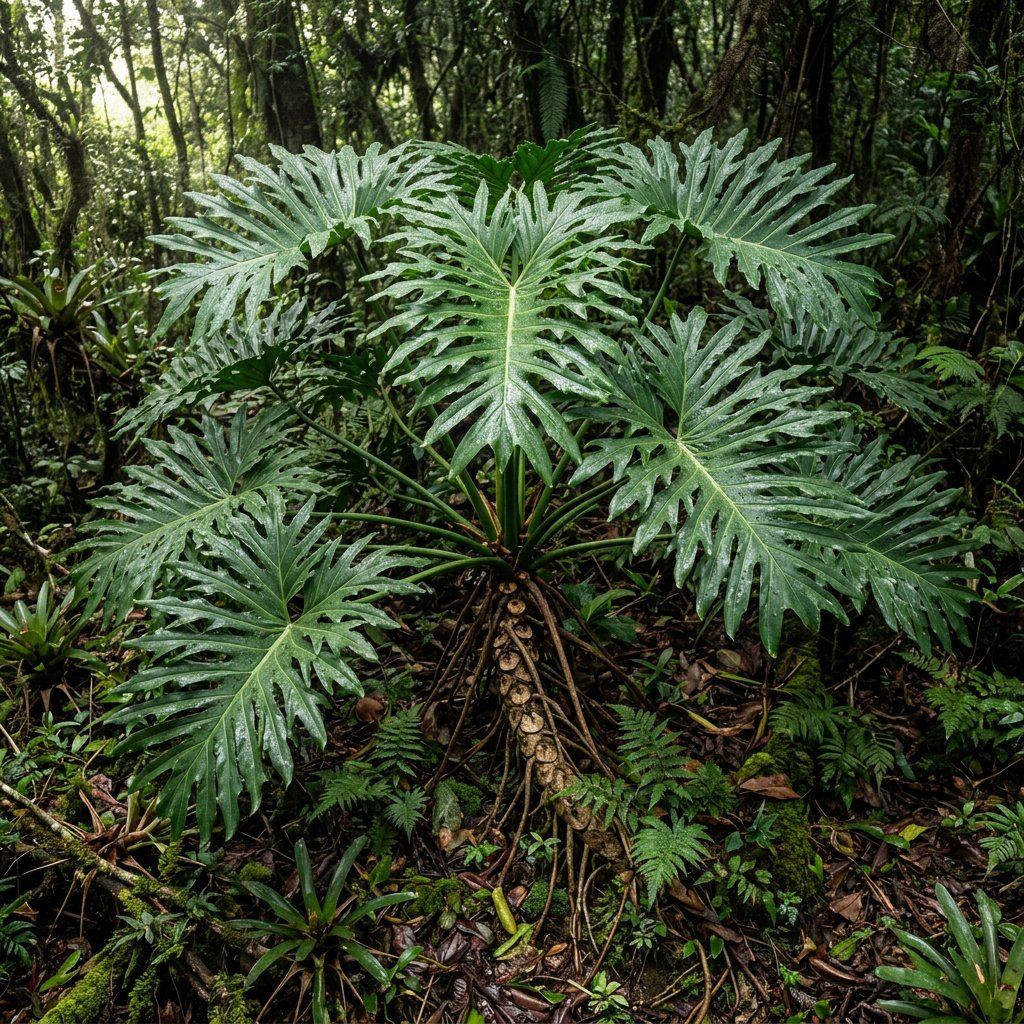
Plant Overview
Commonly known as the "Lacy Tree Philodendron" or "Selloum," this tropical giant is a true prehistoric masterpiece. While it spent decades classified as a Philodendron, recent DNA evidence moved it to the genus Thaumatophyllum, which literally translates to "wonder leaf." It is a bold, architectural plant that transforms any room into a lush, South American rainforest.
🔍 How to Identify
- 🌿 The Foliage: Massive, glossy green leaves that are "bipinnatifid," meaning they are deeply lobed with wavy, finger-like edges that look like feathers.
- 👁️ The "Eye" Trunk: As the plant matures and lower leaves drop, it develops a thick, woody trunk covered in circular leaf scars that resemble large, staring eyes.
- 🐍 Aerial Roots: Long, greyish-brown roots often grow from the stem and hang down or wander across the floor, used by the plant to stabilize itself and "breathe" in humid environments.
🏡 In Your Garden
- 📏 Space Demands: This is not a plant for a tight corner. It grows outward in a wide, sprawling habit, so it needs significant "elbow room" to show off its dramatic silhouette without being crushed against a wall.
- 🪵 Self-Heading Growth: Unlike many vining philodendrons that need a moss pole to climb, the Selloum is "self-heading," meaning it supports its own weight on its sturdy, trunk-like stem as it matures.
- 💧 Thirst for Humidity: While it is surprisingly hardy, it thrives when humidity is high. If the leaf tips turn brown and crispy, it’s a sign the air is too dry for its tropical soul.
⚠️ Safety & Toxicity
- 🚫 Toxic: Like most members of the Araceae family, this plant contains insoluble calcium oxalate crystals.
- 👄 Irritant: If any part of the plant is chewed or swallowed, it causes immediate burning and swelling of the mouth, tongue, and throat. It is highly recommended to keep this plant out of reach of curious cats, dogs, and toddlers.
✨ Fun Fact
The Thaumatophyllum bipinnatifidum is "thermogenic," meaning it can actually generate its own heat! During its blooming cycle, the flowers can raise their temperature significantly above the ambient air to help spread their scent and attract pollinating beetles.

Detailed Care Instructions
| Humidity | Normal |
| Lighting | Part Sun |
| Difficulty | Medium |
| Temperature | 21°C - 32°C |
| Hardiness Zones | 9A - 11B |
To grow a Thaumatophyllum Bipinnatifidum plant, also known as a split-leaf philodendron or Swiss cheese plant, follow these steps:
- Select a suitable location: Choose a spot with bright, indirect sunlight. Avoid direct sunlight, as it can scorch the leaves. These plants can also tolerate some shade.
- Optimal temperature and humidity: Maintain a temperature range of 60-85°F (15-29°C). It prefers high humidity, so misting the leaves or using a humidifier can help. Placing a tray filled with water near the plant can also increase humidity.
- Choose the right soil: Use a well-draining potting mix with good organic content. A mix of peat moss, perlite, and/or vermiculite is ideal. Make sure the pot has enough drainage holes to prevent waterlogging.
- Watering: Water thoroughly when the top inch of soil feels dry. Allow excess water to drain out from the bottom of the pot. Avoid overwatering, as it can lead to root rot.
- Fertilizer: Feed the plant with a balanced, water-soluble houseplant fertilizer once a month during the growing season (spring and summer). Follow the instructions on the fertilizer packaging for the correct dosage.
- Pruning: If the plant becomes too large or leggy, you can prune it to encourage branching and bushier growth. Use clean, sharp pruning shears to remove unwanted or dead foliage.
- Provide support: As the plant grows, it might need a support system like a moss pole or trellis to climb. Attaching aerial roots to the support structure can help the plant climb and grow upright.
- Repotting: Every 1-2 years, repot the plant into a slightly larger pot to accommodate its growing roots. Spring is the best time for repotting.
- Propagation: You can propagate Thaumatophyllum Bipinnatifidum through stem cuttings. Take a 6-8 inch stem cutting with a few leaves, remove the lower leaves, and place it in water or potting mix. Keep it warm and moist until roots develop.
With proper care, your Thaumatophyllum Bipinnatifidum plant should grow lush and healthy, adding a touch of tropical beauty to your indoor space.

Place in a window with dappled sun or a spot in the middle of a room. Or directly in a window facing west or east.

The Thaumatophyllum Bipinnatifidum plant requires regular watering to thrive and survive. The watering schedule depends on the soil and environmental conditions. It is important to ensure that the top two inches of the soil are dry before watering the plant.
When watering, it is best to use water that is at room temperature or slightly warmer. Cold water can shock the plant and cause damage. The plant should be watered slowly and evenly to ensure that the water reaches the roots. Overwatering can be harmful to the plant and lead to root rot, so it is important not to water excessively.
It is also important to consider the humidity levels in the environment. The Thaumatophyllum Bipinnatifidum requires high humidity levels to grow properly. If the environment is dry, it may be necessary to mist the plant with water to keep the humidity levels high.
Overall, the Thaumatophyllum Bipinnatifidum plant should be watered regularly, but not excessively. The soil should be allowed to dry out slightly between watering, and the plant should be watered slowly and evenly to ensure proper absorption. Additionally, the plant may need to be misted to maintain high humidity levels.
To fertilize this plant, you can use a balanced fertilizer with equal parts nitrogen, phosphorus, and potassium. It's important to dilute the fertilizer according to the instructions on the package before applying it to the soil. Fertilize the plant every two weeks during the growing season, which is typically spring and summer. In the fall and winter, reduce fertilizing to once a month. Be careful not to over-fertilize, as this can damage the plant. It's also important to ensure the soil is moist before applying fertilizer.
Thaumatophyllum bipinnatifidum prefers well-draining soil that is rich in organic matter. The soil should be slightly acidic with a pH range of 5.5 to 6.5. It is important to ensure that the soil is not waterlogged, as this can cause root rot. A mixture of peat moss, perlite, and vermiculite is a good option for creating a well-draining soil mix. Adding some compost or aged manure can increase the nutrient content of the soil, which can improve plant growth. It is recommended to repot the plant every 1-2 years to ensure that it has sufficient nutrients and space to grow.
To propagate this plant, you will need to take a stem cutting from a mature, healthy plant. Use a clean, sharp pair of scissors or pruning shears to snip off a 6 to 8-inch long stem that has several nodes.
Remove the lower leaves from the stem, leaving only the top few leaves intact. Dip the cut end of the stem into rooting hormone powder to help encourage root growth.
Next, fill a small pot with a well-draining soil mix and create a small hole in the center. Insert the stem cutting into the hole and gently press the soil around it.
Water the cutting thoroughly and place it in a warm, bright location with indirect sunlight. Keep the soil moist but not waterlogged, and avoid exposing it to direct sunlight or cold drafts.
After a few weeks, the stem cutting should begin to develop roots and new growth. Once the roots are well-established, you can transplant the new plant into a larger pot or move it outdoors into a suitable location.
Common pests of the selloum include Scale insect, mealybugs, spider mites, fungus gnats, thrips. Make a habit of checking your selloum frequently for pests so that any infestations can be caught and managed early.








