Plant Overview
Known as the Ahouai or Brazilian Broad-leafed Oleander, this tropical shrub is a master of disguise. While it produces charming yellow blooms and glossy foliage, its most famous feature is its tempting, heart-shaped red fruit, which earned it the nickname "Gopher Apple." Originating from the lush regions of Mexico and Brazil, it is a stunning ornamental plant that carries the ancient, potent chemical defenses typical of the Oleander family.
🔍 How to Identify
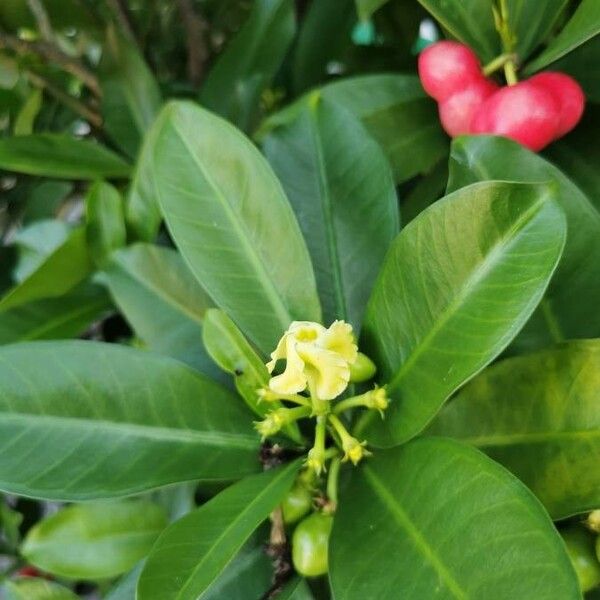
- 🍃 The Foliage: Unlike its narrow-leafed cousins, the Ahouai has broad, elliptical leaves with a high-gloss finish. They are dark green, leathery to the touch, and grow in an attractive spiraling pattern.
- 🌼 The Flowers: It features delicate, pale yellow to creamy trumpet-shaped flowers. They usually appear in small clusters at the tips of the branches and emit a faint, sweet scent.
- 🍎 The Fruit: The most distinctive trait is the fleshy, angular fruit. It starts green and ripens into a brilliant, waxy crimson red. Inside the pulp lies a large, stony seed.
🏡 In Your Garden
- ☀️ Sun Lover: This plant thrives in full tropical sun but is surprisingly adaptable to partial shade. Because of its tropical roots, it hates the cold; even a light frost can cause significant damage to its glossy canopy.
- 🪴 Soil & Drainage: It is not picky about soil types but demands excellent drainage. It has a deep root system that makes it quite drought-tolerant once established, meaning it prefers "deep but infrequent" watering rather than constant moisture.
⚠️ Safety & Toxicity
- 🚫 Extreme Toxicity: Every part of the Thevetia Ahouai is highly poisonous if ingested. It contains cardiac glycosides, which can cause severe heart rhythm issues, nausea, and even death.
- 🖐️ Sap Irritation: When cut or pruned, the plant bleeds a thick, milky white latex. This sap can cause significant skin irritation or rashes upon contact. Always wear gloves when handling this plant and keep it well out of reach of curious pets and children.
✨ Fun Fact
In various South American cultures, the hard, dried seeds of this plant have been used for centuries to create "leg rattles" or "shakers" for traditional dances. When dried, the seeds become hollow and stone-like, producing a sharp, rhythmic clicking sound when they strike one another.

Detailed Care Instructions
To grow Thevetia Ahouai plants, follow these steps:
- Climate: Thevetia Ahouai thrives in tropical and subtropical regions with temperatures between 20-40°C (68-104°F). Ensure you are in a suitable climate before growing this plant.
- Sunlight: Choose a location with full sun exposure. Thevetia Ahouai requires at least 6-8 hours of direct sunlight daily.
- Soil: Thevetia Ahouai prefers well-draining, sandy, or loamy soil. Ensure the soil has good water retention capabilities but is not waterlogged.
- Watering: Water the plant regularly, especially during its establishment phase. Keep the soil consistently moist but not overly saturated. Reduce watering during cooler months.
- Fertilizer: Apply a balanced slow-release fertilizer during the growing season, such as a 10-10-10 or 14-14-14 formulation, to promote healthy growth. Follow the directions on the fertilizer packaging for the appropriate amount and frequency of application.
- Pruning: Prune Thevetia Ahouai regularly to maintain its shape and promote bushier growth. Remove dead or damaged branches and thin out crowded areas. Pruning should be done during the dormant season.
- Pests and diseases: Keep an eye out for common pests like aphids, mealybugs, and spider mites. Treat any infestations promptly using organic or chemical insecticides. Monitor for any signs of diseases like root rot and black spot, and address them using appropriate treatments.
- Propagation: Thevetia Ahouai can be propagated from seeds or stem cuttings. If propagating from seeds, plant them in well-draining soil and keep the soil consistently moist until germination. If using stem cuttings, take 6-8 inch cuttings from the parent plant and place them in a well-draining rooting medium until roots develop. Transplant them into individual pots once rooted.
- Transplanting: If you wish to transplant Thevetia Ahouai, do so when the plant is young and still manageable. Choose a location with suitable sunlight, soil, and space for the plant to grow to its mature size. Dig a hole wider and deeper than the root ball, place the plant in the hole, backfill with soil, and water thoroughly.
- Caution: Thevetia Ahouai is poisonous, so exercise caution when handling it. Keep it away from children and pets.
Remember to research any specific care requirements for your specific region and consult local experts or nurseries for additional guidance.

Place in a bright room that is sun drenched almost all day. Or directly in a south-facing window.

To water this plant, you should first check the soil moisture level by sticking your finger into the soil about an inch deep. If the soil feels dry, it's time to water. However, do not overwater the plant as it can lead to root rot. Water the plant deeply and allow the water to drain from the pot's bottom. You can also mist the leaves to increase humidity around the plant. It's best to water this plant in the morning or evening when the sun is not too strong, as direct sunlight can cause the water to evaporate too quickly.
To fertilize this plant, you should first choose a balanced fertilizer that has equal amounts of nitrogen, phosphorus, and potassium. Mix the fertilizer with water according to the manufacturer's instructions and apply it to the soil around the plant. It is important not to get the fertilizer on the leaves or stem of the plant as it can cause damage. Fertilize once every two weeks during the growing season and reduce the frequency to once a month during the winter months. As always, be sure to water the plant thoroughly before and after fertilizing.
The recommended soil for the Thevetia Ahouai plant should have a good drainage system, with good water retention capacity. It should be loose and light, with a pH range between 6.0 and 7.5. The soil should be enriched with organic matter and nutrients, such as nitrogen, phosphorus, potassium, calcium, and magnesium. The soil should also be free from pests and diseases. A mixture of loamy soil, sand, and compost can be used for the successful growth of the Thevetia Ahouai plant.
To propagate this plant, you will need to collect healthy stem cuttings from a mature plant during the active growing season. Ensure the cutting is about 4-6 inches long and has at least two leaf nodes. Remove the lower leaves of the cutting and dip the cut end in rooting hormone. Plant the cutting in a well-draining potting mix and keep it in a warm, partially shaded area. Water the cutting moderately and regularly but avoid overwatering. After about 3-4 weeks, new roots will begin to form, and the cutting will start to grow. Gradually acclimatize the young plant to brighter light and eventually move it outdoors when it is large enough.








