Plant Overview
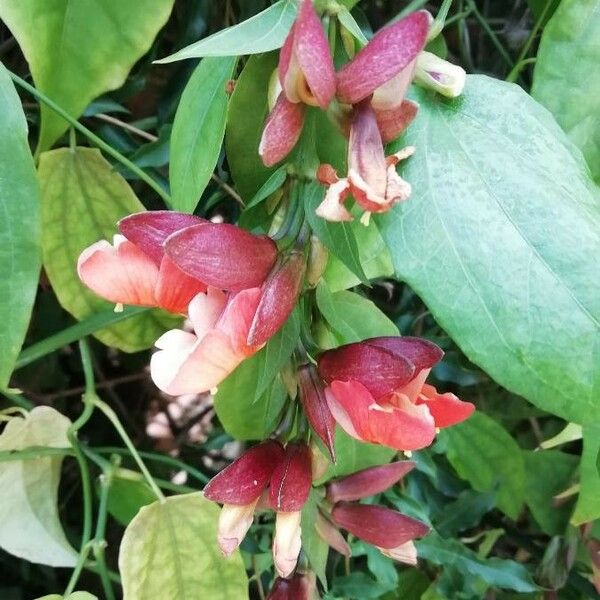
Often referred to as the Red Clock Vine or Scarlet Clock Vine, Thunbergia coccinea is a show-stopping climber native to the mist-covered foothills of the Himalayas. Unlike its more common blue or yellow cousins, this variety produces dramatic, "bleeding" clusters of flowers that dangle like floral chandeliers. It is a favorite for gardeners looking to add a touch of exotic, vertical drama to their outdoor spaces.
🔍 How to Identify
- 🌺 The Blooms: Features pendulous racemes (hanging clusters) of trumpet-shaped flowers that range from deep scarlet to vibrant orange-red, often with a contrasting yellow throat.
- 🍃 The Foliage: Its leaves are dark green, glossy, and shaped like elongated hearts or arrows, providing a dense, lush backdrop for the fiery flowers.
- 🪜 Growth Habit: A vigorous, woody evergreen vine that uses its twining stems to wrap around supports, reaching impressive heights if left unpruned.
🏡 In Your Garden
- 🏗️ Support is Key: Because this vine becomes heavy and woody as it matures, it requires a very sturdy trellis, pergola, or fence. It isn't a "lightweight" climber and can easily collapse flimsy plastic supports.
- 💧 Himalayan Humidity: While it enjoys bright light, it thrives best in conditions that mimic its mountain home—damp soil and high humidity. It hates "wet feet," so ensure your soil drains well to prevent root rot.
- ✂️ Space Management: In tropical climates, it can be quite aggressive. Regular pruning after the blooming season helps keep it from swallowing nearby shrubs or trees.
⚠️ Safety & Toxicity
- 🟢 General Safety: Thunbergia coccinea is generally considered non-toxic to humans and common household pets like cats and dogs.
- 🧤 Skin Sensitivity: Some gardeners report mild skin irritation from the sap when pruning. It is always a good idea to wear gloves when doing heavy maintenance.
- 🚫 Keep it Ornamental: While not "poisonous," the plant is not edible. Ensure children don't mistake the nectar-heavy flowers for something to snack on, as ingestion can lead to mild stomach upset.
✨ Fun Fact
The "Clock Vine" name comes from the way the stems twine around a support; most species in this genus always spiral in a specific direction (usually clockwise), behaving like a natural floral compass!

Detailed Care Instructions
To grow Thunbergia coccinea plants, also known as red carpet vine or scarlet creeper, follow these steps:
- Choose the right location: Thunbergia coccinea thrive in full sun to partial shade. Select a location that receives at least 6 hours of direct sunlight each day.
- Prepare the soil: Thunbergia prefers well-draining soil. Amend the soil with organic matter such as compost or well-rotted manure to improve drainage and fertility.
- Planting: Dig a hole two times wider than the root ball of the plant. Place the plant in the hole, ensuring that the top of the root ball is level with the soil surface. Gently backfill the hole and firm the soil around the base of the plant.
- Watering: Thunbergia plants require regular watering, especially during dry spells. Water deeply, allowing the soil to dry slightly between waterings to avoid waterlogging.
- Mulching: Apply a layer of organic mulch around the base of the plant to conserve moisture and suppress weed growth. Keep the mulch a few inches away from the stem to avoid rotting.
- Support: Thunbergia is a climbing plant that needs support to grow. Install a trellis, fence, or arbor where the vine can climb and spread.
- Fertilizer: Feed the plant with a balanced slow-release fertilizer or apply a liquid fertilizer every 2-3 weeks during the growing season. Follow the package instructions for application rates.
- Pruning: Thunbergia coccinea may benefit from regular pruning to control its growth and shape. Prune back any dead or damaged stems and trim long or unruly growth to promote bushiness.
- Pests and diseases: Monitor the plant for any signs of pests such as aphids or spider mites. Treat any infestations promptly with organic pest control methods or insecticidal soap. Additionally, ensure good air circulation around the plant to prevent fungal diseases.
- Propagation: Thunbergia coccinea can be propagated through seeds or cuttings. Collect seeds from mature pods and sow them in well-draining soil. To propagate from cuttings, take 4-6 inch stem cuttings from a healthy plant, remove lower leaves, dip the cut end in rooting hormone, and plant in a pot filled with a well-draining rooting medium. Keep the soil moist and provide indirect light until roots establish.
By following these steps, you can successfully grow and enjoy Thunbergia coccinea plants in your garden.

Place in a bright room that is sun drenched almost all day. Or directly in a south-facing window.
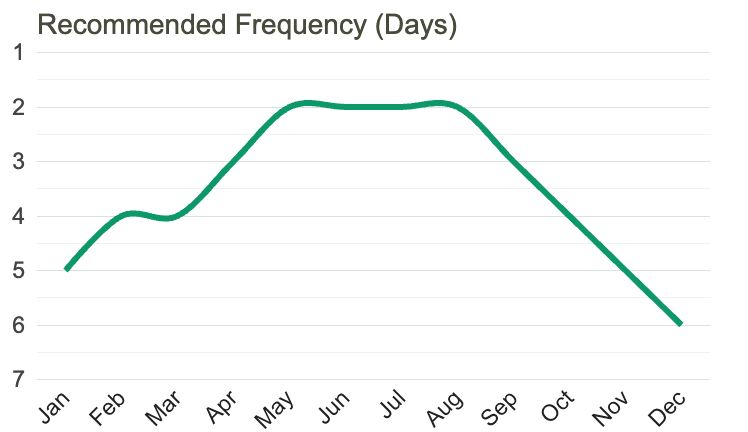
Thunbergia Coccinea plant requires a regular watering schedule. It's essential to keep the soil moist but not waterlogged, as excessive water can lead to root rot. A good indicator of when to water is to check the top inch of soil, and if it feels dry to the touch, it's time to water.
It's recommended to water from the base of the plant, slow and consistent watering will allow the water to penetrate deep into the soil and reach the plant's roots. Watering the leaves can lead to fungal diseases, so it's best to avoid it.
During the summer months, the plant may need more frequent watering due to evaporation. However, in the winter months, the frequency of watering can be reduced as the plant enters a dormant state.
Overall, it's crucial to maintain a balance in watering and ensure the soil is well-drained to promote healthy growth and avoid any diseases.
To fertilize this plant, use a balanced fertilizer with equal parts nitrogen, phosphorus, and potassium. Apply the fertilizer every two to three weeks during the growing season, reducing frequency in the winter months. Water the plant thoroughly before fertilizing to prevent burning the roots. Avoid over-fertilizing, as this can lead to excessive foliage growth at the expense of flowers.
Thunbergia Coccinea plant prefers well-draining soil that is rich in organic matter. It requires a pH level of around 6.0 to 7.0. The soil should be loamy and able to hold moisture without becoming waterlogged. It is recommended to mix in some coarse sand or perlite to improve drainage. Avoid using heavy clay soils or those that are too sandy. The soil should be high in nitrogen, phosphorous, and potassium, and should be replenished with fertilizer every few months. It is important to ensure that the soil is not compacted and has good aeration, which can be achieved by regularly loosening the soil with a garden fork or cultivator.
To propagate a certain plant species, one needs to follow certain steps. Firstly, locate a healthy mature plant of the desired species. Then, using pruning shears or a sharp knife, take a cutting of a stem that is at least 6 inches long. Make the cut at a slight angle to increase the surface area for rooting. Remove all leaves from the bottom half of the stem.
Next, dip the cut end of the stem into rooting hormone powder to encourage root development. Then, plant the stem cutting into a pot filled with a well-draining soil mixture such as peat moss or perlite. Firm the soil around the stem to ensure stability and water the soil thoroughly.
To help the cutting establish roots, cover the pot with a transparent plastic bag to increase humidity levels around the cutting. Place the pot in a shaded area until roots begin to emerge from the bottom of the pot. Once root development has occurred, gradually move the plant to a brighter, more sunlit area.
Eventually, when the plant has grown sizable enough, it can be transplanted into a larger pot or directly into the ground.








