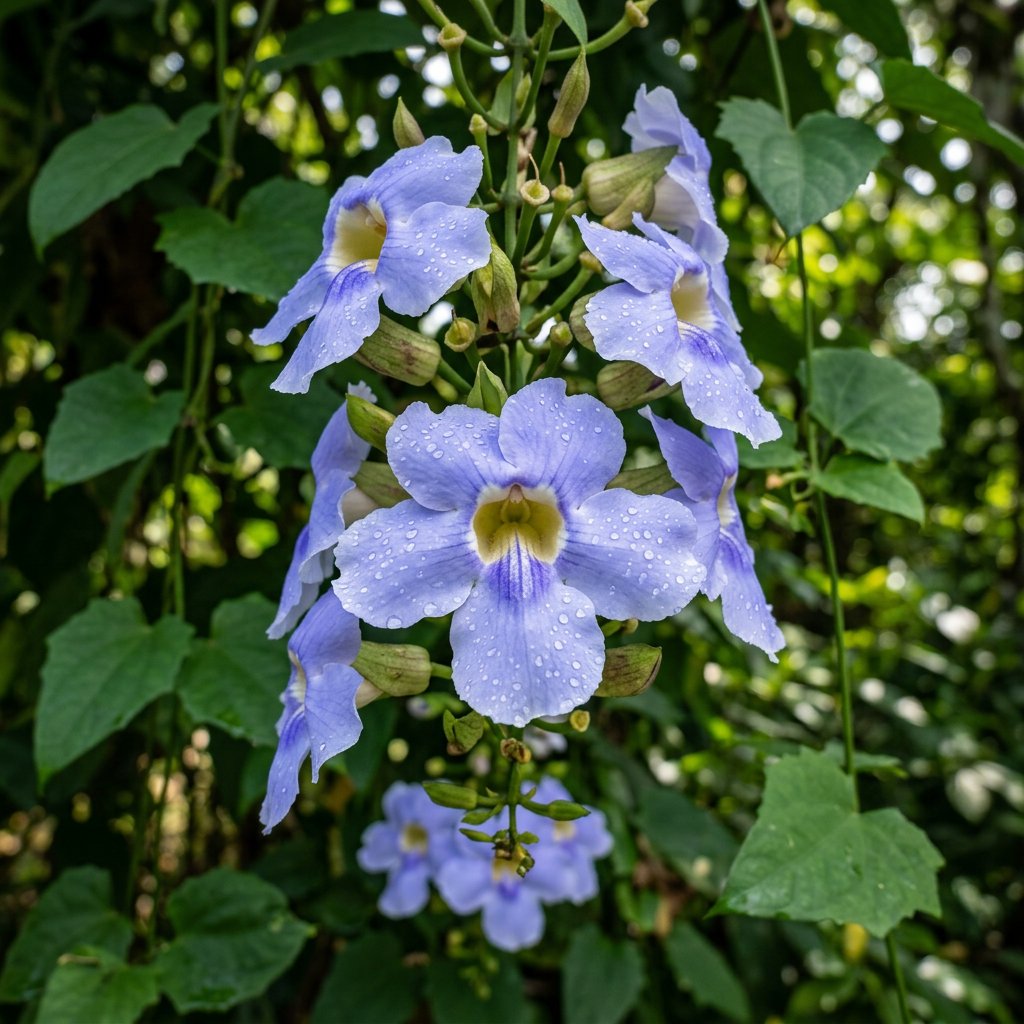
Plant Overview
Often called the "Bengal Clock Vine" because its flowers seem to keep time with the sun, this vigorous climber is a showstopper in any tropical or subtropical garden. Originating from the Indian subcontinent, it is famous for its cascading curtains of sky-blue blossoms that can turn a plain fence into a living, floral waterfall. It is a high-speed grower that brings a lush, "jungle" feel to a landscape in a single season.
🔍 How to Identify
- 🌸 The Blooms: Large, 3-inch wide trumpet-shaped flowers, typically in shades of lavender-blue or mauve with a soft, creamy-yellow throat.
- 🍃 The Foliage: Rich green, heart-shaped (cordate) leaves that are slightly rough or "sandpapery" to the touch and grow in opposite pairs.
- 🧗 The Stems: Thick, twining woody stems that wrap aggressively around supports; unlike some vines, it does not use "fingers" (tendrils) but twists its entire body to climb.
🏡 In Your Garden
- 🏗️ Vertical Ambition: This vine is heavy and fast. It needs a very sturdy trellis, pergola, or fence. Avoid flimsy plastic supports, as the weight of a mature vine can easily collapse weak structures.
- 🌱 Root Resilience: It develops massive tuberous roots underground. This makes it drought-tolerant once established, but it also means it is very difficult to move once it has settled into its "forever home."
- ✂️ Growth Management: In warmer climates, it can become a bit of a "garden bully." Don't be afraid to prune it back hard in late winter to keep it from smothering nearby shrubs or trees.
⚠️ Safety & Toxicity
- ✅ Safe Status: Thunbergia grandiflora is generally considered non-toxic to humans, cats, and dogs.
- 🧤 Skin Protection: While not poisonous, the leaves and stems have tiny, stiff hairs that can cause mild skin irritation for people with sensitive skin. It is best to wear gloves when doing heavy pruning.
✨ Fun Fact
In some parts of Australia and Florida, this plant is actually nicknamed the "Vine that Ate the South." Because it can grow several inches in a single day and regrow from tiny root fragments, it is considered an invasive environmental weed in certain tropical ecosystems!

Detailed Care Instructions
| Lighting | Full Sun |
| Hardiness Zones | Min 10A |
To grow Thunbergia grandiflora, also known as blue trumpet vine or skyflower, you can follow these steps:
- Planting: Choose a sunny location in your garden that receives at least six hours of sunlight per day. Thunbergia grandiflora prefers well-draining soil. Prepare the soil by loosening it with a garden fork or tiller and mix in compost or organic matter to improve drainage and fertility.
- Propagation: You can propagate Thunbergia grandiflora from seeds, cuttings, or by layering. If using seeds, soak them in warm water for 24 hours before planting. Sow them directly into the soil or start them indoors in pots and transplant them later.
- Watering: Thunbergia grandiflora enjoys regular watering but prefers to dry out slightly between watering sessions. Check the moisture level of the soil before watering and avoid overwatering, as it can cause root rot. Water the plant when the top inch of soil feels dry.
- Training and support: As Thunbergia grandiflora is a climbing vine, provide it with a trellis, arbor, or any other support structure to help it grow vertically. You can train the vines around the support or gently tie them for guidance.
- Pruning: To encourage bushier growth and more flowering, prune Thunbergia grandiflora annually during late winter or early spring before new growth begins. Trim back any dead or damaged branches and cut back any overgrown or unruly growth.
- Fertilizing: Apply a balanced, slow-release fertilizer during the growing season to provide essential nutrients for healthy growth and flowering. Follow the instructions on the fertilizer packaging for application rates and frequency.
- Pests and diseases: Keep an eye out for common garden pests like aphids, scale insects, or whiteflies. Treat any infestations promptly with appropriate insecticides or organic pest control methods. Thunbergia grandiflora is generally resistant to most diseases.
- Winter care: In regions with frost or freezing temperatures, Thunbergia grandiflora may not be frost-tolerant. Protect the plant during winter by covering it with a frost blanket or moving it indoors to a cool, well-lit location until the cold weather passes.
Remember to check the specific care requirements for Thunbergia grandiflora in your local climate to ensure the best possible growth and blooming.

Place in a bright room that is sun drenched almost all day. Or directly in a south-facing window.
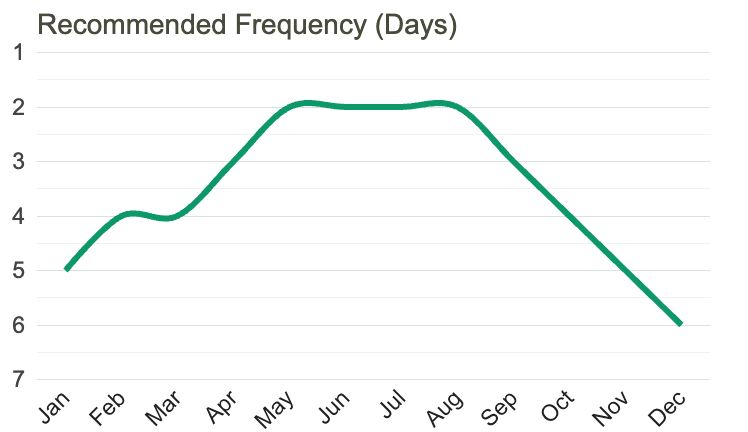
To properly water this particular plant, it is important to consider its specific watering needs. First, it is important to ensure that the soil is well-drained to prevent waterlogging, which can cause root rot. The plant should be watered regularly, approximately once or twice a week, depending on the weather and humidity levels. It is important to water deeply, ensuring that the water reaches the root level, rather than just the surface of the soil. This can be achieved by using a watering can or hose with a slow, steady stream. However, care should be taken not to overwater, as this can also cause damage to the plant. It is recommended to monitor the soil moisture levels by checking the top inch of soil; if it feels dry, it is time to water. Additionally, it is beneficial to water early in the morning or late in the evening when the temperatures are cooler, as this minimizes water loss through evaporation.
- Choose a fertilizer that is balanced in nutrients such as 10-10-10 or 20-20-20.
- Apply the fertilizer during the growing season, which is usually from spring to fall.
- Mix the fertilizer according to the package instructions.
- Water the soil around the plant thoroughly before applying the fertilizer.
- Avoid getting the fertilizer on the leaves or flowers.
- Apply the fertilizer evenly around the base of the plant, being careful not to get too close to the roots.
- Water the plant again lightly after fertilizing to help the nutrients absorb into the soil.
- Repeat the fertilization process every four to six weeks during the growing season for optimal growth and blooming.
The soil best suited for Thunbergia Grandiflora is a well-draining, nutrient-rich soil that is slightly acidic with a pH range from 5.5 to 6.5. It is recommended to use a mix of peat moss, perlite, and vermiculite, which will provide good drainage, aeration, and moisture retention. The soil should be loose and porous, preventing water stagnation in the root zone. The use of organic matter such as compost or aged manure is also beneficial as it provides essential nutrients and promotes the growth of beneficial microorganisms. It is important to avoid heavy soils that can cause root rot and limit the plant's growth potential.
There are several methods to propagate Thunbergia Grandiflora plants, including taking stem cuttings and growing from seed.
To propagate from stem cuttings, select a healthy stem from the parent plant that is at least 6 inches in length and has several leaves. Cut the stem at a 45-degree angle just below a node (where a leaf attaches to the stem). Remove the lower leaves, leaving only a few at the top. Dip the cut end in rooting hormone and plant it in a pot filled with moist potting soil. Keep the soil moist and the plant in a warm, bright location. In a few weeks, you should see new growth indicating successful rooting.
To propagate from seed, collect the seeds from the parent plant when the seed pods have turned brown and dry. Remove the seeds from the pods and soak them overnight in warm water. Plant the seeds in a pot filled with moist potting soil and cover lightly with soil. Keep the soil moist and the plant in a warm, bright location. In a few weeks, you should see seedlings sprout.
It is best to propagate Thunbergia Grandiflora plants during the growing season, which is typically from spring to early fall.
Common pests of the bengal trumpet include Spider mites, aphids, whiteflies, larvae. Make a habit of checking your bengal trumpet frequently for pests so that any infestations can be caught and managed early.








