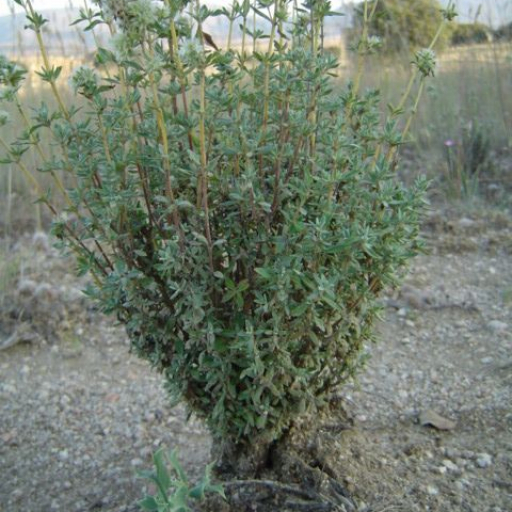
Plant Overview
Often called "Spanish Marjoram," this aromatic treasure is actually a wild species of thyme native to the sun-drenched hills of Spain and Portugal. Despite its name, its scent is far more intense than sweet marjoram, leaning into cooling, forest-like notes of eucalyptus and camphor. It is a rugged, woody survivor that brings a silvery, Mediterranean aesthetic to rock gardens and herb collections.
🔍 How to Identify
- 🍃 The Foliage: Small, oval, silvery-green leaves that grow densely along woody, upright stems. The leaves are slightly hairy, giving the plant a soft, frosted appearance.
- ☁️ The Blooms: Unlike the flat clusters of common thyme, these flowers grow in distinctive, fluffy white "puffballs" or "pom-poms" that erupt at the ends of the branches in early summer.
- 👃 The Aroma: Crushing a leaf releases a sharp, medicinal, and refreshing scent. It lacks the lemony sweetness of culinary thyme, smelling instead like a mix of pine and eucalyptus.
🏡 In Your Garden
- ☀️ Sun & Air: This plant is a sun-worshiper. It needs a bright, open spot with plenty of air circulation to prevent the dense foliage from trapping moisture and rotting.
- 🏜️ Drainage is Vital: Coming from rocky Iberian slopes, it hates "wet feet." If your garden has heavy clay, it is best to grow this in a terracotta pot or a raised bed mixed with plenty of grit and sand.
- ✂️ Woodiness: It has a habit of becoming "leggy" over time. A light pruning after the flowers fade will help the plant maintain a tight, bushy shape and prevent the center from becoming a bundle of bare sticks.
⚠️ Safety & Toxicity
- 🌿 Safe for Humans: It is non-toxic and used in traditional Spanish stews and herbal teas. However, because its flavor is so potent and camphorous, it is used more like a spice than a leafy herb.
- 🐾 Pet Sensitivity: While not listed as a major toxin, the high concentration of essential oils (like cineole) can cause digestive upset or drooling in cats and dogs if they munch on large quantities.
- 🧴 Oil Potency: If you use the essential oil derived from this plant, always dilute it. Its high cineole content can be irritating to sensitive skin or the respiratory tracts of very young children.
✨ Fun Fact
🧪 The Eucalyptus Mimic: Thymus mastichina is a powerhouse in the aromatherapy world because it contains high levels of 1,8-cineole—the exact same compound that gives Eucalyptus its "clear-breathing" properties. In Spain, it is historically nicknamed "Tomillo Blanco" (White Thyme).

Detailed Care Instructions
To grow Thymus mastichina plant, also known as Spanish marjoram or White-leaved savory, you can follow these steps:
- Choose the right location: Thymus mastichina prefers full sun to partial shade. Make sure the area receives at least six hours of direct sunlight per day. Also, ensure the soil is well-draining.
- Prepare the soil: Thyme plants prefer light, sandy soils with good drainage. If your soil is heavy or compacted, it is advisable to improve it by adding organic matter like compost or well-rotted manure.
- Planting: Thymus mastichina can be grown from seeds or propagated from cuttings or divisions. If starting from seeds, sow them indoors about 6-8 weeks before the last frost date, as they can take up to three weeks to germinate. Once the seedlings are large enough, transplant them outdoors, spacing them around 6-12 inches apart. Water well after planting.
- Watering: Thyme plants prefer slightly dry conditions, so it is best to avoid overwatering. Water the plants deeply but infrequently, allowing the soil to dry out slightly between waterings. Check the soil moisture level by inserting your finger about an inch into the soil. If it feels dry, it's time to water.
- Fertilization: Thymus mastichina does not require much fertilization. You can apply a balanced organic fertilizer once or twice a year to provide necessary nutrients. Avoid excessive use of nitrogen, as it can promote excessive leafy growth at the expense of essential oil production.
- Pruning: Pruning is important to maintain the compact and bushy growth of the plant. After the blooming period, usually in late spring or early summer, trim back about one-third of the growth to encourage fresh growth. Additionally, regular light pruning throughout the growing season can help maintain its shape and improve air circulation.
- Pests and diseases: Thymus mastichina is relatively resistant to pests and diseases. However, common garden pests like aphids, spider mites, and thrips can occasionally be a problem. Inspect the plant regularly and use organic pest control methods if necessary.
- Harvesting: You can begin harvesting the leaves of Thymus mastichina once the plant is well-established, usually after one year. Harvest in the morning when the essential oil content is highest. Trim the foliage just above a leaf node, leaving some growth behind to allow for recovery and continued growth.
Remember to familiarize yourself with your specific variety's requirements, as different Thymus mastichina cultivars may have variations in growing conditions or pruning preferences.

Place in a bright room that is sun drenched almost all day. Or directly in a south-facing window.

Thymus Mastichina is a small plant that typically grows in dry, rocky soil. When it comes to watering this plant, it's important to strike a balance between keeping the soil moist and avoiding overwatering.
To water Thymus Mastichina, you should start by thoroughly soaking the soil around the plant. Allow the water to drain away, then wait for the top inch of soil to feel dry to the touch before watering again. Depending on the climate and location of the plant, this could be as often as every few days or as infrequently as every week or two.
It's important to keep the soil moist but not waterlogged, as too much water can cause the plant's root system to rot. In addition to monitoring the soil moisture, you should also pay attention to the leaves of the plant. If they start to wilt or turn yellow, it could be a sign of overwatering or underwatering.
To promote healthy growth, you can also consider using a water-soluble fertilizer every few weeks during the growing season. This will help provide the plant with the nutrients it needs to produce vibrant foliage and abundant flowers.
To fertilize the Thymus Mastichina plant, begin by selecting a balanced, water-soluble fertilizer. Dilute the fertilizer according to the manufacturer's instructions, typically at a ratio of one tablespoon of fertilizer per gallon of water.
During the growing season, apply the fertilizer once every two to three weeks. Prior to applying the fertilizer, thoroughly water the soil around the plant to ensure proper absorption.
Take care not to over-fertilize, as excessive nutrients can harm the plant. Evaluate the condition of the plant regularly and adjust the fertilization frequency accordingly.
Remember to follow the general guidelines of fertilizing during the plant's active growth period and reduce or stop fertilizing during the winter dormant phase. Providing adequate sunlight, water, and well-draining soil in addition to appropriate fertilization will help maintain the health and vigor of the Thymus Mastichina plant.
The ideal soil for the Thymus Mastichina plant should be well-draining and slightly alkaline with a pH level of 7.5 to 8.5. The soil should be loose and airy, allowing for good water drainage and air circulation. It is recommended to add organic matter to the soil, such as compost or aged manure, to improve its structure and nutrient content. Avoid heavy clay soils that can retain too much water and cause root rot. It is also important to ensure the soil is not too rich in nutrients as this can cause the plant to produce more leaf growth than flowers. A mixture of sandy loam and perlite or vermiculite can create the ideal texture for growing Thymus Mastichina.
To propagate the Thymus Mastichina plant, follow these steps:
- Select a healthy and mature Thymus Mastichina plant from which you want to take cuttings. Ensure that the plant is disease-free and has no signs of stress or damage.
- Prepare a clean and sharp pair of pruning shears or scissors. Sterilize the cutting tool by wiping it with rubbing alcohol or a mixture of water and bleach to prevent the spread of diseases.
- Choose a suitable time to take the cuttings, usually during spring or early summer when the plant is actively growing. This period offers the best chance of successful propagation.
- Identify the new growth or non-flowering stems on the Thymus Mastichina plant. These stems are usually tender, green, and flexible, indicating they are ideal for propagating.
- Using the sterilized cutting tool, make a clean cut just below a leaf node on the selected stem. A leaf node is where a leaf joins the stem. Aim for a cutting length of around 4-6 inches (10-15 cm) to ensure the cutting has enough viable tissue to develop roots.
- Remove the leaves from the lower part of the cutting, leaving a few leaves near the tip. This minimizes moisture loss while the cutting establishes roots.
- Prepare a propagation tray or small pots with a well-draining potting mix. You can create a suitable mix by combining equal parts of peat moss, perlite, and vermiculite.
- Wet the potting mix slightly to make it moist but not soggy. Excessive moisture can lead to rotting of the cuttings.
- Dip the bottom end of the Thymus Mastichina cutting in a rooting hormone powder. Although not necessary, rooting hormone can enhance the success rate of root development.
- Make a planting hole in the moistened potting mix using a pencil or a similar tool. Place the cutting into the hole, ensuring that its bottom end is inserted into the mix and gently press the soil around the stem to secure it in place.
- Repeat the above steps to take multiple cuttings from the parent plant if desired.
- Place the propagation tray or pots in a warm location with bright, indirect light. Avoid placing them in direct sunlight, as it may scorch the cuttings.
- Mist the cuttings regularly with water to maintain a humid environment. A clear plastic cover or a propagation dome can also be used to trap moisture and create a mini-greenhouse effect.
- Check the cuttings regularly for signs of root development. This may take several weeks or even months, depending on the plant and environmental conditions.
- Once the Thymus Mastichina cuttings have developed a sufficient root system, gently transplant them into individual pots filled with well-draining soil. Gradually acclimate the new plants to outdoor conditions before transplanting them into the garden.
By following these steps, you can successfully propagate Thymus Mastichina plants and expand your garden with this unique species.








