Plant Overview
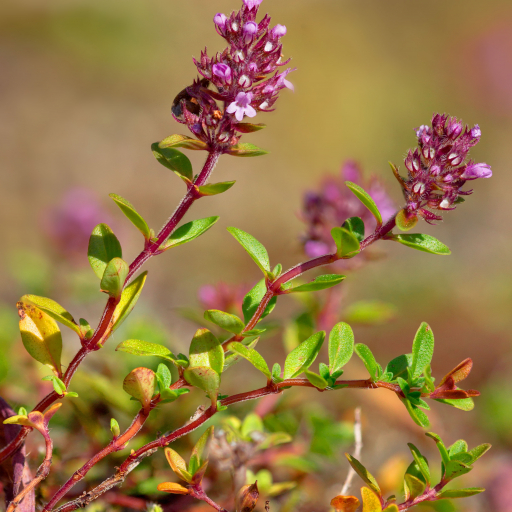
Commonly known as "Large Thyme" or "Broad-leaved Thyme," this aromatic herb is the wilder, sturdier cousin of the common kitchen thyme. Native to the sunny slopes of Europe, it creates lush, fragrant carpets that release a spicy, citrus-tinged scent whenever brushed against. In ancient folklore, thyme was a symbol of bravery, and even today, it remains a favorite for gardeners looking to bridge the gap between a functional herb garden and a beautiful ornamental landscape.
🔍 How to Identify
- 🌿 The Square Stem: A key giveaway for this species is the stem; it is distinctly square-shaped, with tiny hairs growing only along the four corners, leaving the flat sides smooth.
- 🍃 Broad Foliage: Unlike the needle-like leaves of common thyme, these leaves are broader and more oval-shaped, providing a much "greener" look to the groundcover.
- 🌸 Floral Spires: During the summer, it produces dense, rounded clusters of tiny pink to purple flowers that rise slightly above the foliage, looking like miniature lilac towers.
🏡 In Your Garden
- ☀️ The Sun-Bather: This plant thrives in "hot spots." It loves rocky crevices or the edges of gravel paths where the sun warms the soil, which helps intensify the aromatic essential oils in its leaves.
- 🌱 Drainage is Vital: While it is a hardy survivor, it cannot tolerate "wet feet." If you have heavy clay soil, it is best to plant it in a raised bed or mix in plenty of grit to ensure water moves away from the roots quickly.
⚠️ Safety & Toxicity
- ✅ Edible & Safe: Thymus pulegioides is perfectly safe for culinary use. It has a slightly more "wild" and pungent flavor than French thyme, making it excellent for stews and teas.
- 🐾 Pet Friendly: This plant is non-toxic to dogs, cats, and horses. It is often recommended for "sensory gardens" where pets are encouraged to sniff and explore.
✨ Fun Fact
The genus name Thymus is derived from the Greek word thumos, which means "courage." In the Middle Ages, women would often embroider sprigs of thyme onto the scarves of knights to give them strength and bravery in battle.

Detailed Care Instructions
| Humidity | Dry |
| Lighting | Full Sun |
| Difficulty | Hard |
| Hardiness Zones | 4 - 8 |
To grow a Thymus pulegioides plant, follow these steps:
- Choose a suitable location: Thyme plants prefer full sun, so choose a spot in your garden that receives at least 6 hours of direct sunlight per day. Thyme also prefers well-draining soil with a pH of 6 to 8.
- Prepare the soil: Thymus pulegioides prefers slightly alkaline soil. If your soil is acidic, add some lime to raise the pH. Thyme plants also benefit from nutrient-rich soil, so add compost or well-rotted manure to improve soil quality.
- Planting: Thyme can be grown from seeds, but it is easier and faster to grow from cuttings or young plants. Dig a small hole in the prepared soil, about the same size as the root ball of your plant or cutting. Place the plant in the hole and gently backfill with soil, firming it around the base of the plant.
- Watering: Thyme plants prefer slightly dry conditions, so water sparingly. Allow the soil to dry out between waterings. Thyme is drought-tolerant, but young plants may require more frequent watering until they establish their root systems.
- Mulching: Apply a layer of organic mulch, such as straw or wood chips, around the base of the plant to help retain moisture and suppress weed growth.
- Pruning: Prune thyme regularly to promote bushy growth and prevent it from becoming leggy. You can start pruning once the plant has reached about 6 inches tall. Simply trim off the top 1-2 inches of growth, taking care not to cut into the woody stems.
- Fertilizing: Thyme is not very demanding in terms of fertilization. A yearly application of a balanced organic fertilizer in early spring or a light top dressing of compost should be sufficient.
- Pest and disease control: Thyme plants are generally resilient and do not have many serious pest or disease issues. However, keep an eye out for common garden pests like aphids or spider mites. If necessary, treat them with insecticidal soap or neem oil.
By following these steps, you can successfully grow Thymus pulegioides in your garden.

Place in a bright room that is sun drenched almost all day. Or directly in a south-facing window.

To properly water this plant, you should first check the soil moisture level by sticking your finger about 1 inch into the soil. If the soil feels dry, it's time to water. Use a watering can or gently pour water onto the soil around the base of the plant, being careful not to get water on the leaves. Make sure the water soaks into the soil to a depth of at least 6 inches. Avoid over-watering, as this can lead to root rot. Water frequency will depend on the climate and time of year, but generally, water when the soil feels dry to the touch.
- Choose a balanced fertilizer with even amounts of nitrogen, phosphorus, and potassium.
- Dilute the fertilizer according to the instructions on the package.
- Apply the fertilizer to the soil around the plant, avoiding the leaves, stems, and flowers.
- Water the plant thoroughly after fertilizing.
- Repeat the process every 4-6 weeks during the growing season.
Thymus Pulegioides plant prefers to grow in well-draining soil with a neutral to alkaline pH level. It does best in a soil mixture that is sandy and loamy, with a moderate nutrient content. It is important to avoid using soils that are heavy and poorly draining, as this can cause root rot and other issues.
One option for soil mix is to combine equal parts of sand, loam, and peat moss. This creates a soil mix that is well-draining and has the right amount of nutrients for the plant. It is also important to ensure that the soil is kept consistently moist but not waterlogged.
If you are unsure about the quality of your soil, you can perform a simple soil test to determine the pH level and nutrient content. This can help you make any necessary adjustments to ensure that your Thymus Pulegioides plant is growing in the best possible conditions.
To propagate this plant, you can take softwood cuttings in the spring or early summer. Choose a healthy stem that is not flowering and about 4-6 inches in length. Make a clean cut below a node (where leaves grow) and remove the lower leaves. Dip the cut end in rooting hormone powder and plant the cutting in a container filled with well-draining soil. Water the cutting and cover it with a plastic bag to create a humid environment. Keep the cutting in a bright, but indirect light, and maintain the moisture level in the soil by misting it occasionally. Once roots have developed, transplant the cutting into a larger pot or outside in a sunny location with well-draining soil.
Common pests of the lemon thyme include Spider mites, fungus gnats, aphids, thrips, whiteflies. Make a habit of checking your lemon thyme frequently for pests so that any infestations can be caught and managed early.








