Plant Overview
Often called the Teucrium-leaved Thyme, this hardy Mediterranean native brings a touch of the rocky Balkan hillsides directly to your doorstep. Unlike the common culinary thyme, this species is prized for its unique foliage that mimics the look of Germander (Teucrium), forming a dense, aromatic carpet. It is a master of survival, thriving in the kind of sun-scorched, rocky terrain where other plants might wither.
🔍 How to Identify
- 🌿 The Foliage: Features small, leathery, dark-green leaves that are narrower and more structured than common thyme, often arranged in neat pairs along woody stems.
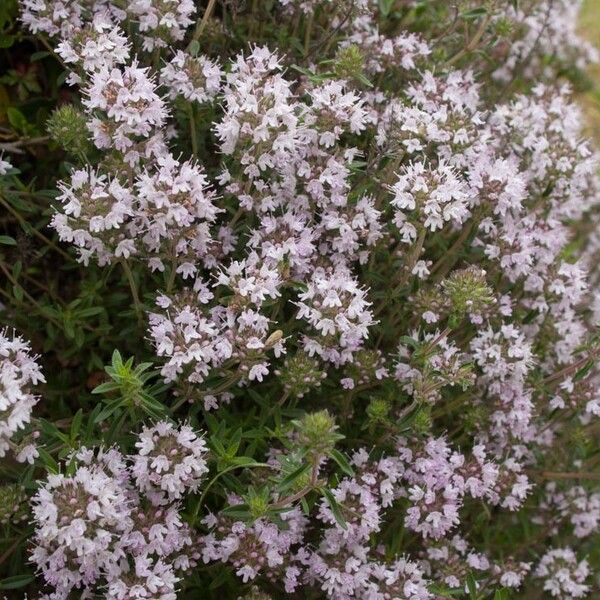
- 🌸 The Bloom: Produces striking spikes of tubular, pink-to-purple flowers that emerge in dense clusters at the tips of the branches during late spring and summer.
- 📏 Growth Habit: A low-growing, evergreen subshrub that forms a sprawling mat, rarely exceeding 4–6 inches in height but spreading wide to cover bare ground.
🏡 In Your Garden
- ☀️ The Sun-Lover: This plant thrives on "tough love." To keep it from getting "leggy" or sparse, it must have full, intense sunlight, which helps it concentrate its essential oils and maintain a compact shape.
- 🪨 The Drainage Specialist: It hates "wet feet." Because it evolved in limestone-rich, rocky soils, it requires exceptionally well-draining earth. If your garden has heavy clay, consider planting it in a raised bed or a terracotta pot to prevent root rot.
- 🐝 The Pollinator Magnet: While it’s a quiet resident for most of the year, its blooming season transforms it into a bustling hub for honeybees and butterflies, making it an essential pick for a wildlife-friendly "sensory garden."
⚠️ Safety & Toxicity
- ✅ Status: Generally non-toxic and safe for home gardens.
- 🐾 Details: While not considered poisonous to cats, dogs, or horses, the concentrated essential oils in most thyme species can cause mild stomach upset if ingested in very large quantities. As an ornamental plant, it is best enjoyed for its scent and sight rather than as a primary food source.
✨ Fun Fact
The specific epithet teucrioides literally means "resembling Teucrium." It was named this because its leaves look remarkably similar to those of the Germander plant, a clever botanical disguise that helps it reduce water loss in its dry, native habitat!

Detailed Care Instructions








