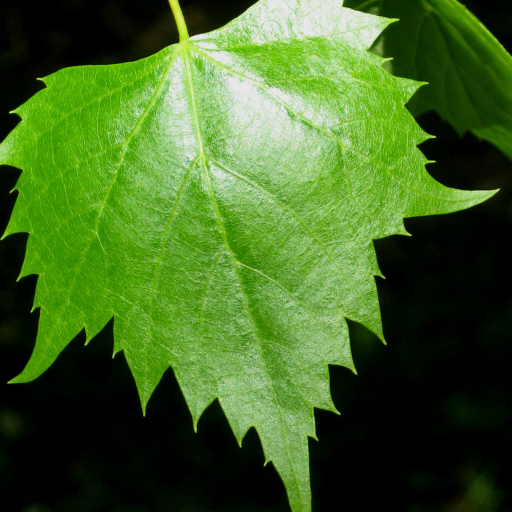
Plant Overview
Often called the "Jewel of the Steppes," the Mongolian Linden is a refined and rare beauty that breaks the mold of the typical heart-shaped Lime tree family. Hailing from the rugged, wind-swept landscapes of Northern China and Mongolia, this tree is prized by collectors for its elegant, almost weeping habit and its ability to withstand bitter cold while maintaining a delicate, lacy appearance.
🔍 How to Identify
- 🍃 The Leaves: Unlike other Lindens, these leaves are deeply lobed and jagged, resembling a grape leaf or a small oak leaf. They emerge with a reddish-bronze tint before turning a glossy dark green.
- 🌼 The Flowers: In early summer, it produces drooping clusters of pale yellow, highly fragrant flowers that can perfume an entire garden on a still evening.
- 🌳 The Form: It typically grows into a small to medium-sized tree with a dense, rounded crown and slender, pendulous branches that give it a graceful "weeping" silhouette.
🏡 In Your Garden
- ❄️ Cold Specialist: This is one of the hardiest ornamental trees available. It thrives in regions with harsh winters where other delicate species might struggle to survive the frost.
- 🌱 Slow & Steady: It has a slower growth rate compared to the common American or European Lindens, making it an excellent choice for medium-sized suburban yards where space is a consideration.
- 💧 Establishment: While it is surprisingly drought-tolerant once mature, it hates "wet feet." Ensure your soil is well-drained to prevent root rot, especially during the spring thaw.
⚠️ Safety & Toxicity
- ✅ Status: Non-toxic and safe.
- 🐾 Details: The Mongolian Linden is considered safe for pets, livestock, and children. In many cultures, Linden flowers (including this species) are dried and used to make a soothing, sedative herbal tea, though you should always consult an expert before consuming wild-harvested plants.
✨ Fun Fact
The Mongolian Linden is often called a "living fossil" in its niche because it has remained relatively unchanged for millennia. Despite its delicate, "designer" look, it is tough enough to have survived the extreme temperature swings of the Mongolian plateau for centuries!

Detailed Care Instructions
To grow Tilia mongolica, also known as Mongolian lime or Mongolian linden, follow these steps:
- Select suitable location: Choose a spot with well-draining soil and full to partial sun exposure. Mongolian lime can tolerate a range of soil types but prefers loamy or sandy soil.
- Prepare the soil: Clear the area of any weeds or grass and loosen the soil. Incorporate organic matter like compost to improve soil fertility and drainage.
- Choose a healthy sapling: Purchase a Tilia mongolica sapling from a reputable nursery or garden center. Look for a plant with healthy foliage and a sturdy stem.
- Planting: Dig a hole that is slightly larger and deeper than the root ball of the sapling. Gently lower the sapling into the hole, ensuring that the top of the root ball is level with or slightly above the soil surface. Backfill the hole with soil, firming it gently around the base of the plant.
- Watering: Give the sapling a deep watering after planting to settle the soil and encourage root establishment. Ensure the soil remains evenly moist, but not waterlogged, during the first year of growth.
- Mulching: Apply a layer of organic mulch, such as wood chips or straw, around the base of the plant. This will help conserve moisture, suppress weed growth, and regulate soil temperature.
- Pruning: Regularly prune Tilia mongolica to maintain its shape, remove dead or damaged branches, and improve air circulation. Pruning is best done during the dormant season, in late winter or early spring.
- Fertilizing: Generally, Mongolian limes do not require much fertilization. However, you can apply a balanced slow-release fertilizer in spring if desired, following the manufacturer's instructions.
- Pests and diseases: Monitor the plant for common pests like aphids or scale insects. Promptly address any pest or disease issues with appropriate treatments like insecticidal soaps or horticultural oils.
- Winter care: Tilia mongolica is hardy in USDA zones 3-8 and can withstand cold temperatures. However, providing a layer of mulch around the base of the plant in late fall can help insulate the roots during winter.
Remember to research and follow any specific care instructions for Tilia mongolica in your particular region or climate. Regular maintenance, adequate watering, and proper care will help ensure optimal growth and health of your Tilia mongolica plant.

Place in a bright room that is sun drenched almost all day. Or directly in a south-facing window.

To water this particular plant, you should first check the moisture level of the soil by poking your finger about an inch deep into the soil. If the soil feels dry, it's time to water. Use a watering can or hose to water the plant at the base, trying to avoid getting water on the leaves or flowers. Water thoroughly, until the soil feels evenly moist. Make sure not to overwater the plant as this can cause root rot. Watering once a week should be sufficient, but adjust the frequency depending on the weather and soil conditions.
To fertilize this plant, use a balanced fertilizer with equal parts of nitrogen, phosphorus, and potassium. Apply the fertilizer during the active growing season, typically in the spring. Follow the package instructions for application rate based on the plant size. Be careful not to over-fertilize as it can cause damage to the roots. Water the plant thoroughly after fertilizing.
There are a few key characteristics that the soil for Tilia Mongolica should have. It should be well-draining, with a good mixture of sand, loam, and clay. It should also be rich in organic matter, with a pH level that is slightly acidic to neutral. The soil should be able to retain moisture without becoming waterlogged, as Tilia Mongolica prefers consistently moist soil. Additionally, the soil should be free of any toxins or pollutants, as these can harm the plant's growth and development. Overall, selecting a high-quality soil that meets these requirements will help ensure the long-term health and vitality of Tilia Mongolica.
To propagate this plant, you will need to collect seeds from the mature fruit. When the fruit turns brown and begins to split open, you can harvest the seeds. Remove the outer layer of the seed coat and soak the seeds in water for 24 hours. Next, plant the seeds in a soil-less mix in a small container and keep them moist. Place the container in a warm, bright location but out of direct sunlight. Once the seedlings have grown to a size where they have developed true leaves, they can be transplanted to individual pots or directly to the garden. Another way to propagate this plant is through hardwood cuttings taken in late winter. Choose healthy, mature stems and cut them to approximately 15 cm in length, making sure to cut just below a node. Remove any lower leaves and dip the cut end in rooting hormone powder before planting them in a well-draining soil mix. Place the cuttings in a warm, humid location out of direct sunlight and keep them moist until new growth appears. These newly rooted cuttings can then be transplanted to individual pots or directly to the garden.








