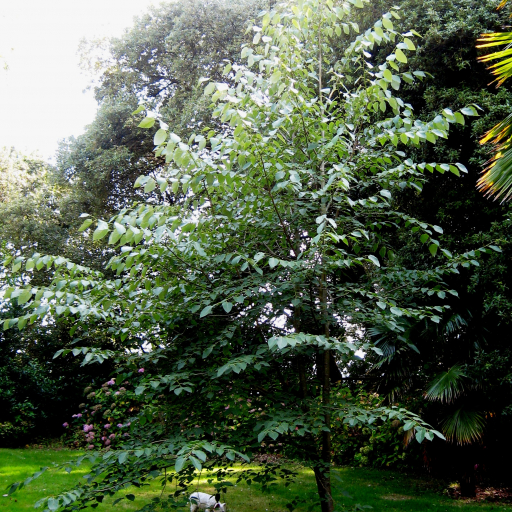
Plant Overview
Often called the Tuan Linden, this elegant deciduous tree is a hidden gem from the high-altitude forests of Central and Southern China. It is most famous for its "shimmering" effect; when a light breeze catches the canopy, the leaves flip to reveal a brilliant, silvery-white underside. In many cultures, Linden trees are seen as symbols of peace and justice, often planted at the heart of villages to serve as a communal meeting place.
🔍 How to Identify
- 🍃 Asymmetric Leaves: Look for distinct heart-shaped leaves that are "lopsided" at the base, a classic hallmark of the Linden family.
- 🥈 Velvety Underside: The most striking feature is the dense, soft layer of silvery-grey hairs on the leaf's underside, which feels almost like felt to the touch.
- 🚁 Winged Seeds: The small, nut-like fruits are attached to a long, leaf-like wing (called a bract) that allows the seeds to "helicopter" away from the parent tree in the wind.
🏡 In Your Garden
- 🌳 The Taproot Factor: This tree develops a deep, strong taproot early in its life. Because of this, it is exceptionally wind-resistant but hates being moved—choose its "forever home" carefully to avoid transplant shock.
- 💧 Moisture Balance: While it loves a good drink, the Tuan Linden is sensitive to "wet feet." It requires soil that drains quickly to prevent root rot, especially in clay-heavy garden beds.
- 🐝 Pollinator Magnet: In mid-summer, it produces clusters of pale yellow, highly fragrant flowers that can attract honeybees from miles away, making it an excellent choice for supporting local biodiversity.
⚠️ Safety & Toxicity
- 🛡️ Pet & Child Friendly: The Tuan Linden is non-toxic to humans, dogs, and cats. It is widely considered one of the "safest" large landscape trees.
- 🤧 Pollen Note: While not toxic, the tree produces a significant amount of fragrant pollen during its blooming season, which may trigger mild seasonal allergies for sensitive individuals.
✨ Fun Fact
In its native China, the nectar from Tilia tuan is used to produce a rare, gourmet honey. This "Linden Honey" is prized by herbalists for its light, minty finish and is often used in traditional teas to help soothe a sore throat or promote sleep.

Detailed Care Instructions
Growing a Tilia tuan plant, also known as the Silver Linden tree, requires proper care and attention. Here are some steps to help you successfully grow a Tilia tuan plant:
- Choose an appropriate location: Select a planting site that receives full sun to partial shade. Tilia tuan plants prefer well-draining soil and can tolerate a wide range of soil types.
- Prepare the soil: Loosen the soil in the planting area and remove any weeds or grass. Incorporate organic matter like compost into the soil to improve its fertility and drainage.
- Planting: Dig a hole that is slightly larger than the root ball of the Tilia tuan plant. Gently place the root ball into the hole, ensuring it is at the same height as the surrounding soil. Fill the hole with soil and firmly pat it down around the base of the plant.
- Watering: Water the newly planted Tilia tuan thoroughly and deeply to help establish its roots. Afterward, provide regular watering, especially during dry periods.
- Mulching: Apply a layer of organic mulch, such as wood chips or bark, around the base of the plant. This will help conserve moisture, control weeds, and maintain a stable soil temperature.
- Pruning: Pruning is generally not required for Tilia tuan plants, but you can remove any dead, diseased, or damaged branches as necessary. Additionally, you can shape the tree through selective pruning if desired.
- Fertilizing: Tilia tuan plants usually do not require much fertilization. However, you can apply a balanced slow-release fertilizer in early spring to promote healthy growth.
- Pests and diseases: Monitor your Tilia tuan plant for common pests like aphids or leaf miners. In case of an infestation, treat with appropriate organic or chemical controls. Additionally, ensure good air circulation and avoid over-watering to prevent fungal diseases.
- Protection from extreme weather conditions: Provide protection from strong winds, especially for young Tilia tuan plants. You can use windbreaks or plant the tree near a natural windbreak like a wall or larger trees.
- Regular maintenance: Regularly check the growth and health of your Tilia tuan plant. Water as needed and monitor for any signs of stress, such as wilting or discoloration. Prune selectively to maintain a healthy shape.
By following these steps and providing proper care, you can successfully grow a Tilia tuan plant.

To water the Tilia Tuan plant, you need to ensure that it receives the appropriate amount of moisture. Here are some guidelines to follow:
1. Understand the water needs: The Tilia Tuan plant prefers moist soil but does not tolerate waterlogged or overly wet conditions.
2. Check the soil moisture: Before watering, always check the moisture content of the soil. Insert your finger about an inch or two into the soil to see if it feels dry or moist. Alternatively, you can use a moisture meter for a more accurate reading.
3. Watering frequency: Water the Tilia Tuan plant when the top inch of soil feels dry. This generally translates to watering every 7-10 days, but it may vary depending on environmental conditions such as temperature and humidity.
4. Watering technique: When watering, apply water evenly around the root zone of the plant. Avoid excessive watering as it may lead to root rot. Aim to moisten the top few inches of soil without saturating it.
5. Use the right amount of water: Provide enough water to thoroughly moisten the soil, allowing excess water to drain out of the pot's drainage holes. Ensure the water is evenly distributed to avoid waterlogging.
6. Watering method: You can use a watering can or a hose with a gentle spray nozzle to water the Tilia Tuan plant. Avoid harsh water pressure as it may damage the plant or disturb the soil.
7. Time of watering: Early morning or late afternoon is the best time to water the Tilia Tuan plant. This allows the plant to absorb the moisture before the heat of the day and prevents water evaporation.
8. Consider the plant's size and growth stage: Young Tilia Tuan plants may have a smaller root system and require less water compared to mature plants. Adjust your watering as per the plant's requirements.
Remember that these watering guidelines are general recommendations, and it's essential to consider the specific needs of your Tilia Tuan plant. Observe the plant closely for any signs of overwatering or underwatering, such as yellowing leaves, wilting, or excessive drooping, and adjust your watering routine accordingly.
Fertilize your Tilia Tuan plant during the active growing season, which is typically spring and summer. Use a balanced, slow-release fertilizer that provides equal amounts of nitrogen, phosphorus, and potassium, such as a 10-10-10 or 20-20-20 ratio. Before applying the fertilizer, moisten the soil to ensure proper absorption.
Follow the instructions on the fertilizer packaging to determine the recommended dosage for your specific Tilia Tuan plant size. In general, sprinkle the granules evenly around the base of the plant, avoiding direct contact with the stems or leaves. Gently work the fertilizer into the top layer of soil, approximately 1-2 inches (2.5-5 cm) deep.
After application, water the plant thoroughly to activate the fertilizer and promote absorption into the roots. Maintain regular watering throughout the growing season to prevent the soil from becoming excessively dry or waterlogged.
Avoid over-fertilizing your Tilia Tuan plant, as it can lead to nutrient burn or overly rapid growth, which may weaken the plant and make it more susceptible to diseases or pests. Monitor the plant's behavior and adjust fertilization accordingly based on its response and overall health.
Tilia Tuan, a deciduous tree that belongs to the Tilia genus, has specific requirements when it comes to soil conditions. It thrives in loamy soil that is well-draining and provides good moisture retention. The optimal pH range for this plant is slightly acidic to neutral (between 6.0 and 7.5). Additionally, Tilia Tuan prefers a soil that is moderately fertile, rich in organic matter, and able to provide sufficient nutrients for healthy growth.
When selecting soil for Tilia Tuan, it is essential to avoid heavy clay soils that can lead to poor drainage and waterlogging. The soil should also not be excessively sandy, as it may not retain enough moisture to support the tree's health. A balanced, loamy soil composition ensures both proper drainage and moisture retention, which are crucial for allowing the tree's roots to access oxygen while maintaining adequate hydration.
To enhance the soil's fertility and organic matter content, incorporating well-decomposed compost or aged manure can be beneficial. This practice enriches the soil and provides essential nutrients that promote optimal growth. It is also recommended to ensure that the soil is properly prepared before planting, by loosening it and removing any weeds or debris.
Overall, choosing a loamy, well-draining soil that is slightly acidic to neutral and rich in organic matter will provide an excellent foundation for the healthy development of Tilia Tuan.
Propagation of Tilia Tuan plant can be achieved through various methods such as seed germination, softwood cuttings, or grafting. Here are the details on how to propagate this plant:
- Seed Germination:
- Collect fresh seeds from the Tilia Tuan plant during the fall when the seeds are mature and dry.
- Prepare a well-draining seed-starting mix by combining equal parts of peat moss and perlite.
- Moisten the mix with water until it is evenly damp but not soaking wet.
- Sow the Tilia Tuan seeds on the surface of the seed-starting mix and lightly press them into the soil.
- Cover the seeds with a thin layer of the seed-starting mix to protect them.
- Place the container in a warm and brightly lit area, but avoid direct sunlight.
- Keep the soil consistently moist by misting it with water regularly.
- Germination should occur within a few weeks. Once the seedlings develop a couple of true leaves, they can be transplanted into individual pots.
- Collect fresh seeds from the Tilia Tuan plant during the fall when the seeds are mature and dry.
- Softwood Cuttings:
- Take softwood cuttings from a healthy Tilia Tuan plant during the early summer when the new growth is still flexible and hasn't hardened.
- Select a stem that is approximately 6-8 inches long and free from any diseases or pests.
- Using a clean and sharp pair of pruning shears, make a diagonal cut just below a leaf node, removing the cutting from the plant.
- Remove the lower leaves from the cutting, leaving only a few leaves at the top.
- Dip the cut end of the cutting into a rooting hormone powder to encourage root development.
- Insert the prepared cutting into a pot filled with moist and well-draining potting mix, burying at least half of the cutting.
- Place the pot in a warm location with bright, indirect light.
- Mist the cutting with water regularly to maintain humidity levels and prevent it from drying out.
- Within a few weeks, the cutting should develop roots, and once new growth appears, it can be transplanted into a larger container or into the ground.
- Take softwood cuttings from a healthy Tilia Tuan plant during the early summer when the new growth is still flexible and hasn't hardened.
- Grafting:
- Choose a healthy Tilia Tuan plant that you wish to propagate and another compatible Tilia species or cultivar to act as the rootstock.
- Take a dormant scion during the late winter or early spring, which is a piece of the Tilia Tuan plant that contains the desired traits such as leaves, flowers, or fruits.
- Make a vertical, slanting cut about 2-3 inches long on the rootstock plant.
- Cut a matching wedge-shaped notch from the base of the scion.
- Insert the scion into the rootstock's cut, ensuring that the cambium layers of both the scion and the rootstock are aligned.
- Secure the graft with a grafting tape or rubber band.
- Place the grafted plant in a warm and humid environment with bright, indirect light.
- After a few weeks, the scion should start showing signs of growth, indicating a successful grafting.
Remember that propagating plants involves trial and error, and it may take some time and patience to achieve successful results.
- Choose a healthy Tilia Tuan plant that you wish to propagate and another compatible Tilia species or cultivar to act as the rootstock.








