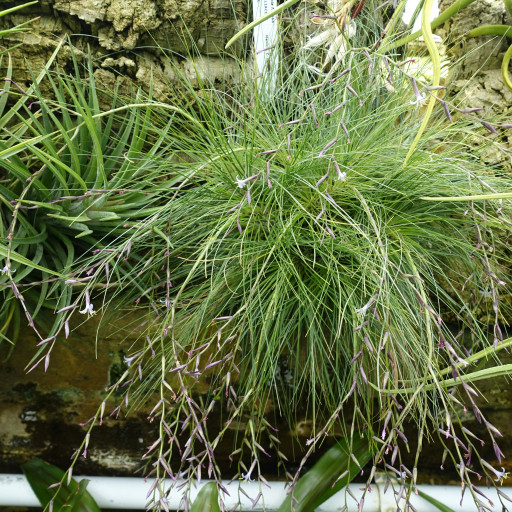
Plant Overview
Often called the "Threadleaf Air Plant," this delicate species looks less like a typical houseplant and more like a captured explosion of green fireworks. Originating from the humid forests of Central America and Mexico, it adds a soft, misty texture to any indoor space. In its natural habitat, it perches high on tree branches, living entirely on air, rain, and the nutrients it catches from the passing breeze.
🔍 How to Identify
- 🌿 Fine Foliage: It features hundreds of hair-thin, needle-like leaves that radiate from a central base, forming a dense, rounded "pom-pom" shape.
- 🎨 Color Palette: The leaves are a soft, dusty green, sometimes appearing slightly silvery due to tiny water-absorbing scales called trichomes.
- 🌸 Bloom Spike: When it matures, it sends up a slender, dark, wire-like stem that produces petite, elegant flowers—usually a mix of deep violet and white.
🏡 In Your Garden
- 🌬️ Air Circulation is Key: Because its leaves are so fine and dense, it is highly prone to rot if water gets trapped in the center. It requires a breezy spot where it can dry out completely within two hours of being watered.
- 💧 Misting vs. Soaking: While many air plants love a long bath, Tillandsia filifolia often prefers frequent, fine misting. If you do soak it, shake it gently upside down afterward to ensure no droplets remain nestled in the base of its "thread" leaves.
- 🪵 Mounting Style: This plant hates being buried in soil. It thrives best when mounted on cork bark or driftwood, or even suspended by a thin wire, allowing its roots to serve as anchors rather than nutrient-seekers.
⚠️ Safety & Toxicity
- 🐾 Pet Friendly: Good news for cat and dog owners! This air plant is considered non-toxic and safe if a curious pet decides to bat at its feathery leaves.
- 🌱 Gentle Nature: It has no thorns or irritating sap. However, it is structurally fragile; its thin leaves can break easily if handled roughly, so it’s best kept out of reach of high-traffic areas.
✨ Fun Fact
Despite looking like a desert tumbleweed, this species actually comes from moist, tropical evergreen forests. It has evolved its incredibly thin leaves to maximize surface area, allowing it to "drink" moisture directly from the heavy fog and clouds passing through the forest canopy!

Detailed Care Instructions
To grow Tillandsia filifolia successfully, you need to consider the following steps:
- Purchase a healthy plant: Start by buying a healthy Tillandsia filifolia plant from a reputable nursery or online seller. Look for plants with green leaves and no signs of damage or disease.
- Choose the right location: Tillandsia filifolia is an epiphytic air plant, which means it doesn't require soil to grow. Place it in a location with bright, filtered light, such as near a window or under grow lights. Avoid direct sunlight, as it can scorch the leaves.
- Provide proper humidity: Tillandsia filifolia thrives in humid environments. If your home has low humidity, you can increase it by placing the plant on a humidity tray filled with water or misting it regularly with a spray bottle.
- Water regularly: Tillandsia filifolia absorbs water through its leaves. To water, soak the plant in room temperature water for about 20-30 minutes once a week. After soaking, shake off the excess water and let it dry completely before placing it back in its location. Be careful not to leave the plant sitting in water, as it can lead to rot.
- Fertilize occasionally: While Tillandsia filifolia obtains most of its nutrients from the air, you can also provide additional nutrients by applying a diluted, balanced orchid or bromeliad fertilizer once a month during the growing season (spring to fall). Follow the instructions on the fertilizer package for proper application.
- Provide good air circulation: Air movement is essential for Tillandsia filifolia's growth and overall health. Make sure there is adequate ventilation in the room where you keep the plant. If necessary, use a small fan to enhance air circulation.
- Maintain proper temperature: Tillandsia filifolia prefers temperatures between 60-80°F (15-27°C). Protect it from extreme temperatures, especially freezing conditions.
- Monitor for pests: Occasionally check your Tillandsia filifolia for signs of pests such as mealybugs or scale insects. If you notice any, remove them by hand or use an organic insecticidal soap.
By following these guidelines, you should be able to create a suitable environment for your Tillandsia filifolia to thrive and grow into a beautiful air plant.

Place in a window with dappled sun or a spot in the middle of a room. Or directly in a window facing west or east.

Tillandsia Filifolia plant should be watered by placing it in a container of clean, room temperature water for about 30 minutes. After the soaking, the plant should be shaken gently to remove excess water, and then left to dry completely in a well-ventilated area. It is important not to overwater the plant, as this can lead to rotting of the roots or leaves. The frequency of watering will depend on the temperature and humidity of the environment, but typically should be done every one to two weeks. Additionally, the plant should be misted once or twice a week to provide additional moisture, especially during hot, dry weather. When misting, it is important to not get any water on the leaves' abaxial (underside).
- Choose a balanced fertilizer that contains equal amounts of nitrogen, phosphorus, and potassium.
- Dilute the fertilizer in water according to the instructions on the package.
- Apply the fertilizer solution to the base of the plant, making sure to saturate the soil and the roots.
- Water the plant thoroughly to ensure that the fertilizer is distributed evenly throughout the soil.
- Repeat the fertilization process once a month during the growing season (spring and summer) and reduce to every other month during the dormant period (fall and winter).
Tillandsia Filifolia plant prefers a well-draining soil that is light and airy. The soil should not be too dense as this can lead to waterlogging and root rot. A good soil mix for Tillandsia Filifolia would include a mixture of organic materials such as peat moss, coconut coir, and shredded bark, along with inorganic materials such as perlite, pumice, or sand to improve drainage.
It is important to note that Tillandsia Filifolia is an epiphyte, which means it grows on other plants or structures in nature, and does not require soil to survive. Therefore, the soil mix should not completely fill the pot but rather give the plant something to anchor onto so that the roots have room to grow.
When watering Tillandsia Filifolia, it is important to avoid getting water on the leaves, as this can lead to rot and disease. Instead, soak the plant in a bowl of water or mist the leaves with a spray bottle.
Overall, a well-draining soil mix that allows for water to drain quickly and does not retain moisture for too long is ideal for Tillandsia Filifolia.
To propagate this plant, you will need to carefully remove the offsets or pups from the mother plant using a clean and sharp blade. Make sure to avoid damaging the main plant by gently pulling the offsets away from the base. Allow the pups to dry in a shaded area for a few hours or overnight. Once the cut edges of the pups have dried, you can either plant them in a well-draining soil mix or attach them to a suitable substrate using a non-toxic glue or wire. Mist the new plants regularly and keep them in a brightly-lit area, but avoid direct sunlight. With time and proper care, your Tillandsia Filifolia pups will grow into beautiful and healthy plants.
Common pests of the tillandsia filifolia include Mealybugs. Make a habit of checking your tillandsia filifolia frequently for pests so that any infestations can be caught and managed early.








