Plant Overview
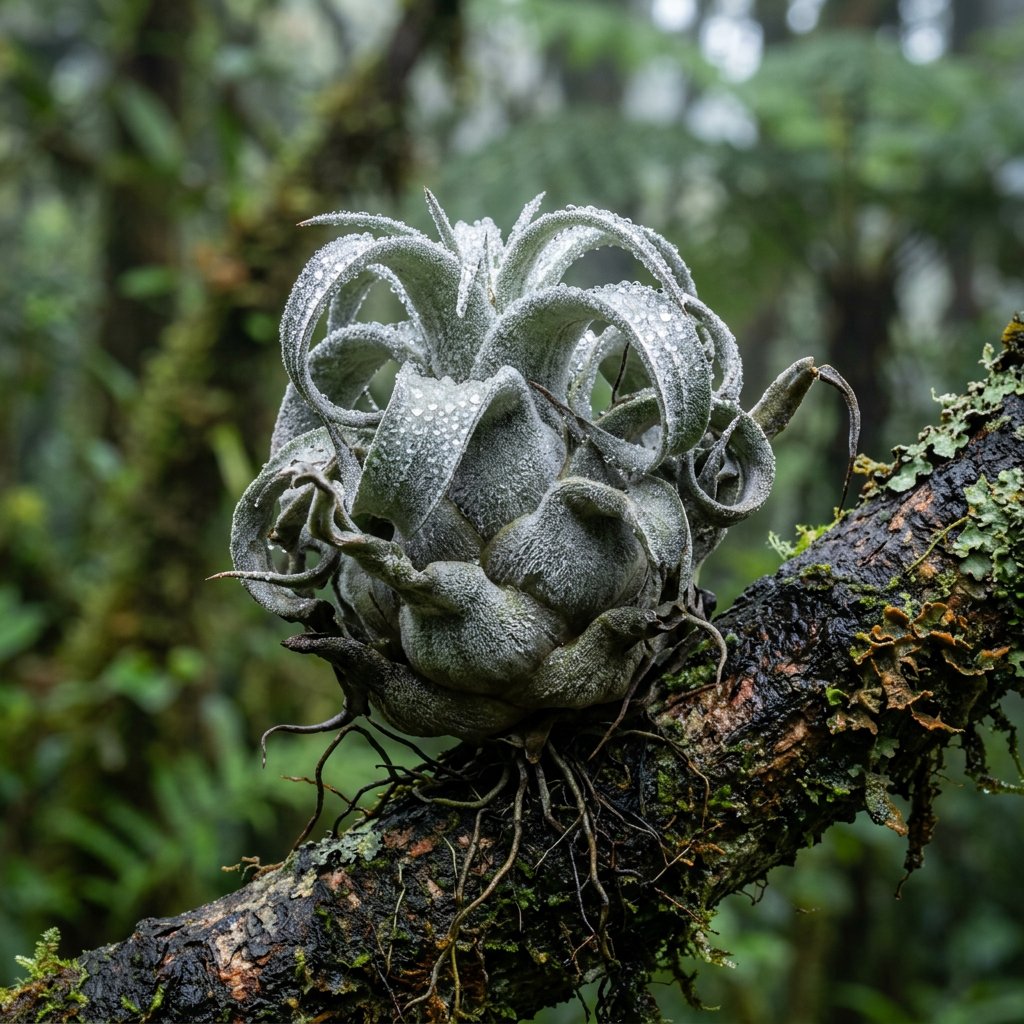
This stunning hybrid is the "silver fox" of the air plant world, combining the best traits of two iconic parents: the frosty Tillandsia pruinosa and the prehistoric-looking Tillandsia seleriana. Often called the "Fuzzy Bulb Plant," it looks like something plucked from a coral reef or a distant moon. It is highly prized by collectors for its thick, velvety texture and its dramatic, bulbous silhouette.
🔍 How to Identify
- 🌵 The Pseudobulb: It features a prominent, swollen base that feels substantial and heavy compared to other air plants. This base is hollowed naturally, a trait inherited from the seleriana parent.
- ❄️ The "Frosty" Coating: The entire plant is covered in a dense layer of large, silvery trichomes (tiny scales). This gives the plant a fuzzy, white-washed appearance that glistens under bright light.
- 🌀 Twisted Form: The leaves are thick, succulent, and often curve or twist slightly as they grow upward, giving the plant a sense of motion.
🏡 In Your Garden
- 🌬️ The Drying Dilemma: Because this hybrid has a deep, bulbous base and very dense fuzz, it is an expert at trapping water. You must ensure it has excellent air circulation and is displayed sideways or upside down so water doesn't sit in the "cup" of the base, which can cause internal rot.
- ☀️ Light Lovers: The heavy "frost" on the leaves acts like a natural sunblock. This means it can handle (and actually prefers) much brighter light than its greener, smoother cousins. In lower light, it may lose its silvery luster.
⚠️ Safety & Toxicity
- ✅ Safe for All: Like the vast majority of Tillandsias, this hybrid is non-toxic to humans, cats, and dogs.
- 🧤 Physical Touch: While not "dangerous," the stiff leaves can be quite pointy. Keep it away from eye level if you have curious pets or toddlers who might bump into its sharp tips.
✨ Fun Fact
In the wild, the Tillandsia seleriana parent of this hybrid is a "myrmecophyte," meaning it has a symbiotic relationship with ants! The ants live inside the hollow bulbous base, providing the plant with nutrients from their waste, while the plant provides the ants with a sturdy, dry fortress.

Detailed Care Instructions
To grow Tillandsia Pruinosa X Seleriana plant, you can follow these steps:
- Choose a suitable location: Place your plant in a location with bright but indirect sunlight. Avoid direct sunlight, as it can scorch the leaves. A windowsill or a spot near a bright window can be ideal.
- Provide the right temperature and humidity: Tillandsias prefer warm temperatures ranging from 60°F to 80°F (15°C to 27°C). They also thrive in high humidity environments, so misting the plant regularly or placing it in a humid area like the bathroom can help.
- Watering: Tillandsia Pruinosa X Seleriana plant absorbs water through its leaves rather than its roots. To water it, mist the plant thoroughly with filtered or rainwater. Make sure to wet the leaves, but avoid over-saturating the plant as this can lead to rot. Repeat watering every 1-2 weeks, depending on the humidity levels in your area. In drier climates, you may need to water more frequently.
- Air circulation: Good air circulation is crucial for Tillandsia plants. Ensure the plant is placed in an area with good air movement to prevent stagnant air and excess moisture around the leaves.
- Fertilization: Although Tillandsia Pruinosa X Seleriana can survive without fertilization, you can provide a diluted, water-soluble bromeliad or air plant fertilizer once every couple of months during the growing season (spring and summer).
- Avoidance of standing water: After watering, ensure that excess water can drain out of the plant by giving it a gentle shake or blotting the leaves with a towel. Standing water can lead to rot, so it's essential to prevent any water from pooling around the plant.
- Displaying the plant: You can display the Tillandsia Pruinosa X Seleriana plant in various ways. They can be mounted on a piece of driftwood, placed in a terrarium, or simply nestled in a decorative container. Make sure the air can circulate around the plant, and avoid using non-breathable containers or enclosures.
By following these guidelines, you should be able to grow and enjoy the Tillandsia Pruinosa X Seleriana plant in your home.
To properly water this plant, you should first fill a container with non-chlorinated water, such as rainwater or distilled water. Avoid using tap water as the chlorine and other chemicals can harm the plant.
Next, place the plant in the water and soak it for 20 to 30 minutes. After soaking, remove the plant from the water and shake off any excess moisture.
Allow the plant to dry completely before placing it back in its display area. This plant should only be watered once every two weeks or so, depending on the humidity levels of its environment.
It is also important to ensure that any water left in the plant's crevices or leaf axils is removed to prevent rotting and other issues.
To nourish this particular plant, you should provide regular and consistent feedings with a specialized nutrient solution tailored to its specific needs. This plant can benefit from a diluted liquid fertilizer applied once every three weeks during its active growing season. The fertilizer should be high in potash, with a low nitrogen and phosphorus ratio. Be sure to soak the plant thoroughly in the solution for 10-15 minutes, then drain well to avoid waterlogging. Avoid using tap water, as it may contain minerals harmful to the plant. Instead, use distilled or rainwater for best results.
The best soil type to use for the Tillandsia Pruinosa X Seleriana plant is a well-draining type that allows for proper irrigation. The soil should be rich in nutrients, airy, and lightweight to promote healthy growth. Organic soil enriched with coconut coir and perlite is an ideal mixture to use for this plant. It should be high in pH with slightly alkaline to slightly acidic levels. When planting this type of plant, it's essential to ensure that the soil is never boggy or waterlogged as this can cause root growth to suffer, leading to plant death. Additionally, a good fertilization routine with a balanced, water-soluble plant food will keep this plant thriving.
To propagate this plant, you should start by identifying healthy and mature specimens of the plant. From there, you can remove a healthy offset or 'pup' from the parent plant. In order to remove the pup, you should carefully grip the base of the offshoot and gently twist to detach from the parent plant.
Once the pup has been removed, you should allow it to dry out, away from direct sunlight, for 1-2 days until the wound has calloused over. After this period, you can then attach the pup to a suitable substrate using glue or wire. The substrate could be anything from a tree branch to a piece of cork bark.
Following attachment, the plant should be placed in an area with bright but indirect sunlight and should be misted daily. It is important to ensure that the substrate remains moist but not waterlogged. After a few weeks, the pup should start to show signs of growth, and you can begin to decrease the frequency of misting as the plant becomes better established.







