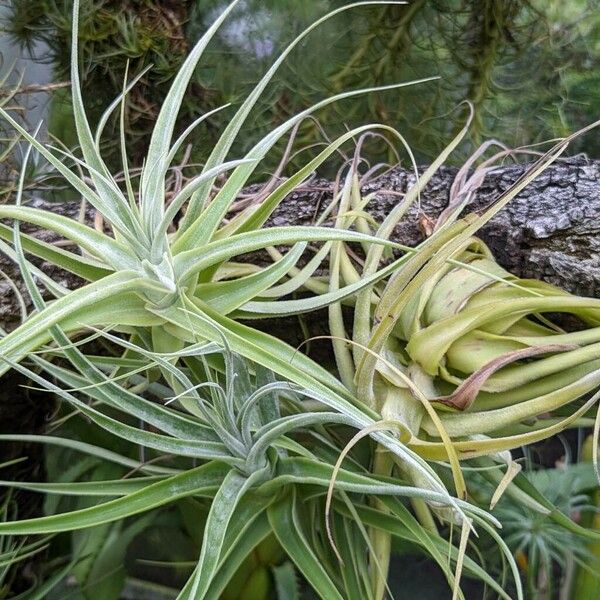
Plant Overview
Often hailed as the "Grand Dame" of the air plant world, Tillandsia straminea is a majestic species that defies the typical small, green image of its relatives. Native to the arid coastal deserts of Peru and Ecuador, this silver-leaved beauty is one of the few air plants prized specifically for its intoxicating fragrance. In its natural habitat, it creates vast, shimmering carpets across the sand or clings to rocky cliffs, surviving on little more than coastal fog and sunlight.
🔍 How to Identify
- 🌬️ Velvet Foliage: The leaves are covered in a thick layer of "trichomes"—tiny silver scales that give the plant a soft, fuzzy texture and a shimmering metallic appearance.
- 📏 Architectural Form: Unlike round, bulbous air plants, this species grows in a "caulescent" (stem-like) fashion, with long, tapering leaves that gracefully arch and curl downward.
- 🌸 Fragrant Blooms: It produces a tall, branched flower spike with delicate white petals edged in lavender. Unlike most Tillandsias, these flowers emit a sweet, spicy scent reminiscent of vanilla or cloves.
🏡 In Your Garden
- ☀️ Sun Seeker: Because of its heavy silver coating, this plant is "xeric," meaning it is adapted for high light. It thrives in bright, indirect sun and can even handle some direct morning rays, which helps it maintain its structural integrity.
- 💨 Airflow is Vital: In the wild, it lives on cliffs where the wind is constant. In your home, it must dry out completely within a few hours of watering. Stagnant, humid air is its only real enemy; it prefers a "high-and-dry" placement rather than a steamy bathroom.
- 💧 Drought Specialist: It is far more forgiving of a missed watering than other air plants. Instead of soaking it for hours, a heavy misting or a very quick dunk is usually sufficient to keep it hydrated.
⚠️ Safety & Toxicity
- ✅ Pet Friendly: This plant is considered non-toxic to cats, dogs, and horses. It is a safe choice for households with curious nibblers.
- 🧤 Handle with Care: While not toxic, the delicate silver trichomes can be rubbed off by frequent handling. To keep the plant healthy and "silver," try to hold it by the base rather than the leaves.
✨ Fun Fact
In the coastal deserts of Peru, Tillandsia straminea doesn't always grow on trees or rocks; it is famous for being "uncensored," meaning it can grow directly on the shifting desert sands, tumbling like a beautiful, living tumbleweed until it finds a place to settle.

Detailed Care Instructions

Place in a window with dappled sun or a spot in the middle of a room. Or directly in a window facing west or east.

The water in these plants is absorbed and evaporated form the leaves. As a result, it is recommended that the leaves be submerged in water once a week or misted on a regular basis. Submerge your plant in water in a sink or holder for 30 minutes. Then gently shake the plant tossing and turning to dry it. Place your plant on a towel for a few hours and let it sit. It will evaporate any excess water. If the plants are kept in indoor conditions, they should be hydrated on a regular basis. It's simple to keep these plants hydrated all the time, but it takes a lot of work. Watering air plants early in the morning allows them to dry out and avoids disturbing their respiration activity at night. Chlorinated water causes the tips of the leaves to brown, so avoid it.
These plants scarcely crave for fertilizers. The choice of fertilizer, on the other hand, is quite important. Misting with right fertilizers will promote blooming. Fertilizers containing urea, zinc, and copper are toxic to plants and should be avoided at all costs. Nitrogen, phosphorus, and potassium should be present in the chosen fertilizer. Once a month, apply either bromeliad fertilizer or a diluted houseplant fertilizer with a 1/4 dilution. Moreover, don't forget to water your plants after the application of fertilizer.
You may use Orchid Food for your Tillandsia Straminea
Common pests of the tillandsia straminea include Mealybugs. Make a habit of checking your tillandsia straminea frequently for pests so that any infestations can be caught and managed early.








