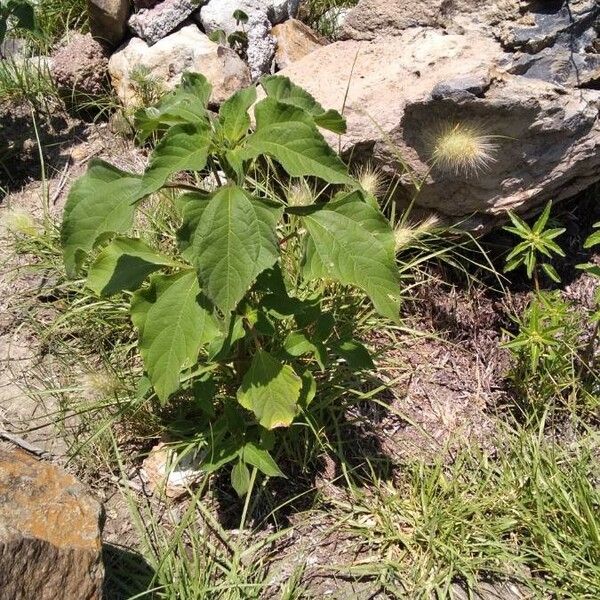
Plant Overview
Known in its native Mexico as "Acahual," this towering annual looks like a wild, rebellious version of the common sunflower. While it lacks the heavy, edible seeds of its famous cousins, its bright golden blooms act as a high-octane refueling station for butterflies and bees. It is a true "pioneer" species, often the first to bring a splash of color to barren roadsides and disturbed lands.
🔍 How to Identify
- 🌼 The Flower: Bright yellow, daisy-like blooms that sit atop long stalks. Unlike the classic sunflower, these are usually smaller (about 2–4 inches across) and more numerous.
- 🎺 The "Trumpet" Stem: Its species name, tubaeformis, refers to the unique shape of the flower stalk, which often swells and becomes hollow and wider just below the flower head.
- 🍃 Textured Foliage: Large, broad leaves that are heart-shaped or triangular. They feel slightly rough or "sandpapery" to the touch due to a coating of fine, stiff hairs.
🏡 In Your Garden
- 🌱 The Green Manure: Gardeners often value this plant less for its looks and more for its "superpowers." It is highly efficient at pulling nutrients like phosphorus from the soil. Many farmers chop it down before it seeds to use as a rich, natural fertilizer.
- ☀️ Sun-Seeker Nuance: This plant is an opportunist. It doesn't just like sun; it demands it. If planted in the shade, it will become "leggy" and may collapse under its own weight, as it can easily reach heights of 6 to 10 feet in a single season.
⚠️ Safety & Toxicity
- ✅ Status: Generally non-toxic and safe to handle.
- 🧤 Skin Sensitivity: The tiny hairs on the stems can cause mild skin irritation or "itchiness" for some people. If you have sensitive skin, it is best to wear gloves when pruning or clearing large patches of Acahual.
- 🐾 Pet Safety: There are no documented cases of severe toxicity for cats or dogs, though the rough texture of the leaves usually discourages pets from snacking on them.
✨ Fun Fact
In some parts of Africa and Mexico, Tithonia tubaeformis is nicknamed "the weed of the sun" because of its ability to thrive in the hottest, poorest soils where other plants would simply wither and die.

Detailed Care Instructions
To grow Tithonia tubaeformis, also known as Mexican Sunflower or Tree Marigold, follow these steps:
- Choose a suitable planting location: Tithonia tubaeformis prefers full sun and well-draining soil. Make sure the chosen spot receives at least 6-8 hours of direct sunlight.
- Prepare the soil: Loosen the soil in the planting area using a garden fork or tiller. Remove any weeds or large rocks. Mix in organic matter such as compost or well-rotted manure to improve soil fertility and drainage.
- Sow the seeds: Plant the Tithonia tubaeformis seeds directly in the garden bed after the last frost of spring. Space the seeds about 1-2 feet apart, as this plant can grow quite large. Alternatively, you can start the seeds indoors about 4-6 weeks before the last frost and transplant them outdoors once the threat of frost has passed.
- Watering: Water the planted seeds thoroughly after sowing and maintain consistent soil moisture throughout the growing season. However, try to avoid overwatering, as excessive moisture can cause root rot. Aim to keep the soil moist, not soggy.
- Fertilization: Tithonia tubaeformis does not require heavy fertilization. However, incorporating compost or a balanced organic fertilizer into the soil before planting can help promote healthy growth. You can also provide a diluted liquid fertilizer every 4-6 weeks during the growing season.
- Mulching: Apply a layer of organic mulch around the plants, such as straw or wood chips. Mulching helps retain moisture, suppress weed growth, and moderate soil temperature.
- Pruning and staking: As Tithonia tubaeformis grows, it may require support from stakes or trellises to prevent it from falling over. Prune the plant selectively to remove any dead or damaged branches, and to maintain shape and overall size.
- Pests and diseases: Tithonia tubaeformis is generally resistant to pests and diseases. However, occasional pest issues like aphids or spider mites may arise. Monitor the plants regularly and use organic insecticides or insecticidal soap if necessary.
- Harvesting: The vibrant orange or yellow flowers of Tithonia tubaeformis can be cut and used as long-lasting cut flowers. Harvest them when the flowers are fully open but before they start to fade.
By following these steps, you can successfully grow and enjoy the beauty of Tithonia tubaeformis in your garden.
Tithonia Tubaeformis is a plant that requires moderate watering. It is recommended to water the plant when the soil is dry to the touch, about once a week. When watering the plant, it is important to avoid getting water on the leaves as this can cause damage. Instead, water the soil around the base of the plant. The plant prefers well-draining soil, so be sure not to overwater it. If the soil is too moist or the plant is watered too frequently, it can lead to root rot. In periods of drought or extreme heat, the plant may require more frequent watering.
To fertilize this plant, apply a balanced fertilizer every four to six weeks during the growing season. Avoid applying too much nitrogen as it can cause the plant to grow too tall and become weak. Water the soil before and after fertilizing to prevent burning the roots.
Tithonia tubaeformis prefers well-draining soil that is rich in organic matter. The soil should be slightly acidic with a pH range between 6.0 to 6.8. It also requires full sunlight and should be planted in an area that receives at least 6 hours of direct sunlight daily. The plant is drought resistant but requires moderate watering. Overwatering should be avoided as it can cause root rot. The soil should also be kept weed-free to prevent competition for nutrients. It is recommended to add a layer of mulch on top of the soil to help retain moisture and prevent weed growth.
To propagate this plant, you will need to collect seeds from a mature plant. Once the seed pods have dried and turned brown, harvest them and remove the seeds. Soak the seeds in warm water for 24 hours before planting them in a seedling tray or directly in the soil. Cover them lightly with soil and keep the soil moist. The seeds will usually germinate within two weeks.
Alternatively, you can propagate this plant using stem cuttings. Take a stem cutting from a mature plant and remove the lower leaves. Dip the cut end in rooting hormone and plant it in a potting mix. Keep the soil moist and place the pot in a warm area with indirect sunlight. The cutting should root within four to six weeks.








