Plant Overview
Known affectionately as the "Piggyback Plant" or "Youth-on-Age," Tolmiea menziesii is a charming woodland native of the Pacific Northwest. It earned its quirky nicknames through its unique habit of growing miniature "pup" plants right on top of its mature leaves, appearing as if the babies are hitching a ride. It is a nostalgic favorite for indoor hanging baskets and shaded garden corners alike.
🔍 How to Identify
- 🍃 Fuzzy Foliage: The leaves are heart-shaped with jagged, serrated edges. They are covered in soft, fine hairs that give the plant a matte, velvety texture.
- 👶 The "Piggyback": Look closely where the leaf blade meets the stem (petiole). You will see tiny, fully-formed plantlets emerging directly from the base of older, larger leaves.
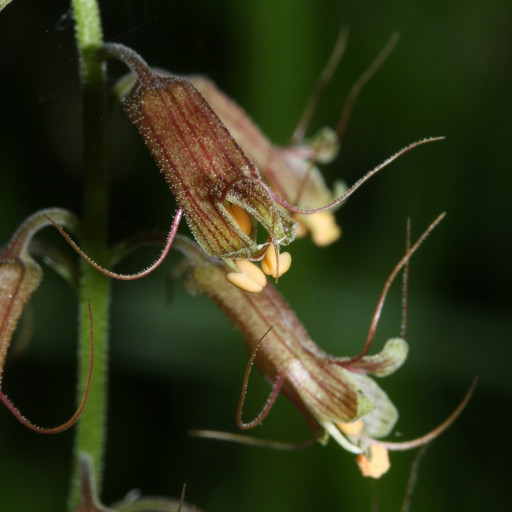
- 🟤 Subtle Blooms: In spring, it sends up tall, thin stalks featuring small, nodding flowers. These blooms are a unique, muted shade of brownish-purple or maroon and are often overlooked in favor of the foliage.
🏡 In Your Garden
- 🌫️ Cool & Damp: Since this plant originates from moist coastal forests, it thrives in high humidity and cool temperatures. It often struggles in dry, centrally-heated homes; if the leaf edges turn crispy and brown, it is likely "shivering" from the dry air.
- ⛰️ Low-Stress Propagation: This is one of the easiest plants to multiply. You don't even need scissors—simply pin a leaf with a "pup" onto some moist soil, and it will root itself while still drawing nutrients from the mother plant.
⚠️ Safety & Toxicity
- 🐾 Pet Friendly: Great news for animal lovers—the Piggyback Plant is considered non-toxic to cats, dogs, and even horses according to the ASPCA.
- 🧤 Sensory Note: While the plant is not poisonous, the tiny bristly hairs on the leaves can occasionally cause mild skin irritation for people with very sensitive skin. It is best to handle it gently if you are prone to contact dermatitis.
✨ Fun Fact
The Piggyback Plant is the only species in its entire genus (Tolmiea), making it a bit of a botanical loner. It was named to honor two legendary 19th-century Scottish botanists who explored the American West: Archibald Menzies and William Fraser Tolmie.

Detailed Care Instructions
| Color | Purple, Purple-Green |
| Soil Ph | Neutral To Acidic |
| Humidity | High |
| Lighting | Part Sun |
| Soil Type | Well-Drained |
| Bloom Time | Spring, Summer |
| Difficulty | Medium |
| Plant Type | Evergreen Perennial |
| Mature Size | 1–2 Ft. Tall, 12–20 In. Wide |
| Native Area | North America |
| Temperature | 12°C - 20°C |
| Sun Exposure | Partial Shade |
| Hardiness Zones | 7-9 |
To grow a Tolmiea menziesii plant, also known as youth on age or piggyback plant, you can follow these steps:
- Obtain a cutting or a small plant: You can either buy a potted Tolmiea menziesii plant from a local nursery or obtain a cutting from an existing plant.
- Choose a suitable location: Tolmiea menziesii plants prefer bright, indirect sunlight. Select a spot in your home or garden that offers filtered sunlight or partial shade.
- Prepare the soil: Ensure the soil is well-draining and rich in organic matter. Use a potting mix that consists of equal parts of peat moss, perlite, and compost.
- Planting: If you have a cutting, remove a few bottom leaves and dip the cut end in rooting hormone powder. Then, plant the cutting about an inch deep into the prepared soil. If you have a potted plant, gently remove it from the pot and transplant it into a larger pot with fresh potting soil.
- Watering: Keep the soil consistently moist, but avoid soggy conditions. Water the plant when the top inch of soil feels dry. Tolmiea menziesii plants appreciate high humidity, so you can mist the leaves occasionally.
- Temperature and humidity: Tolmiea menziesii plants prefer cool to moderate temperatures around 60-75°F (15-24°C). They also benefit from higher humidity. Placing a tray of water near the plant or using a humidifier can increase humidity levels.
- Fertilizing: Feed your Tolmiea menziesii plant with a balanced, water-soluble fertilizer monthly during the growing season (spring and summer). Follow the instructions on the fertilizer package for application rates.
- Pruning: Trim off any dead or brown leaves to maintain the plant's appearance and prevent disease.
- Propagation: Tolmiea menziesii plants can be propagated by division or by taking stem cuttings. Divide overcrowded plants every few years, or take stem cuttings in the spring or summer and follow the same rooting process as mentioned in step 4.
- Pests and diseases: Keep an eye out for common houseplant pests like aphids, mealybugs, and spider mites. Treat any infestations promptly with organic or chemical pest control methods.
With proper care and attention, your Tolmiea menziesii plant should thrive and grow into a beautiful addition to your indoor or outdoor space.

Place in a window with dappled sun or a spot in the middle of a room. Or directly in a window facing west or east.

The best way to water this plant is to ensure that the soil is moist but not waterlogged. You can achieve this by watering it thoroughly when the top inch of soil feels dry to the touch. Be sure to avoid getting water on the leaves, as this can lead to fungal diseases. Additionally, it's important to provide good drainage, either by planting in a pot with drainage holes or ensuring that the soil in the garden has good drainage. Finally, it's important not to let this plant dry out completely or sit in standing water for extended periods of time.
To fertilize this type of plant, use a well-balanced fertilizer once every three months. Avoid over-fertilizing, as this can cause damage to the plant. Apply the fertilizer according to the instructions on the packaging, and be sure to water the plant well before and after fertilizing.
Tolmiea Menziesii plant prefers a well-draining soil that is rich in organic matter. The soil should have a slightly acidic to neutral pH level and should be kept consistently moist but not waterlogged. It is recommended to use a soil mix that consists of peat moss, perlite or vermiculite, and coarse sand or gritty material to ensure good drainage. The addition of a slow-release fertilizer can also benefit the growth of the plant. It is important to avoid using heavy, clay soils or soils that contain high levels of salt, as this can be harmful to the plant's health.
This plant can be propagated by taking stem cuttings in the summer months. Take a cutting that has at least two nodes and remove the leaves from the bottom half of the stem. Dip the cut end in rooting hormone and plant in a well-draining mix of soil and perlite. Keep the soil moist and the cutting in a shaded area until roots develop. Once roots have developed, the new plant can be transferred to a larger pot or planted in the ground.
Common pests of the piggyback plant include Mealybugs, spider mites, aphids. Make a habit of checking your piggyback plant frequently for pests so that any infestations can be caught and managed early.








