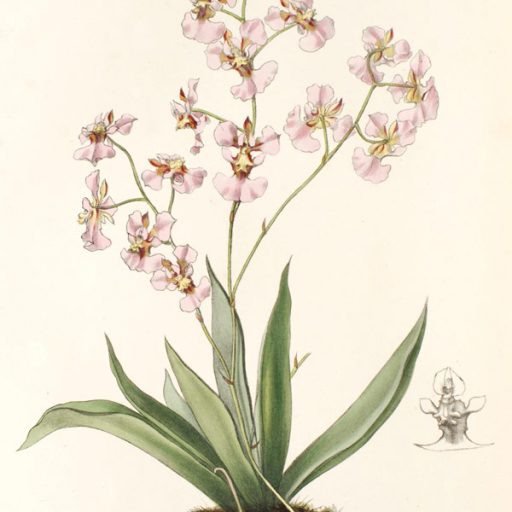
Plant Overview
Known as the "Dancing Lady Orchid" or "Equitant Oncidium," Tolumnia variegata is a miniature marvel that feels like a tropical breeze in a tiny package. Native to the sun-drenched islands of the Caribbean, these orchids are prized by collectors for their doll-sized proportions and prolific, ruffled blooms. Unlike most orchids that cling to large tree trunks, these "twig epiphytes" prefer the outer branches of bushes, swaying freely in the coastal wind.
🔍 How to Identify
- 🍃 Fan-Shaped Growth: The leaves are thick, succulent, and arranged in a distinctive overlapping "V" shape, resembling a miniature green folding fan.
- 🌸 Ornate Blooms: The flowers are small but incredibly detailed, featuring a large, ruffled "lip" that makes each blossom look like a tiny dancer wearing a wide, flamboyant skirt.
- 📏 Petite Stature: These are true miniatures; the entire plant rarely exceeds a few inches in height, even when in full bloom, making them perfect for small spaces.
🏡 In Your Garden
- 🌬️ Air Enthusiasts: In the wild, these plants live on thin twigs with their roots exposed. They absolutely hate "wet feet." In a home setting, they thrive best when mounted on cork bark or tucked into very coarse lava rock rather than traditional potting soil.
- 💧 The "Wet-Dry" Rhythm: They love a morning "rain" (misting) but must be bone-dry by nightfall. If water sits in the center of the leaf fan overnight, the plant can succumb to rot very quickly.
- ☀️ Light Seekers: They enjoy much brighter light than your average orchid. A slight reddish or purple tint on the leaves is a good sign—it’s the plant's version of a healthy "sun tan."
⚠️ Safety & Toxicity
- ✅ Pet Safe: Tolumnia variegata is generally considered non-toxic to cats, dogs, and horses.
- 👶 Family Friendly: These plants lack thorns or irritating saps, making them safe for household display, though their delicate fans are easily damaged by curious little fingers.
✨ Fun Fact
🐝 The Great Bamboozle: Tolumnia orchids are masters of "food deception." Their bright colors and intricate shapes trick bees into thinking they are full of sweet nectar. The bees visit and pollinate the flower, but they leave empty-handed because the orchid actually produces no nectar at all!

Detailed Care Instructions
To grow Tolumnia Variegata plants successfully, follow these steps:
- Light: These plants prefer bright, indirect light. Place them near a window that receives filtered sunlight for at least 4-6 hours a day. Avoid direct sunlight as it can scorch the leaves.
- Temperature: Tolumnia Variegata plants thrive in average to warm temperatures between 65-85°F (18-29°C). Be cautious of drafts and temperature fluctuations.
- Humidity: These plants prefer higher humidity levels. You can increase humidity by placing a tray of water near the plant or using a humidifier. Alternatively, misting the leaves occasionally can also help.
- Watering: Provide regular watering, keeping the potting mix consistently moist but not waterlogged. During active growth, water more frequently, and reduce watering during dormant periods. Ensure proper drainage by using a well-draining potting mix.
- Fertilizing: Feed your Tolumnia Variegata plant with a balanced orchid fertilizer diluted to half strength every 2-3 weeks during the active growing season. Reduce or avoid fertilizing during dormancy.
- Repotting: These plants prefer to be slightly root-bound, so repot only when necessary, typically every 1-2 years. Use a well-draining orchid-specific potting mix. Repotting should be done after the blooming period.
- Blooming: Tolumnia Variegata plants produce small, colorful flowers on upright stems. The blooming period usually occurs in spring or summer. Provide the necessary conditions of light, temperature, and humidity to encourage flowering.
- Pests and Diseases: Monitor your plant for pests like aphids or spider mites. Regularly inspect the leaves and treat any infestations promptly using insecticidal soap or other appropriate treatments. Prevent overwatering to avoid root rot.
Remember to observe and adjust your care routine based on the specific needs of your Tolumnia Variegata plant.
To water this plant, first check the moisture level of the potting mix by sticking your finger about an inch deep into the soil. If it feels dry to the touch, then it is time to water. Use room temperature or slightly warm water and pour it slowly and evenly over the potting mix until it begins to drain out the bottom of the container. Avoid getting water on the leaves as this can lead to fungal diseases. Allow the potting mix to dry slightly between waterings, but do not let it become bone dry. Water more frequently during the plant's active growing season and less during its dormant period.
To fertilize this plant, use a balanced fertilizer with equal parts nitrogen, phosphorus, and potassium. Mix the fertilizer with water at a rate of 1 teaspoon per gallon of water. Apply the fertilizer solution to the soil once every 2-3 weeks during the growing season (spring and summer). Be sure to water the plant thoroughly before and after fertilizing to avoid burning the roots. During the dormant season (fall and winter), fertilize the plant less frequently or not at all.
Tolumnia Variegata plant prefers well-draining soil that is rich in organic matter. It's important to use a soil mix that is suitable for epiphytic orchids, as Tolumnia Variegata can grow as an epiphyte on tree bark in its native habitat. A suitable soil mix can include medium to coarse bark chips, perlite, sphagnum moss, and charcoal. The soil mix should be porous and allow air circulation around the roots to prevent root rot. It's important not to overwater Tolumnia Variegata plant as it has small roots and cannot tolerate standing water. The soil should be allowed to dry out slightly between waterings.
To propagate this plant, select a healthy and mature specimen with at least two pseudobulbs. Remove the plant from its pot and gently separate the pseudobulbs. Cut off any damaged or decaying roots and allow the cut ends to dry for a few hours. Next, fill a small pot with well-draining orchid mix and place one or two pseudobulbs in the pot, keeping them upright and just below the surface of the mix. Water the newly planted pseudobulbs and keep the soil consistently moist but not waterlogged. Place the pot in a warm and humid area with bright, indirect light. The new plants should root and produce new growth within a few weeks to a few months.








