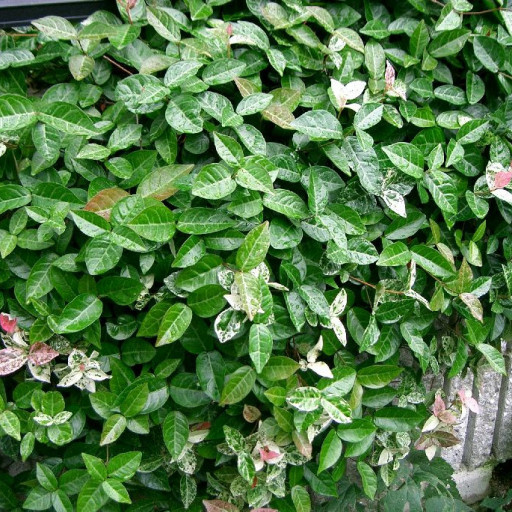
Plant Overview
Often called the Asiatic Jasmine, this plant is the ultimate problem-solver for gardeners looking for a lush, evergreen carpet. Originating from the rocky slopes and forests of Japan and Korea, it is prized for its incredible resilience and its tiny, star-shaped flowers that release an intoxicating, sweet fragrance. While it looks like a delicate vine, it is one of the toughest groundcovers you can invite into your yard, capable of transforming a barren patch of soil into a sea of glossy green.
🔍 How to Identify
- 🍃 The Foliage: Look for small, leathery, oval-shaped leaves that grow in opposite pairs. They are typically a deep, glossy green, though some ornamental varieties feature splashes of white, pink, or gold.
- 🌸 The Blooms: It produces delicate, pinwheel-shaped flowers that transition from creamy white to a soft, buttery yellow. These usually appear in late spring or early summer.
- 🌿 Growth Habit: This is a sprawling, woody vine. Without a trellis, it will knit itself together into a dense, matted groundcover that can grow up to 2 feet tall; with support, it will eagerly climb fences or walls.
🏡 In Your Garden
- 🌱 The "Sleep, Creep, Leap" Rule: Don’t be discouraged if it seems slow at first! This plant follows a famous growth cycle: it "sleeps" (establishes roots) the first year, "creeps" the second, and "leaps" (covers everything) by the third.
- ☀️ Versatile Lighting: While it is famously shade-tolerant—making it perfect for under-tree planting—you will get significantly more flowers and a denser "carpet" effect if it receives at least a few hours of dappled sunlight.
- ✂️ Tough Love: To keep it looking like a manicured lawn rather than a wild thicket, it benefits from being sheared back with a weed-whacker or mower once a year in early spring. This encourages fresh, vibrant new growth.
⚠️ Safety & Toxicity
- 🧤 Sap Warning: When stems are broken, the plant leaks a milky white latex sap. This can cause mild skin irritation or contact dermatitis for some people, so wearing gloves while pruning is recommended.
- 🐶 Pet Safety: While generally considered low-toxicity, ingesting large amounts of the leaves or sap can cause stomach upset in curious dogs or cats. It’s best used as a border where pets aren't tempted to snack.
✨ Fun Fact
Despite its common name, Asiatic Jasmine isn't a "true" jasmine (from the genus Jasminum). It actually belongs to the Apocynaceae family, making it a distant relative of the Common Periwinkle and even the exotic Plumeria!

Detailed Care Instructions
These are two different plant species that look similar when small. Once they grow, they are quite different though. Confederate jasmine has larger leaves, it grows upright as a vine and a major selling point are its fragrant flowers. Asiatic jasmine is primarily a ground cover that spreads vertically; the flowers are secondary or non-existent.
Does Asiatic jasmine attract snakes?
The plant itself does not attract snakes but because it has such a dense thick growth habit close to the ground, it provides shelter for rodents, birds, lizards, or other foods that snakes like to go after.
Can you walk on Asiatic jasmine?
Although it is a tough ground cover, it is not suitable for high-traffic areas.
| Color | Yellow |
| Soil Ph | Acidic To Neutral (5.5 To 7.0) |
| Humidity | Normal |
| Lighting | Part Sun |
| Soil Type | Well-Drained |
| Bloom Time | Spring, Summer |
| Difficulty | Medium |
| Plant Type | Perennial Vine |
| Hibernation | Cold Period |
| Mature Size | Perennial Vine |
| Native Area | Japan, Korea |
| Sun Exposure | Full, Partial |
| Hardiness Zones | 7-9 |
To grow Trachelospermum asiaticum, also known as Asiatic jasmine or Confederate jasmine, follow these steps:
- Choose the right location: Trachelospermum asiaticum prefers full sun to partial shade. Select a spot in your garden that receives at least 6 hours of direct sunlight each day. Ensure the soil is well-draining.
- Prepare the soil: Loosen the soil and remove any weeds or debris. Incorporate organic matter, such as compost or well-rotted manure, to improve soil fertility and drainage.
- Planting: Dig a hole that is slightly larger than the root ball of the plant. Place the plant into the hole, ensuring that the top of the root ball is level with or slightly higher than the surrounding ground. Backfill the hole with soil, firming it gently around the plant.
- Watering: Water the plant thoroughly after planting to settle the soil and provide moisture to the roots. Trachelospermum asiaticum needs regular watering, especially during the establishment period. Water deeply but infrequently, allowing the soil to dry out slightly between waterings.
- Mulching: Apply a layer of organic mulch, such as wood chips or bark, around the base of the plant. Mulch helps to retain soil moisture, suppress weeds, and regulate soil temperature.
- Pruning: Trachelospermum asiaticum can be lightly pruned to maintain its shape or to control its growth. Prune after flowering to remove any dead, damaged, or overgrown branches. Regular pruning also helps to encourage denser growth and stimulate flower production.
- Fertilizing: Feed the plant with a balanced slow-release fertilizer in spring and again in midsummer. Follow the manufacturer's instructions for application rates and timing.
- Pests and diseases: Monitor the plant regularly for signs of pests, such as aphids or mealybugs, and apply appropriate control methods if necessary. It is generally resistant to many diseases but may be susceptible to root rot if the soil is excessively wet.
With proper care and maintenance, Trachelospermum asiaticum can grow into a beautiful and fragrant addition to your garden or landscape.

Place in a window with dappled sun or a spot in the middle of a room. Or directly in a window facing west or east.

When watering this plant, it is important to avoid wetting the leaves as this can lead to fungal growth. Instead, water the soil around the base of the plant, making sure to provide enough moisture for the roots. The frequency of watering will depend on various factors such as the climate, soil type, and size of the plant, so it is important to check the moisture level of the soil regularly. Water deeply but avoid overwatering, as this can lead to root rot. During dry spells, it may be necessary to water more frequently to keep the plant healthy.
To fertilize this plant, use a balanced fertilizer with equal amounts of nitrogen, phosphorus, and potassium. Apply the fertilizer in early spring before new growth appears and again in mid-summer. Follow the instructions on the fertilizer package for the correct amount to use based on the size of your plant. Water the plant thoroughly after applying the fertilizer. Avoid over-fertilizing as it can cause damage to the plant.
Trachelospermum Asiaticum prefers to grow well-drained, nutritious soil that is evenly moist but not too wet. It thrives in fertile loam soil that is slightly acidic, with a pH range of 5.5 to 7.0. The soil should be rich in organic matter and have good drainage to prevent waterlogging or root rot. It also benefits from the addition of organic compost or mulch to help retain moisture and nutrients. Heavy clay soil should be amended with sand and organic matter to improve drainage and aeration. Avoid using soils that are too sandy or too heavy in clay as it can cause damage to the plant roots.
To propagate this plant, first select a healthy mother plant with vigorous, disease-free stems. Then, take stem cuttings that measure around 4-6 inches in length, making sure that each cutting has at least three nodes. Remove any leaves from the bottom half of the cutting.
Prepare a rooting hormone solution and dip the cuttings in it, then plant them in a well-draining potting mix. Water the cuttings thoroughly, then cover the pot with a plastic bag to create a humid environment. Place the pot in a bright, but indirect light location.
Check the cuttings after a few weeks to see if roots have formed. Once they have, remove the plastic bag and gradually expose the new plants to normal air humidity. After a few more weeks, transplant the new plants into larger pots or into the ground.
Common pests of the asiatic jasmine include Scale insect, mealybugs, spider mites, aphids. Make a habit of checking your asiatic jasmine frequently for pests so that any infestations can be caught and managed early.








