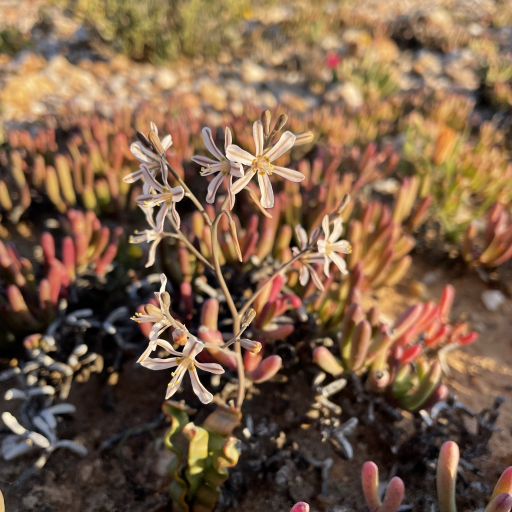
Plant Overview
Often looking like a handful of discarded green ribbons or a head of unruly curls, Trachyandra tortilis is a botanical masterpiece from the arid regions of South Africa. Collectors often call it the "Ribbon Plant" or the "Corkscrew Succulent," though it is frequently confused with its cousin, the Albuca spiralis. It is a slow-growing, perennial bulb that looks more like a piece of modern art than a living organism.
🔍 How to Identify
- 🌀 The Foliage: The most striking feature is its long, flat, ribbon-like leaves that twist into tight, vertical corkscrew spirals or "Z" shapes.
- 🌸 The Bloom: During its growing season, it sends up a branched flower stalk featuring delicate, star-shaped white or pale pink flowers, each marked with a fine, dark longitudinal stripe.
- 🥔 The Base: Beneath the soil line, the plant originates from a fleshy, tuberous rhizome that serves as its primary water storage unit during droughts.
🏡 In Your Garden
- ❄️ The Winter Cycle: This is a "winter-grower." It wakes up and produces its dramatic curls when temperatures drop and goes into a deep sleep (dormancy) during the hot summer months.
- ☀️ Light and Tight: The intensity of the leaf curls is directly related to light. To maintain those signature spirals, it needs very bright light; in low-light conditions, the leaves will "relax" and become straight and lanky.
- 💧 Dormancy Discipline: The biggest challenge for hobbyists is resisting the urge to water during summer. Because it is dormant, excess moisture in the heat will cause the bulb to rot almost instantly.
⚠️ Safety & Toxicity
- 🟢 General Status: Trachyandra tortilis is generally considered non-toxic and safe for households.
- 🐱 Pet Caution: While not known to be poisonous, the tough, fibrous texture of the leaves can cause mild stomach upset if ingested by cats or dogs. It is always best to keep "sculptural" plants out of reach of curious nibblers.
✨ Fun Fact
The spiral shape of the leaves is a brilliant survival adaptation! In the wild, these coils help the plant trap moisture from coastal fogs and create "self-shading" pockets that protect the plant's surface from the scorching desert sun.

Detailed Care Instructions
| Humidity | Normal |
| Difficulty | Medium |
| Temperature | 20°C - 30°C |
| Hardiness Zones | 8 - 11 |
To grow Trachyandra Tortilis plants, follow these steps:
- Propagation: You can propagate Trachyandra Tortilis plants through seeds or cuttings. Seeds can be sown in seed trays filled with well-draining soil, and cuttings can be taken from the mother plant by carefully removing a section of the stem with a sharp, sterilized knife.
- Soil: Trachyandra Tortilis plants prefer well-draining soil with a high organic content. Use a mix of peat moss, sand, and perlite or vermiculite to achieve the right soil composition.
- Planting: Whether using seeds or cuttings, plant them at a depth of around 1 inch (2.5 cm) in the soil. Water lightly after planting to settle the soil.
- Light requirements: Trachyandra Tortilis plants thrive in bright, indirect light. Place them near a sunny window that receives partial sunlight throughout the day. Avoid exposing them to direct sunlight as it can scorch the leaves.
- Temperature and humidity: The ideal temperature range for Trachyandra Tortilis plants is between 60-75°F (15-24°C). They can tolerate slightly lower temperatures but are sensitive to frost. These plants prefer average room humidity, but they can tolerate lower humidity levels as well.
- Watering: Water your Trachyandra Tortilis plant thoroughly when the top inch (2.5 cm) of soil feels dry. Allow excess water to drain away, as the plants do not like sitting in waterlogged soil. During the dormant period (winter), reduce watering.
- Fertilizer: Feed your Trachyandra Tortilis plant with a balanced liquid fertilizer diluted to half strength during the growing season (spring and summer). Reduce or cease fertilization during the dormant period.
- Pruning: Prune any dead or diseased leaves from the plant to maintain its appearance and encourage healthier growth.
- Repotting: Trachyandra Tortilis plants have a slow growth rate and do not require frequent repotting. However, if the plant outgrows its current container, you can repot it into a slightly larger pot with fresh soil.
By following these guidelines, you can successfully grow and care for a Trachyandra Tortilis plant.

Place in a window with dappled sun or a spot in the middle of a room. Or directly in a window facing west or east.

To water this plant, ensure that the soil in the container is dry to the touch before watering. Once the soil has dried out, water the plant thoroughly until water runs out from the drainage holes. Allow the excess water to drain away completely before placing the plant back into its desired location. It is recommended to water the plant once a week. However, the frequency of watering may vary depending on the environmental conditions and the size of the container.
To fertilize the Trachyandra Tortilis plant, follow these instructions:
- Choose a balanced, water-soluble fertilizer suitable for indoor plants. Look for one with a recommended N-P-K ratio (nitrogen, phosphorous, and potassium) of around 10-10-10 or similar.
- Dilute the fertilizer according to the instructions provided on the packaging. Generally, a concentration of half or quarter strength is sufficient for most indoor plants.
- Water the Trachyandra Tortilis plant thoroughly before applying the fertilizer. This helps prevent root burn and ensures even distribution of the nutrients.
- Pour the diluted fertilizer solution onto the soil around the base of the plant. Avoid getting it on the leaves to prevent burning or damaging them.
- Repeat the fertilization process every 4-6 weeks during the growing season, which typically occurs from spring through summer. However, reduce or stop fertilizing during the dormant period (usually autumn and winter).
- Monitor the plant's response to the fertilizer. If you notice any signs of over-fertilization, such as leaf burn or stunted growth, flush the soil thoroughly with water to remove excess nutrients.
Remember to always read and follow the specific instructions provided by the manufacturer for the fertilizer you choose, as different products may have varying application rates and frequency.
Trachyandra Tortilis plant prefers a well-draining soil that is rich in nutrients and able to hold moisture without becoming too waterlogged. A combination of sandy loam, perlite, and peat moss can create an ideal growing medium for this plant. It is important to avoid using heavy soils that could become compacted and inhibit root growth. Additionally, a soil pH between 6.0 and 7.5 is optimal for Trachyandra Tortilis. Adding organic matter such as compost or worm castings can improve soil fertility and promote healthy root development. When transplanting this plant, it is advisable to gently loosen the roots and ensure that the soil is evenly distributed around the base of the plant.
Trachyandra Tortilis is a unique and visually distinctive plant that can be propagated through different methods, including division, leaf cuttings, and offsets. Here is a detailed description of how you can propagate this plant:
- Division: This method involves separating the plant into smaller sections, each with its own roots and foliage. Start by carefully removing the plant from its pot or the ground. Gently shake off excess soil to expose the root system. Look for natural divisions or clusters of leaves that can be separated. Use a clean and sharp knife or garden shears to cut through the plant's underground rhizomes. Make sure each division has a sufficient number of leaves and a healthy root system. Plant the divisions in individual pots with well-draining soil, keeping the same soil depth as before. Water lightly and place the pots in a location with bright, indirect light. Maintain warm and humid conditions until new growth appears.
- Leaf Cuttings: Select a healthy and mature leaf from the plant. Using a clean pair of scissors or a sharp knife, cut the leaf into sections, ensuring that each piece is about 3-4 inches long. Dip the cut ends in a rooting hormone powder that promotes rooting and helps prevent diseases. Prepare a tray or small pots filled with a well-draining, sterile potting mix. Insert the leaf cuttings into the soil, burying about half of their length. Position the cuttings in a bright but indirect light area, ensuring they receive warmth and consistent moisture. Mist the cuttings regularly to maintain humidity levels. After some time, new plantlets will emerge from the base of the leaf, indicating successful rooting. Wait until the plantlets grow to a reasonable size before transplanting them into individual pots.
- Offsets: Trachyandra Tortilis occasionally produces small offsets or plantlets around its base, which can be separated and grown into new plants. Gently remove the plant from its container or the ground, taking care not to damage the root system. Examine the base of the plant for any offsets that have formed. Use your hands or a small knife to gently separate the offsets from the parent plant, keeping some roots attached to each offset. Plant the offsets in small, well-draining pots filled with suitable potting mix. Press the soil gently around the roots to ensure good contact. Place the pots in a location with bright, indirect light and maintain warm and humid conditions. Water the offsets sparingly and avoid overwatering until they establish themselves and show signs of new growth.
Remember to provide proper care, including regular watering, appropriate light levels, and suitable drainage, after propagating Trachyandra Tortilis. Patience and consistent care will help these propagated plants thrive and develop into mature and visually stunning specimens.
Common pests of the contorted capespinach include Mealybugs, spider mites. Make a habit of checking your contorted capespinach frequently for pests so that any infestations can be caught and managed early.








