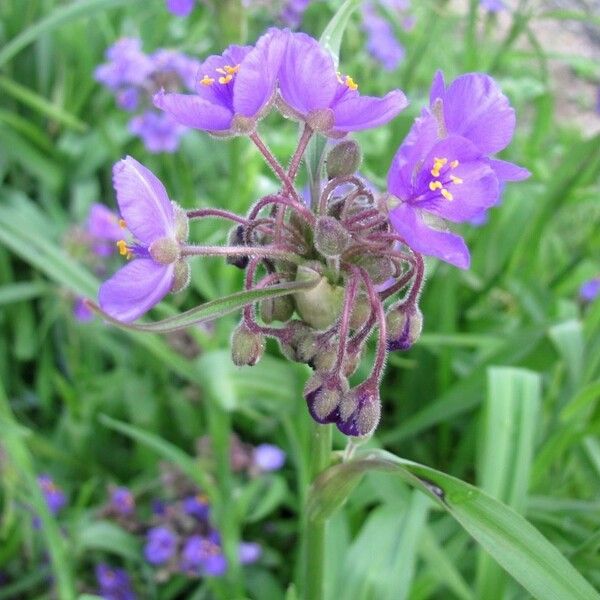
Plant Overview
Known as the Giant Spiderwort, this Texas native is the brawny, oversized cousin of the common garden Tradescantia. It is a hardy perennial that brings a touch of the wild prairie into the backyard, standing taller and more robust than its delicate relatives. In folklore, spiderworts were often called "Widow’s Tears" because their flowers "weep" into a jelly-like fluid once they finish blooming for the day.
🔍 How to Identify
- 🌿 The Foliage: Unlike smaller varieties, Tradescantia gigantea features thick, succulent-like stems and long, arching leaves that can reach over a foot in length. The leaves are often a soft, glaucous green with a slightly fuzzy texture.
- 🌸 The Bloom: It produces clusters of three-petaled flowers that range from deep violet and electric blue to occasional shades of rose or white. Each flower lasts only a single day, opening in the morning and closing by the afternoon heat.
- 💧 The Sap: If a stem is broken, it secretes a clear, sticky, mucilaginous sap that is thick and stringy—resembling a spider's web, which is one theory behind its common name.
🏡 In Your Garden
- 🌱 Native Resilience: Because it originates from the rocky woods and prairies of the South-Central United States, this plant is exceptionally tough. It thrives in limestone-rich soils and is much more drought-tolerant than the tropical Tradescantias found in indoor hanging baskets.
- ✂️ The Mid-Summer Haircut: After the main flowering flush in late spring, the plant can look a bit "leggy" or tired. Cutting it back nearly to the ground will encourage a fresh flush of foliage and potentially a second round of blooms when the weather cools.
- 🐝 Pollinator Magnet: It is a vital early-season resource for bumblebees and other native pollinators who are attracted to the prominent, yellow-tipped stamens that contrast sharply against the colorful petals.
⚠️ Safety & Toxicity
- 🐾 Mildly Toxic: While not considered deadly, the sap contains calcium oxalate crystals. If ingested by curious cats or dogs, it can cause mouth irritation and drooling.
- 🧤 Skin Irritation: Some gardeners experience "contact dermatitis" (a red, itchy rash) when handling the plant without gloves. It is best to wear protection when pruning large clumps to avoid the sticky sap.
✨ Fun Fact
The flowers of the Tradescantia genus are so sensitive to environmental changes that their stamen hairs change color (from blue to pink) in the presence of ionizing radiation and chemical pollutants, leading scientists to use them as a "living bioassay" to monitor air quality!

Detailed Care Instructions
To successfully grow Tradescantia Gigantea (also known as giant spiderwort) plants, consider the following steps:
- Select an appropriate location: Tradescantia Gigantea is a versatile plant that can tolerate different light conditions. However, it thrives in bright, indirect light. Choose a location with filtered sunlight or partial shade.
- Prepare the soil: This plant prefers well-draining soil. Amend the ground or potting mix with organic matter, such as compost or peat moss, to improve drainage and promote healthy root growth.
- Watering: Keep the soil consistently moist but not waterlogged. Water the plant regularly, allowing the soil to dry out slightly between waterings. Watering requirements may vary depending on the specific conditions, so monitor the moisture levels regularly.
- Temperature and humidity: Tradescantia Gigantea prefers average to warm temperatures between 60-80°F (16-27°C). It appreciates moderate humidity levels. If the air is too dry, provide humidity by misting the leaves or placing a tray of water near the plant.
- Fertilization: Apply a balanced, water-soluble fertilizer monthly during the growing season (spring and summer). Follow the package instructions for the application rate.
- Pruning and propagation: Trim back any leggy or overgrown stems to maintain a bushier appearance. Tradescantia Gigantea can be propagated by stem cuttings. Simply cut a healthy stem below a node (where the leaves emerge), remove lower leaves, and place the cutting in water or a well-draining soil mix until roots form.
- Pests and diseases: Spider mites may be a common pest for Tradescantia Gigantea. Inspect the plant regularly for any signs of infestation or unusual spots, discoloration, or leaf damage. If necessary, treat pest issues promptly with an appropriate insecticidal soap or spray.
Remember to regularly monitor your Tradescantia Gigantea plant for any signs of stress or health issues. With good care, it should thrive and grow into a beautiful and vibrant indoor or outdoor plant.

Place in a window with dappled sun or a spot in the middle of a room. Or directly in a window facing west or east.

To properly water this plant, it is important to keep the soil consistently moist but not overly saturated. To achieve this, it is recommended to water deeply whenever the top 1-2 inches of soil feel dry to the touch. When watering, make sure to direct the water towards the base of the plant and avoid getting too much water on the leaves to prevent the possibility of fungal diseases. It is also important to ensure proper drainage by either using a pot with drainage holes or adding gravel to the bottom of the planter to prevent water from pooling.
To fertilize this plant, use a balanced fertilizer with equal amounts of nitrogen, phosphorous, and potassium. Feed the plant every two weeks during the growing seasons and reduce fertilization during the dormant phase. Dilute the fertilizer to half-strength to avoid over-fertilization. Ensure that the plant is watered well before applying the fertilizer, and avoid applying the fertilizer to dried soil. Apply the fertilizer to the soil, not to the leaves or stem. Follow instructions on the label for proper dosage and application.
The soil to use with this plant should be well-draining and composed of a mixture of organic matter and mineral components. It should be slightly acidic in pH, with a range of around 6.0-6.5. The soil should not be too heavy or compact, as this can impede root growth and result in over-watering. A recommended soil mix for this plant could include a combination of peat moss, perlite, and sphagnum moss. It is important to avoid soils with high levels of nutrients, as this can lead to excessive growth and reduce the lifespan of the plant. Additionally, regular fertilization should be avoided, as this plant is relatively low-maintenance and can thrive in nutrient-poor conditions.
To propagate this plant, first identify healthy stems with at least 2-3 nodes and cut them using clean, sharp pruning shears. Remove any leaves from the lower nodes of the stem to expose the bare stem. Dip the cut end of the stem into a rooting hormone powder and plant it in a pot filled with well-draining soil mix. Water the cutting thoroughly and place it in a bright, indirect light spot. Keep the soil consistently moist and mist the cutting regularly to increase humidity. After a few weeks, check for new growth to confirm that the cutting has rooted. Once rooted, gradually acclimate the new plant to its new environment by reducing the humidity and increasing the amount of light it receives.








