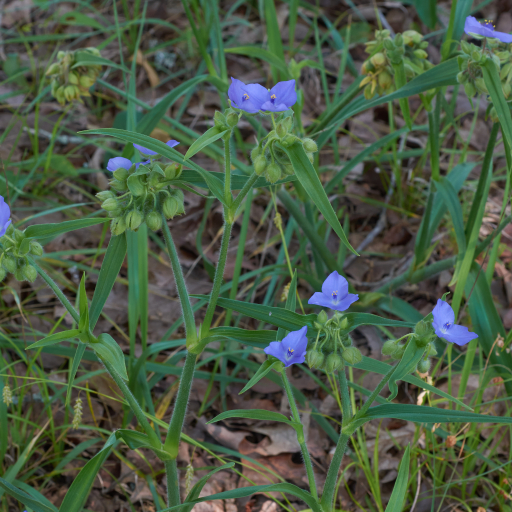
Plant Overview
Known as the Hairy-flowered Spiderwort, this resilient perennial is the rugged, outdoorsy cousin of the common garden Tradescantia. Native to the south-central United States, it is a master of the woodland edge, often surprising hikers with brilliant violet blooms that emerge from fuzzy, dew-kissed buds. It’s a favorite for those who want the beauty of a wildflower with the "tough-as-nails" attitude of a prairie plant.
🔍 How to Identify
- 🌸 The Bloom: Each flower features three delicate, triangular petals, typically in shades of deep cornflower blue or vibrant purple, accented by fuzzy yellow stamens.
- 🧶 The "Hirsute" Stems: True to its name, the flower stalks and sepals (the little leaves behind the flower) are covered in fine, soft hairs that help protect the plant from drying out.
- 🌿 The Foliage: Long, arching, blade-like leaves that wrap around the stem, creating a lush, grassy clump that stands about 1 to 2 feet tall.
🏡 In Your Garden
- 🍂 Shade Tolerance: Unlike many flowering plants that demand full sun, this spiderwort thrives in dappled light or morning sun, making it a perfect solution for brightening up the dark corners of your yard.
- ✂️ Post-Bloom Refresh: After the main flowering period in spring, the plant can look a bit "melted" or messy. Cutting it back to the ground will often stimulate a second flush of fresh, green foliage for the autumn.
⚠️ Safety & Toxicity
- 🧴 Skin Irritation: The sap contains microscopic calcium oxalate crystals. While not deadly, it can cause "Tradescantia dermatitis"—a red, itchy rash—if the sap gets on your skin during pruning.
- 🐾 Pet Safety: It is generally considered non-toxic to most pets, but the sap can cause mild stomach upset or mouth irritation if chewed. It’s best kept out of reach of curious nibblers.
✨ Fun Fact
The name "Spiderwort" is steeped in history; some say the sap, when pulled apart, hardens into thin, silky threads resembling a spider's web, while others believe the plant was once used as a folk remedy for spider bites!

Detailed Care Instructions
To grow Tradescantia hirsutiflora, also known as the "Hairy Wandering Jew," follow these steps:
- Choose a suitable location: Tradescantia hirsutiflora prefers bright, indirect sunlight but can tolerate low light conditions. Select a spot with moderate temperatures, ideally between 60-85°F (15-30°C).
- Select the right soil: Use well-draining soil. You can create a suitable mix by combining equal parts potting soil, perlite, and peat moss.
- Watering: Water the plant when the top inch of soil feels dry. Avoid overwatering, as it can lead to root rot. It's better to underwater than to overwater with this plant.
- Fertilization: Apply a balanced, water-soluble fertilizer once a month during the growing season (spring and summer). Follow the instructions on the fertilizer packaging for the correct dosage.
- Propagation: Tradescantia hirsutiflora can be propagated through stem cuttings. Cut a 4-6 inch (10-15 cm) section of a healthy stem just below a leaf node. Remove the lower leaves and place the cutting in water or plant directly into moist soil. It should develop roots within a few weeks.
- Pruning: Trim back leggy or overgrown stems to promote fullness and encourage branching. Pinching off the tips can also help maintain a compact shape.
- Pests: Monitor the plant for common pests like spider mites, aphids, or mealybugs. If an infestation occurs, gently wipe the leaves with a mild soap or insecticidal soap solution.
- Transplanting: As the plant grows, you may need to repot it into a larger container. Choose a pot with drainage holes, and avoid a pot that is significantly larger than the plant's root ball.
By following these tips, you should be able to successfully grow and care for Tradescantia hirsutiflora.

Place in a bright room that is sun drenched almost all day. Or directly in a south-facing window.

To water this plant, you should first check the soil moisture level by sticking your finger about one inch deep into the soil. If it feels dry, it's time to water. Use a watering can or a hose with a nozzle to gently water the soil around the plant, avoiding getting water on the leaves. Water should be applied slowly and evenly, allowing the soil to absorb it and preventing water from puddling on the surface. You should water this plant regularly, but be careful not to overwater as it can cause root rot. The frequency of watering will depend on various factors such as the size of the pot, the type of soil, and the prevailing weather conditions. However, as a rule of thumb, this plant requires about one inch of water per week, either from rain or watering.
- Choose a balanced fertilizer with equal amounts of nitrogen, phosphorus, and potassium.
- Mix the fertilizer with water according to the instructions on the package.
- Water the plant with the fertilizer solution, making sure to saturate the soil.
- Repeat the fertilizing process every two to four weeks during the growing season (spring and summer).
- Reduce fertilizing frequency during the fall and winter months to avoid over-fertilization.
- Monitor the plant for signs of over-fertilization, such as brown leaf tips, and adjust fertilizing accordingly.
The ideal soil for the plant should be well-draining, fertile, and slightly acidic with a pH level between 5.0 to 6.0. A soil mix that contains a combination of peat moss, perlite, and sand will provide the necessary drainage and nutrient-rich environment for the plant to thrive. It is also important to ensure that the soil is moist but not waterlogged, as this can lead to root rot. Incorporating organic matter into the soil, such as compost or worm castings, can also benefit the plant's growth and overall health.
One method of propagating this plant is by taking stem cuttings. First, choose a healthy stem with at least two nodes (the points where leaves attach to the stem). Using clean, sharp scissors or a knife, cut the stem just below a node. Remove any leaves from the lower half of the cutting, leaving a few leaves at the top. Dip the cut end of the stem into a rooting hormone (optional), then plant it in a pot filled with moist potting soil. Keep the soil evenly moist and place the pot in a location with bright, indirect light. In a few weeks, the cutting should start to produce new roots and begin growing.








