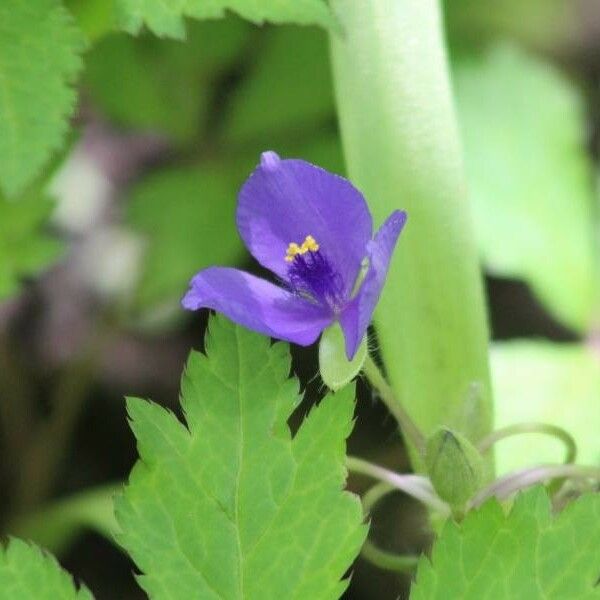
Plant Overview
Often called the Pineland Spiderwort, this resilient wildflower is a hidden gem of the high-altitude pine forests in the American Southwest and Mexico. Unlike its lush, tropical cousins often found in hanging baskets, this species has adapted to survive the rocky, rugged slopes of mountain ranges. It acts as a delicate pop of violet and blue amidst the needles and stones of its native habitat.
🔍 How to Identify
- 🌸 Triple Petals: Small, vibrant flowers featuring three distinct, heart-shaped petals that typically range from deep sky-blue to bright magenta.
- 🍃 Slender Foliage: Narrow, grass-like leaves that grow in a tufted fashion, often appearing more rugged and slightly more grey-green than indoor varieties.
- 🧶 Woolly Filaments: If you look closely at the center of the bloom, the stamen filaments are covered in fine, colorful hairs that look like tiny tufts of wool.
🏡 In Your Garden
- ⛰️ Alpine Origins: Because it naturally thrives in Ponderosa pine forests, it craves well-draining, gritty soil. It is an excellent choice for rock gardens or "wild" meadow patches where water doesn't pool.
- 🌤️ Dappled Light: Think of its home under the forest canopy; it loves bright, filtered light. While it is tough, it can scorch if placed in the brutal, direct afternoon sun of lower, hotter elevations.
- 💧 Tuberous Resilience: It stores energy and moisture in thickened, tuberous roots. This specialized root system allows the plant to go dormant during harsh seasons and bounce back when the rains return.
⚠️ Safety & Toxicity
- 🐾 Mild Irritant: Like many members of the Tradescantia family, the sap contains microscopic, needle-like calcium oxalate crystals.
- 👄 Details: While not considered deadly, ingestion can cause drooling or mouth irritation in cats and dogs. In humans, the sap may cause a mild "itchy" rash (contact dermatitis) on sensitive skin, so wearing gloves during pruning is a good idea.
✨ Fun Fact
The flowers of the Pineland Spiderwort are famously "ephemeral"—each individual bloom typically opens in the cool light of the early morning and "melts" away by the afternoon, lasting only a few hours before another takes its place the following day.

Detailed Care Instructions
To grow Tradescantia pinetorum, also known as Piney River Spiderwort, follow these steps:
- Choose the right location: Tradescantia pinetorum prefers bright, indirect sunlight. Choose a spot with partial shade or morning sun, as too much direct sunlight can scorch the leaves.
- Plant selection: Purchase healthy Tradescantia pinetorum plants from a reputable nursery or online source. Look for well-rooted plants with vibrant, green foliage.
- Soil preparation: The plant prefers well-draining soil. Prepare the planting area by loosening the soil and adding organic matter, such as compost, to improve drainage.
- Planting: Dig a hole slightly larger than the plant's rootball. Place the plant in the hole and backfill with soil, gently firming it around the roots. Water thoroughly after planting.
- Watering: Spiderworts prefer medium moisture levels. Water the plant regularly, keeping the soil moist but not waterlogged. Avoid letting the soil dry out completely.
- Fertilizing: Tradescantia pinetorum doesn't require much fertilizer. Apply a balanced, slow-release fertilizer once in early spring and again in midsummer.
- Pruning: These plants benefit from occasional pruning to promote bushier growth and prevent legginess. Remove any dead or wilted leaves and trim back straggly growth to maintain a neat appearance.
- Propagation: Tradescantia pinetorum can be easily propagated through stem cuttings. Take a 4-6 inch stem cutting just below a leaf node and remove the lower leaves. Place the cutting in a jar of water or a well-draining potting mix until roots develop.
- Pests and diseases: Spiderworts are generally resistant to pests and diseases. However, keep an eye out for common issues such as aphids, spider mites, and root rot. Address any problems promptly with appropriate treatments if necessary.
- Overwintering: In areas with cold winters, Tradescantia pinetorum is usually treated as an annual or grown as a houseplant. If you want to overwinter it, bring it indoors to a cool, bright location away from drafts and maintain a reduced watering schedule.
By following these steps, you can successfully grow and enjoy your Tradescantia pinetorum plant.

Place in a bright room that is sun drenched almost all day. Or directly in a south-facing window.

To water this plant, ensure that you have a container with a drainage hole at the bottom. Fill the container with soil that is well-draining and water the soil until it is thoroughly moist. Keep an eye on the soil and water only when it becomes slightly dry to the touch. Avoid letting the soil completely dry out and do not overwater the plant. Allow any excess water to drain out of the bottom of the container and don't let the plant sit in standing water. Water this plant consistently and regularly for optimal growth.
To fertilize this plant, use a balanced liquid fertilizer every two to four weeks during the growing season. Dilute the fertilizer according to the instructions on the packaging and apply it to the soil around the base of the plant. Avoid getting the fertilizer on the foliage or flowers, as this can cause damage. Water the plant thoroughly after fertilizing to help distribute the nutrients evenly throughout the soil. In the winter months, when the plant is dormant, reduce fertilizing to once a month, or stop entirely if the plant is not growing actively.
The recommended soil for Tradescantia Pinetorum plant is a well-draining potting mix that is comprised of peat moss, perlite, and vermiculite. The pH level should be slightly acidic to neutral, around 5.5 to 7.0. The soil should also contain organic matter and nutrients to support the growth of the plant. It is important to ensure that the soil is not waterlogged, as this can lead to root rot and other issues. The plant should be repotted every one to two years to refresh the soil and provide additional nutrients.
To propagate this particular plant, you can use stem cuttings. Take a healthy stem cutting that is around 4-6 inches long, and make sure that it has at least two nodes. Remove the bottom leaves from the stem, leaving only a few at the top. Dip the cut end of the stem in rooting hormone powder to encourage it to form roots. Then, insert the stem cutting into a pot filled with well-draining soil. Water the soil well and keep it moist but not waterlogged. Place the pot in a bright but indirect light area. The cutting should start developing roots in a few weeks, and once you see new growth, you can gradually transition the plant to its permanent location by increasing its exposure to direct sunlight.








