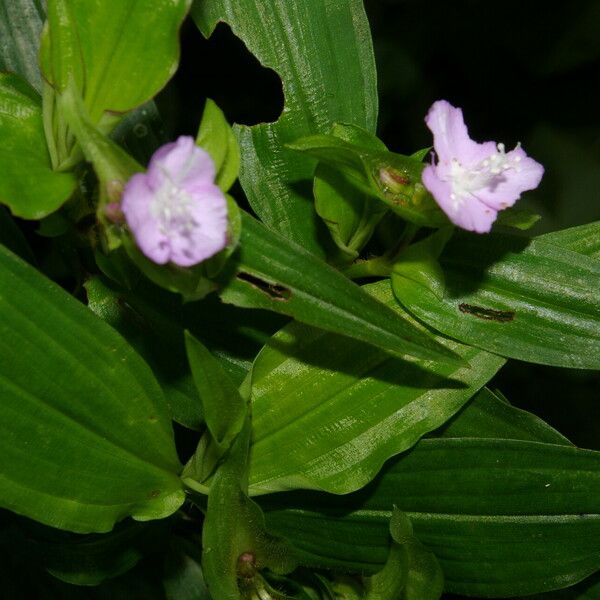
Plant Overview
Often called the "Miniature Spiderwort" or "Green Inch Plant," Tradescantia poelliae is the ultimate low-maintenance companion for those looking to turn their bookshelves into indoor jungles. Native to the tropical forests of Central America, it is a master of adaptation, capable of thriving in the dappled light of the forest floor or the cozy corners of a modern apartment. Its cascading stems create a "living curtain" effect that has made it a favorite for hanging baskets and high ledges.
🔍 How to Identify
- 🌿 Leaf Texture: The leaves are smooth, lance-shaped, and slightly succulent to the touch, often displaying a vibrant, waxy forest-green sheen.
- 📐 Growth Habit: It features a sprawling or "creeping" growth pattern, with fleshy stems that root effortlessly at every node (the small bumps along the stem).
- 🌸 Bloom Style: It produces tiny, delicate three-petaled flowers, usually white or pale lavender, that emerge from boat-shaped leaves at the tips of the branches.
🏡 In Your Garden
- ✂️ Pruning for Fullness: This plant can become "leggy" or stretched out if light is too low; pinching back the growing tips encourages it to branch out, creating a much bushier and lush appearance.
- 💧 The "Soggy Feet" Rule: While it enjoys a humid environment, its stems are prone to rot if the soil remains saturated. It’s best to use a well-draining mix and wait until the top inch of soil feels dry before watering again.
- 🌱 Propagation Magic: It is legendary for its "immortality"—simply snip a stem and place it in a glass of water, and you will see new roots appearing in as little as three to five days.
⚠️ Safety & Toxicity
- 🐶 Pet Warning: This plant is considered mildly toxic to cats and dogs. Ingesting the fleshy leaves can lead to stomach upset, drooling, or vomiting.
- 🧪 Skin Irritant: The sap contains microscopic crystals that can cause "Tradescantia dermatitis" (an itchy red rash) in sensitive individuals or pets who frequently brush against broken stems.
✨ Fun Fact
- 🕰️ The genus Tradescantia was named after John Tradescant the Elder, a 17th-century gardener to King Charles I of England. He was one of the first "plant hunters" to bring exotic species back from the Americas to Europe!

Detailed Care Instructions

Place in a bright room that is sun drenched almost all day. Or directly in a south-facing window.

Some plants require more regular watering than others, which should be done every few days. It's critical to maintain the soil moist all of the time. The water requirements of the same plant placed in pots with varying sizes will differ. Because the water in the smaller pot evaporates faster than the water in the larger pot, it will require more watering. Regardless of pot size, the surface should constantly be maintained moist.








