Plant Overview
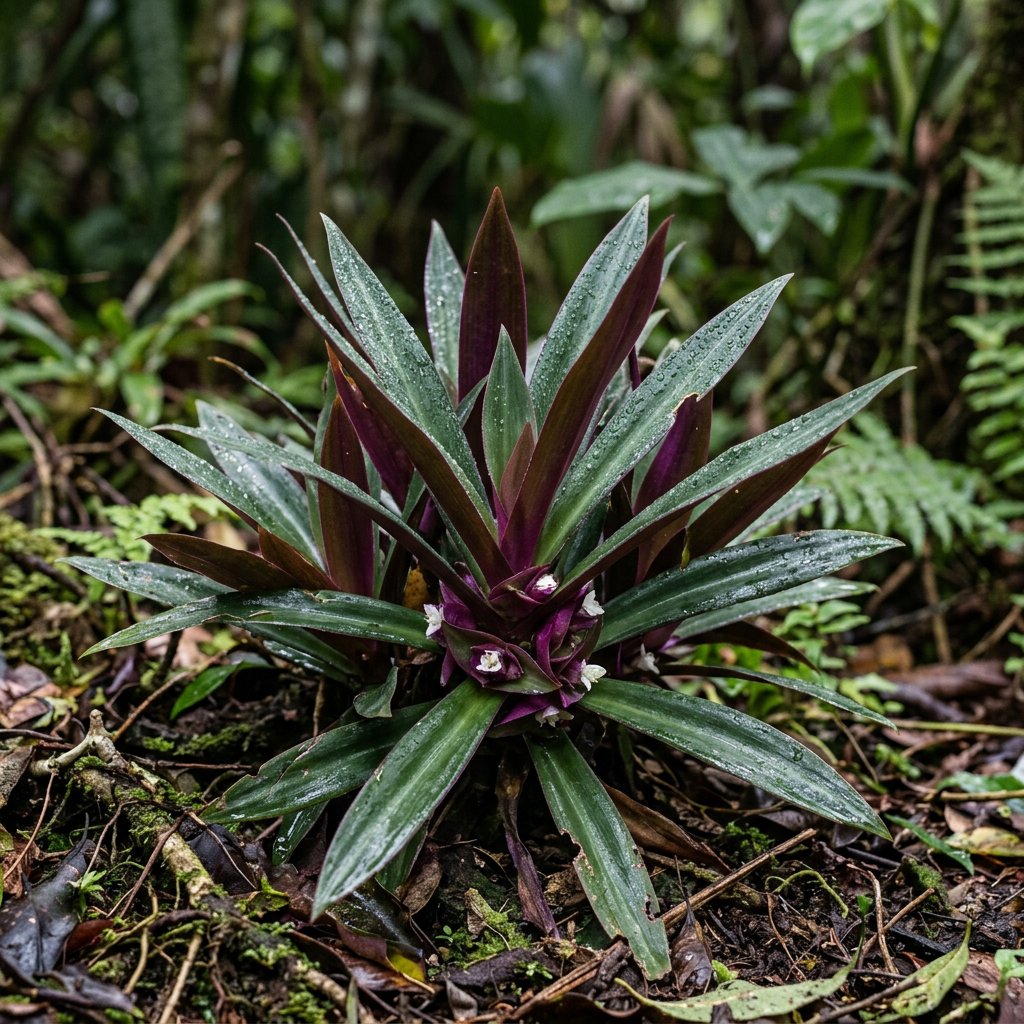
Often called "Moses-in-the-Cradle" or the "Oyster Plant," this eye-catching perennial is a favorite for its dramatic contrast of metallic green and deep royal purple. Hailing from the tropical forests of Mexico and Central America, it brings a bold, architectural flair to any indoor shelf or shaded garden bed. Its most famous nickname comes from the tiny white flowers that nestle inside boat-shaped bracts, looking just like a baby resting in a basket.
🔍 How to Identify
- 🍃 Bi-Colored Foliage: Stiff, sword-shaped leaves that are a dark, waxy green on top and a vivid, solid purple underneath.
- 🛶 "The Cradle": Small, white, three-petaled flowers tucked inside purple, boat-like modified leaves (bracts) at the base of the plant.
- 📏 Growth Habit: Grows in a dense, clumping rosette that stays relatively low to the ground but spreads outward via "pups" or offsets.
🏡 In Your Garden
- 💡 Light for Color: While it is incredibly hardy and can survive in low light, the purple underside of the leaves will lose its vibrancy and turn dull if it doesn't receive enough bright, indirect sunlight.
- 💧 Avoid the "Well": When watering, try to aim for the soil rather than the center of the plant. Because the leaves form a tight rosette, water can easily get trapped in the "cradle," leading to crown rot or fungal issues.
- 🌱 Soil & Drainage: This plant hates "wet feet." It thrives in a well-draining potting mix (like a succulent or cactus blend) and prefers to dry out slightly between drinks.
⚠️ Safety & Toxicity
- 🚫 Irritant: The sap contains calcium oxalate crystals, which can cause skin irritation or a stinging rash (contact dermatitis) upon touch.
- 🐾 Pet Safety: It is considered toxic to cats, dogs, and horses. If nibbled, it can cause irritation to the mouth and tongue, drooling, and digestive distress. Keep it on higher shelves away from curious nibblers.
✨ Fun Fact
The Tradescantia spathacea is a master of survival; in its native tropical habitat, it is known to grow as an "epiphyte," meaning it can occasionally be found growing in the crooks of trees or on rocky cliffs without any soil at all!

Detailed Care Instructions
| Color | White |
| Soil Ph | 6.1 To 7.8 |
| Humidity | High |
| Lighting | Part Sun |
| Toxicity | Poisonous |
| Soil Type | Peat-Based Soil |
| Bloom Time | Year-Round |
| Difficulty | Medium |
| Plant Type | Perennial |
| Mature Size | Up To 12 Inches Tall |
| Native Area | Guatemala, Southern Mexico, Belize |
| Temperature | 18°C - 25°C |
| Sun Exposure | Direct Light For 6-8 Hours, Partial Light Or Shade For The Rest Of The Day |
| Hardiness Zones | 9 To 11 |
To grow Tradescantia Spathacea, also known as the Moses-in-the-Cradle or Oyster plant, you can follow these steps:
- Purchase a healthy plant: Start with a healthy Tradescantia Spathacea plant from a trustworthy nursery or garden center. Ensure that the leaves are green, lush, and free from pests or diseases.
- Choose the right location: This plant thrives indoors or in shady outdoor areas. Select a location that receives indirect or filtered sunlight.
- Prepare the soil: Use well-draining soil rich in organic matter. You can amend it with peat moss, perlite, or compost to improve drainage and nutrient content.
- Planting: Gently remove the plant from its nursery pot and carefully loosen any compacted roots. Place it in a slightly larger pot or directly in the ground if planting outdoors. Ensure that the plant's crown, where the roots and stems meet, is level with or slightly above the soil surface.
- Watering: Water the plant thoroughly after planting to settle the soil and promote root establishment. Tradescantia Spathacea likes consistent moisture, so water it when the top inch of soil feels dry. Avoid overwatering to prevent root rot.
- Fertilizing: Feed your Tradescantia Spathacea once a month during the growing season (spring and summer) with a balanced liquid fertilizer. Follow the instructions on the fertilizer label for application rates.
- Pruning: Trim back any yellow or damaged leaves to improve the overall appearance of the plant. You can also cut back leggy stems to encourage bushier growth.
- Propagation: Tradescantia Spathacea is easily propagated through stem cuttings. Simply take a 4-6 inch cutting, remove the lower leaves, and plant it in moist soil or water until roots develop.
- Repotting: As your plant grows, it may require repotting to provide more space for its roots. Repot it into a slightly larger container using fresh soil.
- Pests and diseases: Monitor your plant for common houseplant pests like mealybugs, spider mites, or aphids. Treat any infestations promptly with appropriate insecticidal sprays or natural remedies.
Remember to research and follow any specific care instructions for your particular cultivar of Tradescantia Spathacea, as there are several varieties with slightly different needs.

Place in a window with dappled sun or a spot in the middle of a room. Or directly in a window facing west or east.

The plant should be watered regularly, taking care to ensure the soil is not waterlogged. It is recommended to water once a week or when the top inch of soil feels dry to the touch. Allow the excess water to drain out of the pot to prevent root rot. The plant prefers to be kept humid, so misting the leaves occasionally or keeping a tray of water nearby can help. Avoid letting the plant sit in standing water for prolonged periods as this can lead to fungal infections.
To fertilize this plant, you should use a balanced liquid fertilizer diluted to half its recommended strength. Apply the fertilizer to the soil every two weeks during the growing season, which typically occurs from spring to fall. During the winter, reduce the frequency of fertilizing to once a month or stop it altogether. Over-fertilizing can cause damage to the plant, so it's important to follow the recommended dosage and frequency.
The ideal soil for planting a Tradescantia Spathacea plant should be well-draining with a slightly acidic to neutral pH level. The soil should be rich in nutrients to promote healthy growth, but not too dense or compact as this can cause waterlogging and root rot. A mix of high-quality potting soil, perlite, and sand is recommended for optimal drainage and aeration. Additionally, adding organic matter such as compost or worm castings can help provide necessary nutrients for the plant. Avoid using heavy clay soils that hold onto water or soils with high alkaline levels, as this can harm the plant over time.
To propagate this plant, you will need to first select a healthy parent plant with some well-established shoots. Then, take a pair of sharp and clean garden shears or scissors, and carefully cut off a small section of the stem from the parent plant.
Next, prepare a pot of well-draining soil, such as a cactus or succulent mix, and moisten the soil. Then, dip the cut end of the stem into a rooting hormone powder, which can be found at most garden centers or online.
After dusting the stem with the rooting powder, insert it about 1-2 inches deep into the soil, and gently pat the soil around the stem to ensure it stays upright. Water the newly propagated plant, then place it in a warm and brightly lit area, but not in direct sunlight.
Over the next few weeks, keep the soil moist but not waterlogged and maintain a warm, humid environment around the plant, such as by covering with a plastic bag or placing it in a greenhouse. Soon enough, you should see new growth and roots forming, at which point you can remove the plastic bag or greenhouse and care for the new plant as you would the parent plant.
Common pests of the oyster plant include Scale insect, mealybugs, spider mites, fungus gnats, thrips. Make a habit of checking your oyster plant frequently for pests so that any infestations can be caught and managed early.








