Plant Overview
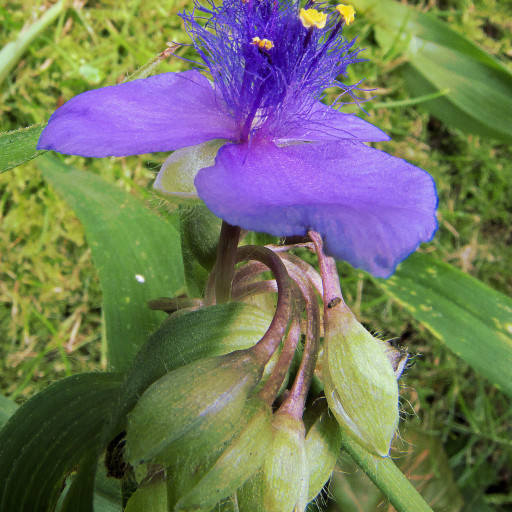
Known by the charmingly melancholic name "Widows' Tears," Tradescantia virginiana is a hardy North American native that brings a dash of electric color to the garden. This perennial is beloved for its "blink-and-you-miss-it" lifestyle; each flower opens with the morning sun and dissolves into a jelly-like drop by the afternoon, only to be replaced by a fresh bud the next day.
🔍 How to Identify
- 🌿 The Foliage: Long, arching, grass-like leaves that wrap around the stems at the base, creating a lush, fountain-like clump.
- 🌸 The Bloom: Distinctive three-petaled flowers, most commonly in a vibrant violet-blue or royal purple, featuring "fuzzy" filaments and bright yellow anthers in the center.
- 💧 The Secretion: When the stems are broken, they exude a clear, thread-like sap that stretches like a spider’s web, which is how it earned the name "Spiderwort."
🏡 In Your Garden
- 🌱 Woodland Wanderer: This plant thrives in the dappled shade of a woodland garden. It is famously "unfussy" about soil, though it will grow most vigorously in moist, organic-rich earth.
- ✂️ The Summer Haircut: By mid-summer, the plant can start to look a bit "leggy" or ragged after its main blooming phase. Don't be afraid to shear it back almost to the ground; this encourages a flush of fresh, tidy foliage and often a second round of flowers in the cooler autumn air.
⚠️ Safety & Toxicity
- 🐾 Mild Irritant: The sap contains calcium oxalate crystals. While not usually life-threatening, it can cause skin irritation or "contact dermatitis" for gardeners with sensitive skin.
- 🐱 Pet Warning: If chewed by cats or dogs, the sap can cause an itchy rash on the mouth or stomach upset. It is best placed in the middle of a flower bed rather than right along a path where pets might brush against it constantly.
✨ Fun Fact
☢️ Nature’s Geiger Counter: Some species of Tradescantia are used by scientists to monitor radiation. The tiny hairs on the flower’s stamens are normally blue, but they are highly sensitive to mutations; they will turn pink in the presence of ionizing radiation or specific chemical pollutants!

Detailed Care Instructions
To grow Tradescantia virginiana, also known as spiderwort, follow these steps:
- Choose a location: Tradescantia virginiana prefers full sun to part shade. Select a spot in your garden that receives at least 6 hours of direct sunlight each day. If you live in a particularly hot area, provide some afternoon shade.
- Prepare the soil: This plant adapts well to various soil types but prefers moist, well-draining soil. Add organic matter such as compost or well-rotted manure to enhance soil fertility and structure.
- Planting: Dig a hole slightly larger than the plant's root ball. Place the plant at the same depth it was in its nursery container and fill the hole with soil, gently firming it around the roots. Space multiple plants about 12-18 inches apart to give them room to spread.
- Watering: Spiderwort appreciates consistently moist soil, so water it regularly, especially during dry periods. Avoid overwatering, as excessively wet soil can lead to root rot. Mulching around the plant can help retain moisture and reduce weed growth.
- Fertilizing: Apply a balanced, slow-release fertilizer in early spring to promote healthy growth. Follow the instructions on the fertilizer package for exact quantities and frequency of application.
- Pruning: Tradescantia virginiana does not require much pruning, but you can trim back any dead or damaged foliage to maintain a tidy appearance. Additionally, cutting back the plants after they finish blooming can promote a second bloom.
- Propagation: Spiderwort can be easily propagated by division or stem cuttings. To divide, dig up the plant in early spring or fall, separate the clumps into smaller sections, and replant them. For stem cuttings, trim a 4-6 inch healthy stem and remove the lower leaves. Place the cutting in moist soil or water until roots develop, then transplant it to its permanent location.
- Pests and diseases: Spiderwort is relatively resistant to pests and diseases. However, keep an eye out for common garden pests like aphids, snails, or slugs. To control these, use organic insecticides or physically remove them from the plants.
By following these guidelines, you should be able to successfully grow Tradescantia virginiana in your garden or outdoor space.

Place in a window with dappled sun or a spot in the middle of a room. Or directly in a window facing west or east.

To water this plant, it is important to check the soil moisture level regularly. One way to do this is to insert a finger into the soil up to the second knuckle. If the soil feels dry, it is time to water. When watering, it is important to ensure that the water reaches the roots of the plant. One way to achieve this is to water slowly until it starts to drain out of the bottom of the pot or saturates the soil around the roots in the ground. It is important to avoid getting water on the leaves of the plant as this can lead to fungal diseases. This plant prefers to be kept slightly moist but not soggy, so it is important to allow the soil to dry slightly between watering. The frequency of watering will depend on factors such as the size of the plant and the temperature and humidity of the environment.
To promote healthy growth and vibrant foliage, apply a balanced fertilizer with equal parts nitrogen, phosphorus, and potassium every two to three months during the growing season. Use a slow-release granular fertilizer or a liquid fertilizer with a 10-10-10 or 20-20-20 ratio and follow the package instructions for proper dosage. Apply the fertilizer evenly around the base of the plant and water thoroughly after application. Avoid over-fertilizing as it can lead to burnt roots and plant damage.
The recommended type of soil for the Tradescantia Virginiana plant should be well-draining and rich in nutrients. It should also have a pH level of 5.6 to 7.5. A mix of peat moss, perlite, and vermiculite is ideal for this plant. It is also important to ensure that the soil is slightly moist but not waterlogged to prevent the roots from rotting. Additionally, the plant is adaptable to various soil types, but it prefers loamy or sandy soil that is moderately fertile.
To propagate this plant, select a healthy stem and cut it with a sharp, sterile knife or scissors. The stem should be at least 3-4 inches long and have several leaves attached. Remove the lower leaves from the stem, leaving 2-3 leaves near the top.
Prepare a pot with well-draining soil, and make a small hole in the center. Dip the cut end of the stem in rooting hormone powder and then place it in the hole. Pack the soil around the stem securely, making sure the stem is stable and upright.
Water the cutting thoroughly and place a clear plastic bag over the pot to create a humid environment. Place the pot in bright, indirect light, but not in direct sunlight. Keep the soil consistently moist, but not waterlogged.
After a few weeks, check for new growth by gently tugging on the stem. If there is resistance, the cutting has rooted successfully. Remove the plastic bag and continue to care for the new plant as you would an established Tradescantia Virginiana.
Common pests of the virginia spiderwort include Scale insect, mealybugs, spider mites, fungus gnats. Make a habit of checking your virginia spiderwort frequently for pests so that any infestations can be caught and managed early.








