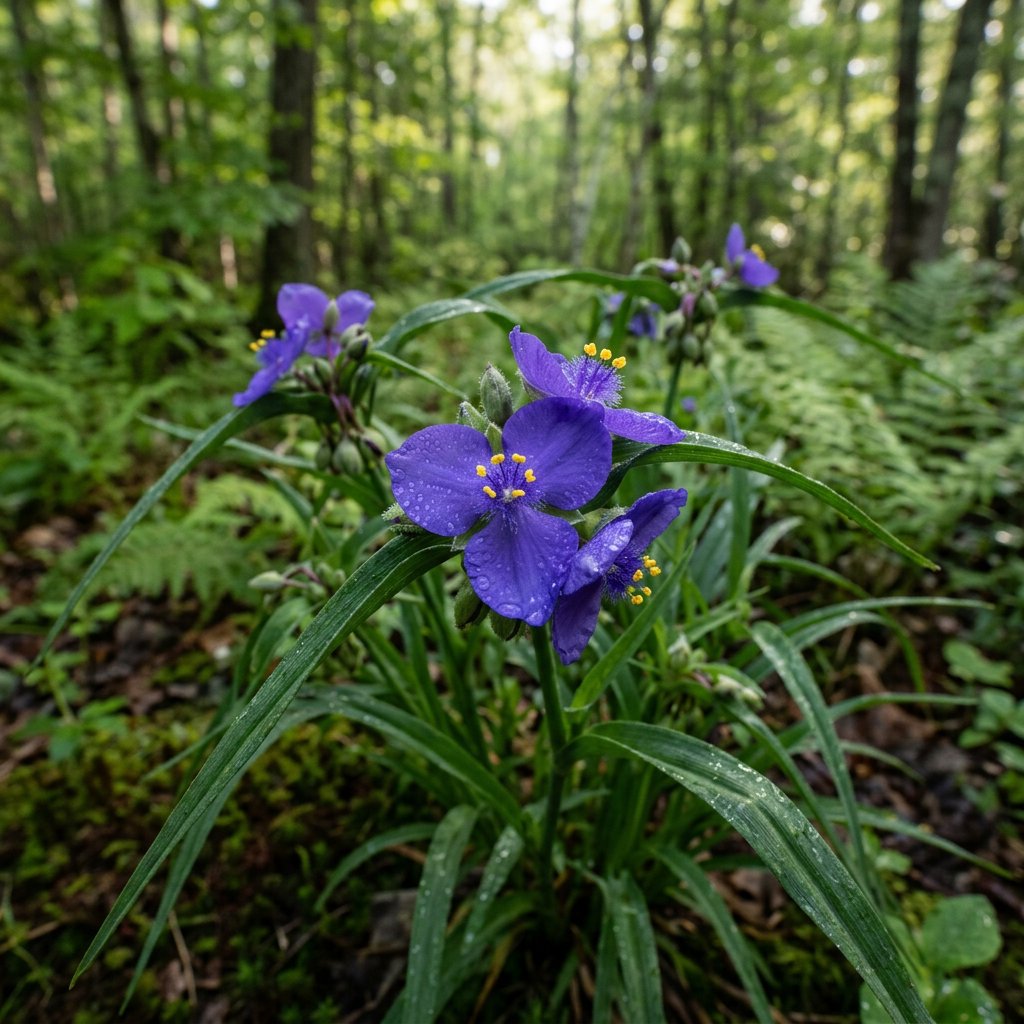
Plant Overview
Often called the "Inch Plant" because it seems to grow an inch every time you look away, the Tradescantia is a vibrant, trailing favorite for indoor gardeners. Originally native to the Americas, these plants are celebrated for their metallic-shimmering leaves and incredible resilience. Whether you know them as "Spiderworts" or "Wandering Dudes," they are the undisputed royalty of the hanging basket world.
🔍 How to Identify
- 🍃 Foliage: Lance-shaped, fleshy leaves that often feature striking silver, deep purple, or lime-green stripes. Many varieties have a shimmering, iridescent "glitter" on the leaf surface.
- 🌸 Blooms: Dainty, three-petaled flowers that usually appear in shades of pink, purple, or white. Though small, they add a delicate charm to the plant’s bold foliage.
- 🌱 Growth Habit: Thick, succulent-like stems that trail downwards or creep across the soil, quickly forming dense mats of color.
🏡 In Your Garden
- ☀️ The Light-Color Connection: While they can survive in low light, their vibrant colors will fade to a dull green if they are kept in the dark. To keep those purple and silver hues "popping," provide bright, filtered sunlight.
- ✂️ Pruning for Fullness: These plants grow so fast they often become "leggy" or thin at the base. The secret is "pinching": snap off the growing tips regularly to encourage the plant to branch out and stay bushy.
- 💧 Water Propagation: Tradescantia is the "magic trick" of the plant world. A single stem cutting placed in a glass of water will often sprout visible roots in less than 48 hours, making them perfect for sharing with friends.
⚠️ Safety & Toxicity
- 🐾 Toxic to Pets: Tradescantia contains sap that can be irritating to the digestive tracts of cats and dogs if ingested.
- 🧴 Skin Sensitivity: The sap can cause mild skin irritation or dermatitis in humans. It is best to wear gloves when pruning a large specimen or to wash your hands immediately after handling the stems.
✨ Fun Fact
- 🧪 Radiation Sensors: Some species of Tradescantia (like T. ohiensis) are natural bio-indicators. The tiny hairs on their flower stamens are normally blue, but they will turn pink when exposed to even low levels of ionizing radiation or chemical pollutants!

Detailed Care Instructions
Spiderwort plants are some of the easiest houseplants to grow, and they will reward you with a lush, full appearance for very little work.
How fast does spiderwort grow?
Outdoors spiderwort is considered an overly aggressive grower. It grows equally fast indoors, but it can be contained. It grows about an inch a week, which is why it's also called an inch plant. Expect a full-grown plant in about six months after it's planted as a seedling.
How long can spiderwort live?
Even with the best of care, spiderwort houseplants have a somewhat short lifespan of just a few years.
| Humidity | Normal |
| Lighting | Shade |
| Difficulty | Easy |
| Hibernation | Cold Period |
| Temperature | 10°C - 26°C |
| Hardiness Zones | Max 9 |
To grow a Tradescantia plant, follow these steps:
- Choose a healthy plant: Select a well-established and healthy Tradescantia plant or purchase a cutting from a reputable nursery or garden center.
- Lighting: Tradescantia plants thrive in bright, indirect light. Place the plant near a window that receives filtered sunlight or in a well-lit room. Avoid direct sunlight, as it can scorch the leaves.
- Temperature: Maintain a temperature range of 60-80°F (15-27°C) for optimal growth. Protect the plant from drafts or extreme temperature fluctuations.
- Watering: Water the plant thoroughly whenever the top inch of soil feels dry. Pour water until it drains from the bottom of the pot, but ensure the plant is not left sitting in standing water, as it can lead to root rot.
- Humidity: Tradescantia plants prefer high humidity. You can enhance humidity by placing the plant on a tray filled with water and pebbles or using a humidifier nearby. Mist the leaves occasionally with water to keep them hydrated.
- Soil: Use well-draining soil or a mixture of potting soil and perlite to ensure proper water drainage. A good soil mix should retain moisture but not become waterlogged.
- Fertilizer: Feed the Tradescantia plant with a balanced, water-soluble fertilizer diluted to half or quarter strength once a month during the growing season (spring and summer). Avoid fertilizing in winter when the plant is dormant.
- Pruning: Trim the plant to maintain its shape and encourage bushier growth. Pinch or cut off stems just above a node (the point where leaves emerge) to promote branching.
- Propagation: Tradescantia plants are easy to propagate. Simply take stem cuttings of about 3-4 inches (7-10 cm) in length with a few leaves. Remove the bottom set of leaves and place the cutting in a glass of water or directly in moist soil until roots develop.
- Repotting: If the Tradescantia plant outgrows its pot or if the soil becomes compacted, repot it in a slightly larger container with fresh soil. Repotting is usually needed every 1-2 years.
By following these steps and providing proper care and conditions, you can successfully grow a healthy and beautiful Tradescantia plant.

Place in a window with dappled sun or a spot in the middle of a room. Or directly in a window facing west or east.

To water this plant, you will need to keep the soil consistently moist but not waterlogged. It is best to water the plant deeply and then allow the top inch of soil to dry out before watering again. It is important to avoid getting water on the leaves and stems as this can cause fungal issues. You can also mist the plant occasionally to increase humidity levels. In general, the plant will need more frequent watering in warmer months and less in cooler months. It is important to monitor the soil moisture levels regularly to ensure the plant has adequate water.
Fertilize this plant once a month during its growing season. Use a balanced liquid fertilizer with equal parts nitrogen, phosphorus, and potassium. Dilute the fertilizer to half strength and apply directly to the soil, making sure to avoid spilling onto the leaves. Water the plant immediately after fertilizing to help distribute the nutrients evenly. It is important not to over-fertilize as it can cause damage to the plant.
The type of soil that is most suitable for this plant is a well-draining soil that is enriched with organic matter. It should have a pH level that ranges between slightly acidic to neutral. The soil should be moist but not waterlogged, and it should be allowed to dry out slightly between waterings. It is important to note that this plant can be sensitive to certain elements in the soil, such as high levels of salt or fluoride, so it is recommended to use a soil that is free of these substances. Additionally, a nutrient-rich soil can help promote healthy growth and development of this plant.
To propagate this plant, you will need to take cuttings from the parent plant. Use a sharp pair of scissors or pruners to cut a stem from the parent plant. Make sure the stem is at least 4 inches long and has a few healthy leaves. Remove the leaves from the lower half of the stem. Dip the cut end of the stem into rooting hormone powder. This will encourage root growth. Fill a small pot with well-draining soil. Make a hole in the soil with your finger and insert the cutting into the hole. Firmly press the soil around the cutting. Water the soil thoroughly. Place the pot in a bright, indirect light location. Water the cutting regularly, keeping the soil moist but not waterlogged. In a few weeks, the cutting will start to produce roots and new growth. Congratulations, you have successfully propagated your plant!
Common pests of the spiderworts include Scale insect, mealybugs, spider mites, fungus gnats. Make a habit of checking your spiderworts frequently for pests so that any infestations can be caught and managed early.







