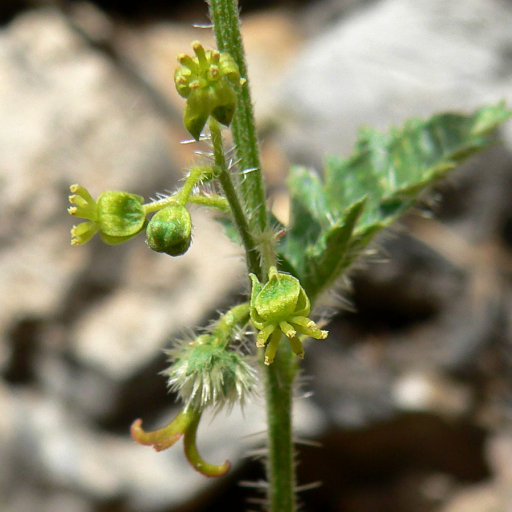
Plant Overview
Known as the Branching Noseburn, this unassuming native of the American West and Midwest is a plant that demands respect. While it looks like a harmless, mint-like weed, it is famous for its "hidden teeth"—a defensive array of stinging hairs that can stop a hiker in their tracks. It is a hardy survivor of rocky terrains and sun-scorched prairies, playing a quiet but prickly role in its ecosystem.
🔍 How to Identify
- 🌿 The Foliage: The leaves are usually triangular or heart-shaped with coarsely "toothed" or jagged edges, often resembling catnip or mint leaves.
- 🪡 The "Stingers": If you look closely (but don't touch!), the entire plant is covered in stiff, translucent stinging hairs called trichomes that act like tiny hypodermic needles.
- 🌼 The Flowers: It produces very small, inconspicuous greenish-yellow flowers that lack petals, tucked away where the leaf meets the stem.
🏡 In Your Garden
- 🌵 Hardy Generalist: You’ll rarely find this sold in nurseries, but it often "invades" rocky garden borders or dry, sandy patches. It thrives in poor soil where other plants might wither.
- 🦋 A Surprising Host: Despite its aggressive defense, it serves as a vital nursery. It is a primary host plant for the larvae of the Ceraunus Blue butterfly, which have evolved to handle its stinging defenses.
⚠️ Safety & Toxicity
- 🚫 Status: HIGH SKIN IRRITANT. The "Noseburn" name is literal; the stinging hairs inject an irritant that causes an immediate, intense burning sensation and redness.
- 🐾 Pets & Kids: Keep curious pets and children away. The sting is painful and can cause localized swelling or rashes that last for several hours. Always wear thick gloves if you are weeding this plant.
✨ Fun Fact
The stinging mechanism of the Noseburn is purely mechanical and chemical; the tip of the hair actually breaks off upon contact, ensuring the irritating fluid is delivered directly into the skin of the "attacker."

Detailed Care Instructions
To grow Tragia ramosa, also known as noseburn or turkey bush, follow these steps:
- Choose a suitable location: Tragia ramosa prefers full sun to partial shade. Make sure the area has well-draining soil.
- Prepare the soil: Before planting, loosen the soil and remove any weeds or rocks. Add organic matter, such as compost or well-rotted manure, to enrich the soil.
- Sow seeds or plant seedlings: Tragia ramosa can be propagated from seeds or seedlings. If using seeds, sow them directly into the prepared soil, spacing them about 12 inches apart. Cover the seeds lightly with soil. If using seedlings, dig holes large enough to accommodate their root balls and place the seedlings in the holes.
- Water the plants: Water the newly planted seeds or seedlings thoroughly, ensuring the soil is evenly moist. Afterward, water the plants regularly, keeping the soil consistently damp but not waterlogged.
- Provide support: Tragia ramosa is a climbing plant and will need support to grow upright. Install a trellis or provide stakes for the plant to climb on.
- Mulch around the plant: Apply a layer of organic mulch, such as straw or shredded bark, around the base of the plant. Mulch helps retain moisture, suppresses weed growth, and moderates soil temperature.
- Prune if necessary: Tragia ramosa can get unruly, so you may need to prune it occasionally to control its growth and promote bushier growth. Prune lightly after blooming to maintain its shape.
- Fertilize: If the soil lacks nutrients, you can feed Tragia ramosa with a balanced fertilizer during the growing season. Follow the manufacturer's instructions on dosage and application.
- Monitor for pests and diseases: Keep an eye out for common garden pests like aphids or spider mites. Treat any infestations promptly using organic insecticides or gentle soapy water sprays.
- Harvesting the seeds: If you wish to collect the plant's seeds for future propagation, allow the flowers to dry on the plant. Once the seed capsules open and release the seeds, collect them and store them in a cool, dry place.
By following these steps, you can successfully grow Tragia ramosa and enjoy its unique beauty in your garden.

Place in a bright room that is sun drenched almost all day. Or directly in a south-facing window.

Tragia Ramosa is a type of plant that requires a specific method of watering in order to thrive. To provide adequate hydration for this plant, it is important to only water the soil around the base of the plant, being careful not to wet the leaves or stem. When watering, aim for a slow and steady flow of water, taking care to avoid applying too much at once, as this can lead to water-logged soil and root rot. Additionally, it is important to monitor the soil moisture levels, only watering when the top inch of soil feels dry to the touch. Over-watering is a common mistake when caring for Tragia Ramosa, so it is important to exercise caution and follow these guidelines for optimal growth and health.
To fertilize this plant, use a balanced fertilizer during the growing season. Apply the fertilizer every two weeks at half strength. Water thoroughly after fertilizing to avoid burning the roots. During the dormant season, do not fertilize.
Tragia Ramosa plant prefers well-draining soil that is rich in organic matter. The soil should be moist, but not waterlogged, as the plant does not tolerate standing water. A pH level of 6 to 7 is ideal for this plant. A sandy loam soil is also suitable for Tragia Ramosa plant as it allows good aeration and drainage. To promote healthy growth, it is recommended to add compost or aged manure to the soil before planting. Additionally, the soil should be fertilized regularly with a balanced fertilizer to ensure adequate nutrition for the plant.
Propagating this plant involves taking stem cuttings and rooting them in a suitable growing medium. It is important to select healthy stems that are free from damage and disease. Cuttings should be taken during the plant's growing season when it is actively producing new growth, usually in the spring or summer.
To prepare the stem cuttings, remove the lower leaves, leaving only a few at the tip. The cutting should be about 4-6 inches long and include at least one node, which is where the roots will emerge. The bottom of the cutting can be dipped in rooting hormone to encourage root growth.
Plant the cuttings in a well-draining growing medium such as perlite or vermiculite, and keep them moist but not overly wet. Cover the pot with a plastic bag to create a humid environment and place it in a warm, bright location, but out of direct sunlight. Mist the cuttings daily to maintain humidity.
After a few weeks, the cuttings should begin to develop roots. At this point, they can be transplanted into individual pots filled with a well-draining potting soil mix. Gradually, acclimate the new plants to brighter light and less humidity until they are fully established.








