Plant Overview
Commonly known as Desert Horse-purslane or Giant Pigweed, this hardy ground-hugger is a master of survival in scorched, sandy environments. While it often pops up uninvited in garden beds like a common weed, it carries a storied history in traditional medicine and as a survival food. Its ability to carpet a sunny patch of dirt with succulent-like leaves makes it a fascinating, if sometimes persistent, garden companion.
🔍 How to Identify
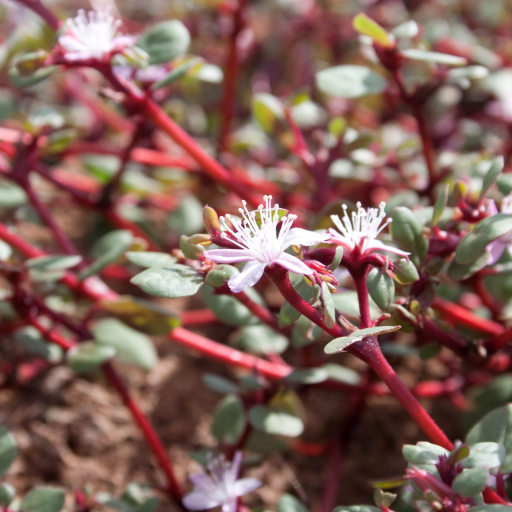
- 🌿 Growth Habit: It grows as a "prostrate" plant, meaning it crawls along the ground in a sprawling mat. The thick, fleshy stems often take on a reddish-purple hue when exposed to intense sun.
- 🍃 Unequal Leaves: One of its most unique traits is that its oval, succulent leaves grow in pairs, but one leaf is almost always significantly larger than its partner.
- 🌸 Hidden Blooms: The flowers are tiny, solitary, and tucked away where the leaf meets the stem. They range from white to pale pink and usually only open for a few hours during the brightest part of the day.
🏡 In Your Garden
- 🌞 Sun & Soil Nuance: This plant is the ultimate sun-worshipper. It thrives in poor, compacted, or sandy soils where other plants might wither, thanks to a deep taproot that anchors it firmly against the wind and heat.
- 🌱 Spreading Nature: It is a prolific seeder. If you find it in your garden, it’s a sign that the area is well-drained and perhaps a bit nutrient-poor. While it can act as a "living mulch" to keep soil temperature down, it can quickly overwhelm smaller, slower-growing flowers if not kept in check.
⚠️ Safety & Toxicity
- 🐾 Moderate Risk: The plant contains oxalates and can accumulate nitrates from the soil. While it is eaten as a cooked vegetable in some cultures, it can be toxic to livestock (especially sheep and cattle) if consumed in large quantities.
- 🐱 Pets & Kids: It is best to discourage pets or children from nibbling on the raw leaves, as the oxalates can cause stomach upset or mouth irritation.
✨ Fun Fact
In various parts of South Asia, this "weed" is actually valued as a medicinal herb (known as Biskhapra) and is used in traditional remedies to support liver health and reduce inflammation!

Detailed Care Instructions
To grow Trianthema portulacastrum, also known as giant pigweed or horse purslane, follow these steps:
- Climate: Trianthema portulacastrum is a tropical plant that is well-suited to warm climates. It thrives in hot and humid conditions, so make sure your region offers these climate conditions.
- Soil: The plant prefers well-draining, sandy soil but can adapt to a variety of soil types. Ensure the soil has good fertility and a pH level between 6 and 7.
- Sunlight: Trianthema portulacastrum requires full sun exposure for at least 6 to 8 hours a day. Ensure they receive direct sunlight for optimum growth.
- Planting: Sow the seeds directly in the soil after the last frost date in your area. The seeds are small and should be planted about 1/4 inch deep. Space each seedling around 12 inches apart to allow them ample room to grow.
- Watering: Keep the soil consistently moist but not waterlogged. Water the plants regularly, especially during dry periods, to ensure they don't dry out. However, avoid overwatering as excessive moisture can lead to root rot.
- Fertilizer: Trianthema portulacastrum usually doesn't require extensive fertilization. However, you can provide a general-purpose fertilizer every 4-6 weeks to promote healthy growth.
- Weed control: This plant can become invasive, so ensure you regularly weed the area to prevent its spread. Be cautious when removing weeds not to damage the Trianthema portulacastrum seedlings.
- Pruning and maintenance: Regularly remove any dead or diseased leaves, stems, or flowers to maintain the plant's health and appearance. Pruning can be done to shape the plant and keep it from becoming overly leggy.
With proper care and attention, your Trianthema portulacastrum plant should grow well and provide an attractive addition to your garden.

Place in a bright room that is sun drenched almost all day. Or directly in a south-facing window.

To water this plant, it is important to first assess the soil moisture level. Insert your finger into the soil up to the first joint to check if the top layer is dry. If the soil is dry, it is time to water the plant. When watering, pour water gently at the base of the plant to avoid splashing the leaves. Ensure the soil is moist but not waterlogged, as excess water can lead to root rot. It is also important to avoid letting the plant sit in standing water for extended periods. Watering frequency will vary depending on factors such as the climate and the size of the container or planting space. Therefore, it is recommended to water the plant as often as necessary to maintain even moisture levels.
To fertilize this plant, apply a balanced, granular fertilizer once every four to six weeks during the growing season. Water thoroughly after application. Avoid over-fertilization, as this can lead to excessive foliage growth at the expense of flowers. In the winter months, withhold fertilizer and reduce watering to promote dormancy.
The ideal soil for Trianthema Portulacastrum should have good drainage capability, and a slightly acidic to neutral pH level. The soil should be rich in organic matter and nutrients, with a sandy or loamy texture. It should also be well-aerated to allow oxygen penetration to the root zone. A balanced fertilizer with equal amounts of nitrogen, phosphorus, and potassium should be added to the soil during planting. The plant can grow in various soils, including clayey or rocky soils, as long as the soil quality is good and the drainage is adequate. Avoid using heavy and compacted soils that restrict the growth of roots and lead to soil moisture retention.
To propagate this plant, take stem cuttings from mature plants during the growing season. Choose healthy stems that are firm and free from any damage or disease. Cut the stems at a length of about 4 inches using a sharp and clean pair of scissors or pruning shears.
Remove the leaves from the bottom inch of the stem, leaving the top leaves intact. Dip the end of the cutting in rooting hormone powder and plant it in a pot filled with a mixture of potting soil and sand. Water the cutting thoroughly and cover the pot with a plastic bag or a clear plastic container to create a humid environment.
Place the pot in a warm and bright spot, but not in direct sunlight. Keep the soil moist but not waterlogged. After a few weeks, you should see new growth emerging from the stem cutting, indicating that it has rooted successfully.
Once the new plant has developed several new leaves, you can transplant it into a bigger pot or directly into the garden. Be sure to acclimate the new plant to its new environment gradually by exposing it to more sunlight and less moisture over a period of several days.








