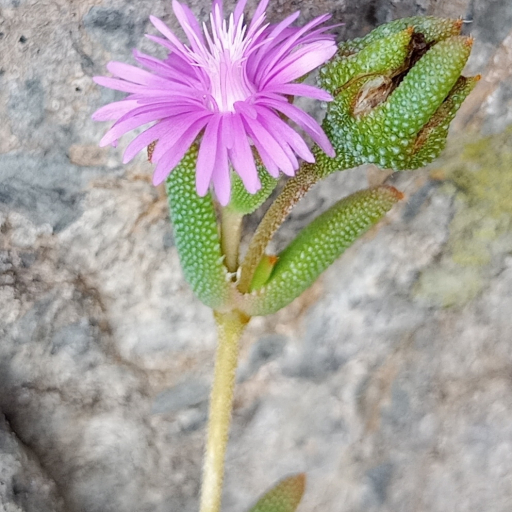
Plant Overview
Known as the "Noon Flower" or "Aloo-moer," this South African succulent is a master of timing and texture. It gets its name from its strict schedule—its shimmering golden-yellow flowers refuse to open until the clock strikes afternoon. With its crown-tipped leaves and hidden, tuberous roots, it is a favorite for succulent collectors who enjoy a plant with "Bonsai" potential.
🔍 How to Identify
- 👑 The Diadems: Each leaf is tipped with a radial cluster of soft, white, hair-like bristles. These look like tiny crowns or exploding fireworks and are the signature trait of the Trichodiadema genus.
- 🌼 Copper-Gold Blooms: The flowers are glossy, daisy-like, and typically a bright yellow or coppery hue. They have a metallic sheen that catches the sunlight perfectly during their brief afternoon appearance.
- 🥔 The Fleshy Caudex: While it looks like a low shrub above ground, it develops a thick, tuberous taproot system. Many growers "lift" the plant during repotting to expose these interesting, gnarled roots.
🏡 In Your Garden
- ☀️ The Afternoon Show: This plant is perfect for west-facing windows or sunny rockeries. Because the flowers only open when hit by the intense afternoon sun, it acts as a living clock for your garden.
- 🌵 Root Resilience: The thick, carrot-like roots serve as an underground water tank. This means the plant prefers a "soak and dry" method; it hates sitting in damp soil, which can quickly rot its hidden reservoir.
⚠️ Safety & Toxicity
- 🐾 Pet Friendly: Trichodiadema pomeridianum is generally considered non-toxic to cats, dogs, and horses, making it a worry-free addition to a household with curious pets.
- 🧤 Gentle Bristles: Unlike many cacti, the "spines" (diadems) on this plant are soft and flexible. They won't puncture the skin, though they can be slightly irritating to very sensitive skin if handled excessively.
✨ Fun Fact
The name "Aloo-moer" comes from South African tradition, where the roots of this plant were historically used as a source of yeast to ferment honey beer! The roots contain high levels of sugar and natural fungi that helped kickstart the brewing process.

Detailed Care Instructions








