Plant Overview
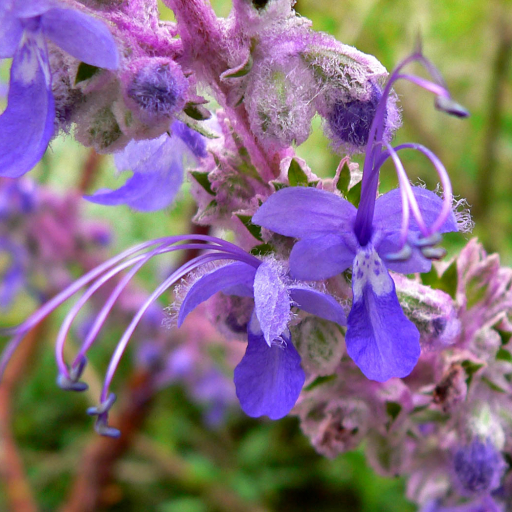
Often called the "Woolly Blue Curls," this California native is a showstopper in any drought-tolerant landscape. Known for its vibrant, fuzzy blue flowers and a scent that reminds many of grape soda or lavender-mint, it is a crown jewel of the coastal sage scrub. In the wild, it creates a hazy blue mist across hillsides, acting as a beacon for every hummingbird in the vicinity.
🔍 How to Identify
- 🌿 The Foliage: Narrow, dark green leaves that look remarkably like rosemary. They are shiny on top and have a slightly revolute (down-curled) edge.
- 🧶 The "Wool": The flower stalks and buds are densely covered in a thick, velvety coat of brilliant purple or blue hairs, giving the plant its common name.
- 🧬 The Stamens: The most dramatic feature is the long, elegant stamens that curve far out of the flower tubes like the delicate eyelashes of a forest spirit.
🏡 In Your Garden
- 💧 The Golden Rule: This plant is a "summer-dry" specialist. While it loves a good drink in the winter, watering it frequently during a hot summer can trigger root rot. It prefers to "sleep" during the heat.
- ☀️ Sun and Soil: It craves full sun and exceptionally well-draining soil. If you have heavy clay, consider planting it on a slope or in a raised mound to keep its feet dry.
- 🐦 Pollinator Magnet: If you plant this, prepare for visitors. Hummingbirds, bumblebees, and butterflies find the nectar-rich tubes irresistible, making it a centerpiece for habitat gardening.
⚠️ Safety & Toxicity
- ✅ General Safety: Trichostema lanatum is considered non-toxic to humans and common household pets like dogs and cats.
- 🍵 Historical Use: Historically, Native American tribes used the leaves to make a medicinal tea for stomach aches, though you should always consult a professional before consuming wild plants.
- 🧴 Skin Sensitivity: While not common, the aromatic oils and fine hairs can occasionally cause mild skin irritation for people with very sensitive skin.
✨ Fun Fact
Native Americans didn't just use this plant for medicine; they also used the crushed leaves to catch fish! The plant contains volatile oils that, when released into small, still pools of water, can temporarily stun fish, making them much easier to gather by hand.

Detailed Care Instructions
To grow a Trichostema lanatum plant, also known as woolly bluecurls, follow these steps:
- Climate: The plant thrives in Mediterranean climates and requires full sun exposure. Ensure your region has a similar climate or create a suitable environment indoors.
- Soil: Use well-draining soil with a pH range of 6 to 8. Adding compost or organic matter can improve soil texture and nutrition.
- Planting: Trichostema lanatum is usually grown from seeds. Start by germinating the seeds indoors during late winter or early spring. Sow the seeds into a seed-starting tray or small pots filled with moist soil. Cover the seeds with a thin layer of soil and keep them warm and humid until they sprout.
- Transplanting: Once the seedlings have grown to a suitable size, typically around 4 to 6 inches tall, they can be transplanted outdoors. Choose a location with ample sunlight and enough space for the mature size of the plant.
- Watering: Trichostema lanatum prefers moderate watering. Water the plants regularly but avoid overwatering, as it can lead to root rot. Allow the soil to dry out slightly between waterings.
- Fertilization: This plant doesn't typically require heavy fertilization. However, you can apply a balanced, slow-release fertilizer in spring to promote healthy growth. Always follow the instructions on the fertilizer packaging.
- Pruning: To maintain a compact shape and encourage bushy growth, lightly prune the plant after flowering in late summer or early fall. Remove any dead or damaged branches.
- Pests and diseases: Trichostema lanatum is generally resistant to pests and diseases. However, keep an eye out for common garden pests such as aphids or spider mites. If necessary, use organic pest control methods or insecticidal soaps.
- Mulching: Mulching around the base of the plant can help retain soil moisture and control weed growth. Apply a layer of organic mulch, such as wood chips or straw, but ensure it doesn't touch the stem directly.
- Propagation: Trichostema lanatum can also be propagated through stem cuttings. Take a cutting from a healthy plant during the active growth period, dip it in rooting hormone, and plant it in a pot filled with moist soil. Keep the soil consistently moist until the cutting establishes roots.
With proper care and suitable growing conditions, your Trichostema lanatum plant should thrive and provide beautiful woolly blue blooms.

Place in a bright room that is sun drenched almost all day. Or directly in a south-facing window.

Trichostema Lanatum is a plant that requires regular watering to thrive, especially during the growing season. To ensure proper hydration, it is important to water the soil around the base of the plant rather than spraying water on the leaves. This can be done using a watering can or a garden hose with a soft spray nozzle.
The frequency of watering will depend on several factors, including the temperature, humidity, and soil type. In general, the plant should be watered when the top inch of soil feels dry to the touch. It is important not to overwater the plant, as this can lead to root rot and other problems.
During periods of drought or high temperatures, the plant may require more frequent watering. In contrast, during periods of heavy rainfall, it may be necessary to reduce watering to avoid waterlogged soil.
Overall, maintaining a consistent watering schedule and monitoring the moisture level of the soil will help ensure the health and vitality of Trichostema Lanatum.
For optimal growth and health of this plant, apply a balanced, slow-release fertilizer in the early spring before the growing season begins. You can also use a liquid fertilizer every two weeks during the growing season. Ensure the soil is moist before fertilizing and avoid over-fertilization as it can damage the roots. Always follow the instructions on the label of the chosen fertilizer, especially the recommended dosage and frequency of application.
Trichostema lanatum is a plant that requires well-draining soil that is rich in organic matter. The pH level that suits the plant and its growth is in the range of slightly acidic to neutral (pH 5.5 to 7.0). The soil should be loose and friable, allowing the roots of the plant to grow well and absorb water and nutrients. The plant prefers soil that is moist but not too wet, and requires good drainage to avoid waterlogging. Well-composted organic matter can help in providing a good nutrient base to the soil, which encourages healthy plant growth, as well as aeration and water retention. The plant requires full sun exposure to thrive, and the soil should be kept consistently moist during the growing season to ensure the plant survives. Additionally, adding sand to the soil can help improve drainage and provide better growing conditions for Trichostema lanatum plant.
To propagate this plant, you can take softwood cuttings in the spring or semi-hardwood cuttings in late summer. Select healthy stems that are 3-4 inches long and remove the lower leaves. Dip the cut end in rooting hormone and plant in a well-draining soil mix. Keep the soil moist and cover with a plastic bag to create a humid environment. Place in a bright, indirect light and wait for roots to develop. Once rooted, transplant the cutting into a pot with a well-draining soil mix or directly into the garden.








