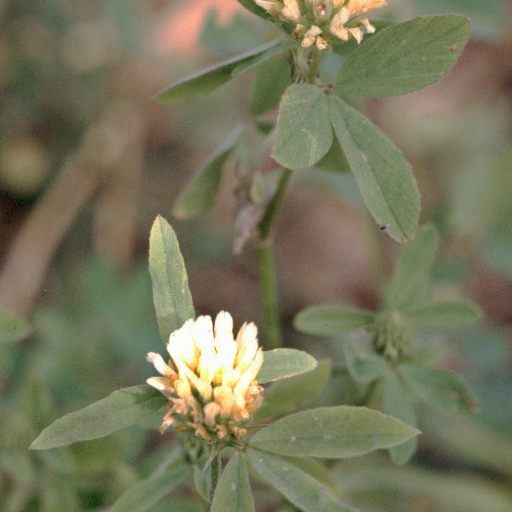
Plant Overview
Known famously as Berseem Clover, this lush legume is the backbone of ancient Mediterranean agriculture. Originating in the Nile Delta, it has been a "green gold" for farmers for millennia, used to rejuvenate tired soil and provide a protein-rich feast for livestock. It is a vigorous, fast-growing annual that transforms fields into a sea of creamy white blooms.
🔍 How to Identify
- ☘️ The Foliage: Like its cousins, it features "trifoliate" leaves (groups of three), but the leaflets are notably more elongated and oval than the common round garden clover.
- 🍦 The Blooms: Its flower heads are oblong or cone-shaped rather than perfectly round, boasting a soft creamy-white or pale yellow hue that smells faintly of honey.
- 📏 Growth Habit: Unlike creeping white clover, Berseem grows upright on hollow, succulent stems, often reaching heights of 12 to 24 inches.
🏡 In Your Garden
- 🌱 The Soil Architect: This plant is a "nitrogen fixer." It hosts special bacteria on its roots that pull nitrogen from the air and store it in the soil, making it the perfect "green manure" to plant before a heavy-feeding crop like tomatoes or corn.
- 💧 Thirst for Life: Given its Egyptian heritage, it loves moisture but demands well-draining soil. It has a deep taproot that helps it find water, but it will struggle in bone-dry, sandy patches without regular irrigation.
- ❄️ Frost Sensitivity: Unlike some clovers that can handle a deep freeze, Berseem is a tender annual. It thrives in the cool seasons of warm climates and will naturally die back once a hard frost hits, self-mulching your garden bed.
⚠️ Safety & Toxicity
- ✅ Generally Safe: Trifolium alexandrinum is non-toxic to humans and is a staple forage for livestock.
- 🐶 Pet Friendly: It is not known to be poisonous to cats or dogs; however, grazing in large amounts can occasionally cause mild digestive upset or bloating in sensitive animals.
- 🚜 Livestock Note: While it is safer than many other clovers regarding "bloat" in cattle, it should still be introduced to a diet gradually.
✨ Fun Fact
Berseem clover is so vital to Egyptian history that it was historically used as a form of currency for land taxes. Today, it remains one of the world's most important honey plants, producing a light, high-quality nectar that bees absolutely adore.

Detailed Care Instructions
To grow Trifolium Alexandrinum, also known as Egyptian clover, follow these steps:
- Choose the right location: Egyptian clover thrives in full sun to partial shade. Ensure that the area receives at least 4-6 hours of direct sunlight per day.
- Prepare the soil: Egyptian clover prefers well-draining soil that is rich in organic matter. Amend the soil with compost or well-rotted manure before planting.
- Planting: Sow the seeds directly into the prepared soil in early spring or early fall. Make sure to scatter the seeds evenly and lightly press them into the soil. If planting a larger area, consider using a seed spreader or a broadcast seeder.
- Watering: Keep the soil moist but not waterlogged until the seeds germinate, which usually takes about 7-10 days. After germination, water the plants regularly but avoid over-watering as it can lead to root rot.
- Fertilizing: Apply a balanced, slow-release fertilizer at the recommended rate during planting. Follow the instructions on the fertilizer packaging for best results. Avoid excessive use of nitrogen-based fertilizers, as it can encourage weeds.
- Weed control: Ensure regular weeding to prevent competition with the clover plants. Use hand-pulling or hoeing to remove any unwanted weeds.
- Maintenance: Egyptian clover is a low-maintenance plant, but regular mowing or grazing can help promote denser growth and prevent it from becoming leggy. Mow or graze the plants when they reach around 6-8 inches in height.
- Harvesting: Egyptian clover can be harvested for forage or as a cover crop. It is usually ready for the first cutting about 60-80 days after planting. Cut the plants close to the ground, leaving around 3 inches of stubble for regrowth.
- Renewal: After harvesting, the plants will regrow and can provide multiple cuttings throughout the growing season. However, it is recommended to replant every 1-2 years to maintain healthy growth and productivity.
By following these steps, you can successfully grow Trifolium Alexandrinum, enjoying its benefits as a forage crop or cover crop in agricultural settings.

Place in a bright room that is sun drenched almost all day. Or directly in a south-facing window.

To water this plant, first ensure that the soil is dry to the touch before watering. Then, gently pour water around the base of the plant, taking care not to wet the leaves. Provide enough water to thoroughly saturate the soil, but avoid overwatering to prevent root rot. As a general rule, water once a week or when the soil becomes dry. Additionally, avoid letting the plant sit in standing water, as this can also lead to root rot.
To fertilize this plant, it is recommended to apply nitrogen-rich fertilizer in early spring. This can be done either by top-dressing with a granular fertilizer or by applying a foliar spray. During the growth period, it may also be helpful to apply a balanced fertilizer to support overall plant growth and health. Care should be taken to avoid over-fertilization, as this can lead to excessive foliage growth at the expense of flowers. Regular watering is also essential for this plant to thrive.
Trifolium Alexandrinum plants require well-draining soil that is rich in organic matter. The ideal soil should have a pH level that is slightly acidic to neutral, ranging from 6.0 to 7.5. It is recommended to use loamy soil that is composed of sand, silt, and clay particles in equal proportions. The soil should be able to retain moisture without becoming waterlogged, as these plants do not tolerate soggy conditions. The use of compost or other organic matter can be beneficial for soil fertility and improving soil structure. Avoid using heavy clay or sandy soils, as these can lead to poor growth and yield in Trifolium Alexandrinum plants.
To propagate this plant, you need to collect its mature seeds from the parent plant. The seeds are then planted in a well-draining soil mix and kept in a warm and humid environment until they germinate. Once the seedlings have sprouted, they can be transplanted to their permanent location. Alternatively, you can propagate the plant via stem cuttings. Cut a healthy stem from the parent plant, remove the lower leaves, and plant the stem cutting in a well-draining soil mix. Keep the soil moist and the cutting in a warm environment until it roots and begins to grow.








