Plant Overview
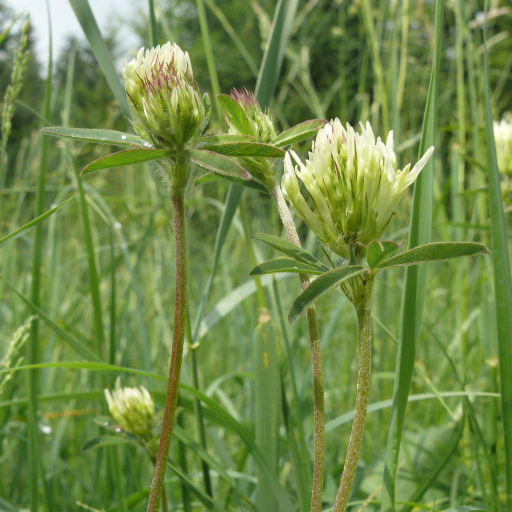
Often called the Sulphur Clover, this perennial beauty is the more sophisticated, cream-colored cousin of the common lawn clover. Native to the ancient meadows of Europe and Western Asia, it provides a soft, buttery glow to wild gardens rather than the aggressive spreading seen in other varieties. It is a prized choice for those looking to recreate a classic hay meadow or a pollinator-friendly "rewilded" space.
🔍 How to Identify
- 🌼 Flower Heads: Large, globular clusters of pale, sulphur-yellow or creamy-white florets that lack the pinkish hues found in Red Clover.
- 🍃 Leaf Structure: Classic "trifoliate" (three-part) leaves that are noticeably longer and more elliptical than the round leaves of common white clover.
- ☁️ Hairy Texture: Both the stems and the undersides of the leaves are covered in fine, soft hairs, giving the plant a slightly silvery or muted appearance in direct sunlight.
🏡 In Your Garden
- 🌱 Soil Preference: This clover is a "calcicole," meaning it absolutely loves chalky or limestone-heavy soils; it may struggle to thrive if your garden soil is highly acidic.
- ☀️ Drought Resilience: Because it develops a sturdy root system, it is remarkably tough and can handle dry spells that would leave a standard lawn looking brown and crispy.
- 🐝 Pollinator Magnet: It is a high-value plant for long-tongued bees and butterflies, who find the deep nectar wells of the sulphur florets irresistible.
⚠️ Safety & Toxicity
- 🐾 Pet Friendly: Trifolium ochroleucon is generally considered non-toxic to cats and dogs, making it a safe addition to a pet-accessible backyard.
- 👶 Child Safe: It is non-toxic to humans, though as with any garden plant, it should not be ingested in large quantities, and the hairy stems might feel slightly "scratchy" to very sensitive skin.
✨ Fun Fact
In many regions, Sulphur Clover is considered a "quality indicator" for ancient grasslands. Finding it growing wild often suggests that the soil has remained undisturbed and chemically untreated for decades, if not centuries!

Detailed Care Instructions
Trifolium Ochroleucon, also known as the Yellow Clover, is a species of clover that is native to Europe. Here are some tips on how to grow this plant successfully:
- Soil: Trifolium Ochroleucon prefers well-draining soil that is rich in nutrients. It can tolerate a wide range of soil pH levels, but slightly acidic to neutral soil is ideal.
- Sunlight: This plant thrives in full sun to partial shade. Make sure it receives at least 6 hours of sunlight per day.
- Watering: Keep the soil consistently moist, but not waterlogged. Water the plant deeply once a week, or more often during dry periods.
- Fertilization: You can fertilize the plant with a balanced fertilizer during the growing season to promote healthy growth.
- Mulching: Apply a layer of organic mulch around the base of the plant to help conserve moisture and suppress weed growth.
- Pruning: Trifolium Ochroleucon does not require extensive pruning. However, you can deadhead faded flowers to encourage more blooms.
- Propagation: You can propagate Yellow Clover by collecting and sowing seeds, or by dividing the plant in early spring.
- Pests and diseases: Keep an eye out for aphids, mealybugs, and powdery mildew, which are common pests and diseases that can affect this plant. Treat infestations promptly to prevent damage.
With proper care and attention, Trifolium Ochroleucon can thrive and add beauty to your garden with its yellow flowers and lush foliage.

Place in a bright room that is sun drenched almost all day. Or directly in a south-facing window.

Trifolium Ochroleucon plants should be watered deeply and evenly, ensuring that the soil is consistently moist but not waterlogged. It is important to water at the base of the plant to prevent moisture from sitting on the leaves, which can lead to disease. During hot weather or when the plant is actively growing, it may be necessary to water more frequently. Conversely, reduce watering during cooler weather or when the plant is dormant. It is also important to avoid overhead watering, as this can increase the risk of fungal infections. Be sure to allow the soil to dry out slightly between waterings to prevent root rot. Consider using a soaker hose or drip irrigation system to deliver water directly to the roots of the plant. Additionally, using mulch around the base of the plant can help retain moisture and reduce the frequency of watering.
To fertilize Trifolium Ochroleucon, apply a balanced fertilizer with equal parts nitrogen, phosphorus, and potassium in early spring before the plant begins actively growing. Repeat the application every 6-8 weeks during the growing season. Be sure to follow the manufacturer's instructions for proper dilution and application rates. Water the plant thoroughly after fertilizing to help the nutrients reach the roots. Avoid over-fertilizing as it can lead to nutrient imbalances and potential harm to the plant.
Trifolium ochroleucon requires well-draining soil with a pH level between 6.0 and 7.0. It thrives in soil that is rich in organic matter and nutrients. A mix of loamy and sandy soil is ideal for optimal growth. It is important to avoid heavy clay soils as they can retain too much water, leading to root rot. Adding compost or other organic matter to the soil can help improve its texture and fertility, providing the necessary nutrients for the plant to thrive. Additionally, regular soil testing and proper fertilization can help ensure the plant receives the necessary nutrients for healthy growth and blooming.
Trifolium Ochroleucon can be propagated through several methods, including seed propagation, division, and cuttings.
One way to propagate this plant is by collecting seeds from mature plants. These seeds can be sown directly into the ground in the spring or fall, or they can be started indoors and transplanted outdoors once the seedlings are established.
Another method of propagation is by dividing established plants. This can be done in the spring or fall by carefully digging up the plant and separating the root ball into smaller sections. These sections can then be replanted in a new location where they will continue to grow.
Propagation through cuttings is another option for Trifolium Ochroleucon. To do this, take a cutting from an established plant, making sure to include a node. Place the cutting in moist soil or water until roots begin to form, then transplant it into a pot or directly into the ground.
By following these propagation methods, you can easily increase the number of Trifolium Ochroleucon plants in your garden or landscape.








