Plant Overview
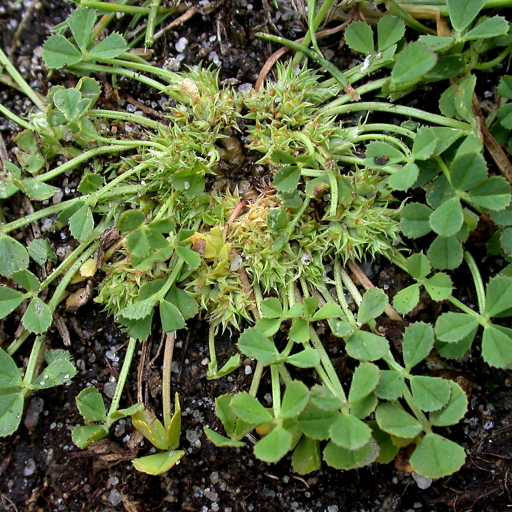
The Suffocated Clover, or Trifolium suffocatum, is a master of the "low profile" lifestyle. Unlike its taller cousins that wave in the meadow breeze, this tiny annual remains pressed firmly against the soil, often hiding its flowers beneath its own foliage. Native to the sandy coasts of Western Europe and the Mediterranean, it is a specialist of rugged, trampled ground where other plants struggle to breathe.
🔍 How to Identify
- 🍀 The "Suffocated" Flowers: The tiny, whitish-pink flower heads are "sessile," meaning they lack stalks. They grow in dense, suffocating clusters right at the base of the leaf stalks, often appearing buried.
- 🍃 Trifoliate Leaves: Like all clovers, it features three leaflets. These are small, wedge-shaped, and usually have a distinct "toothed" edge toward the tip.
- 🌱 Prostrate Habit: The plant grows in flat, spreading mats. Its stems crawl along the ground, rarely rising more than a few centimeters high.
🏡 In Your Garden
- 🏖️ The Sand Specialist: This clover thrives in nutrient-poor, sandy, or gravelly soils. If you find it in your yard, it’s a sign of well-drained ground and perhaps a bit of heavy foot traffic, which it actually enjoys.
- 🛡️ Tough Underfoot: Because it grows so low to the ground, it is remarkably resistant to mowing and trampling. It fills in the gaps on pathways or dry coastal lawns where grass might fail to take hold.
⚠️ Safety & Toxicity
- ✅ Generally Safe: Like most members of the Trifolium genus, the Suffocated Clover is considered non-toxic to humans.
- 🐾 Pet Watch: While not specifically listed as poisonous, most clovers contain small amounts of alkaloids or cyanogenic glycosides. It is unlikely to cause harm in small quantities, but large-scale grazing by pets should be discouraged to avoid digestive upset.
✨ Fun Fact
The name "suffocatum" isn't just a dramatic title; it describes the way the flower clusters are so tightly packed and crowded at the stem joints that they look like they are being squeezed or "choked" by the surrounding plant parts!

Detailed Care Instructions
Trifolium suffocatum, also known as suffocated clover or balansa clover, is a cool-season annual legume that is commonly used as a forage crop. Here are some tips to help you grow Trifolium suffocatum plants:
- Soil preparation: Trifolium suffocatum plants prefer well-drained, fertile soil with a pH of 6.0-7.0. Before planting, prepare the soil by tilling it to a fine texture and incorporating organic matter.
- Planting: Plant Trifolium suffocatum seeds in the early fall or early spring, depending on your climate. Sow the seeds at a depth of 1/4 inch and space them 4-8 inches apart.
- Watering: Keep the soil consistently moist but not waterlogged. Water the plants regularly, especially during dry periods.
- Fertilizing: Trifolium suffocatum plants are nitrogen-fixing legumes that do not require additional fertilizer. However, you may choose to apply a light application of balanced fertilizer if the soil is nutrient-deficient.
- Mulching: Mulch around the plants to help retain moisture, suppress weeds, and protect the roots from temperature fluctuations.
- Maintenance: Remove any weeds that compete with the Trifolium suffocatum plants for resources. Monitor for pests and diseases and take appropriate action if necessary.
- Harvesting: Trifolium suffocatum plants can be grazed by livestock or cut for hay. Allow the plants to reach a height of 8-12 inches before grazing or cutting for optimum yield.
By following these tips, you can successfully grow Trifolium suffocatum plants and enjoy healthy forage for your livestock.

Place in a bright room that is sun drenched almost all day. Or directly in a south-facing window.

To water this plant, it is recommended to check the soil moisture level before watering. This can be done by sticking a finger about an inch into the soil and feeling for moisture. If the soil is dry, it is time to water. When watering, use a gentle and even stream of water to slowly saturate the soil. It is important to avoid overwatering, as this can lead to root rot and other issues. Additionally, it is best to water in the morning or early afternoon to allow the soil to dry out before evening.
To fertilize Trifolium Suffocatum, apply a balanced, all-purpose fertilizer in the early spring before new growth begins. Use a slow-release fertilizer to avoid burning the roots. Water the plant thoroughly after fertilizing to help the nutrients penetrate the soil. Repeat this fertilizing process every 4-6 weeks during the growing season, but be cautious not to over-fertilize as it may harm the plant.
Trifolium Suffocatum plant prefers well-draining soil that is rich in nitrogen and organic matter. It grows best in a soil pH range of 6.0 to 7.0. The soil should be kept moist but not waterlogged, as the plant is susceptible to root rot if it remains too wet. It is recommended to mix in compost or aged manure to the soil before planting to provide a nutrient-rich environment for the plant to thrive. Additionally, adding a layer of mulch around the plant can help retain soil moisture, regulate soil temperature, and suppress weed growth.
Trifolium suffocatum can be propagated through division or by collecting and planting seeds.
To propagate through division, carefully dig up the plant and gently separate the clumps of roots. Each clump should have its own stem and roots attached. Replant the divided clumps in a new location in well-draining soil.
To propagate from seeds, collect the seeds from the mature flowers of the plant. Plant the seeds in moist, well-draining soil in either the spring or fall. Keep the soil consistently moist and provide ample sunlight for the seeds to germinate and grow.
Both methods of propagation require regular watering and maintenance to ensure the new plants establish themselves successfully.








