Plant Overview
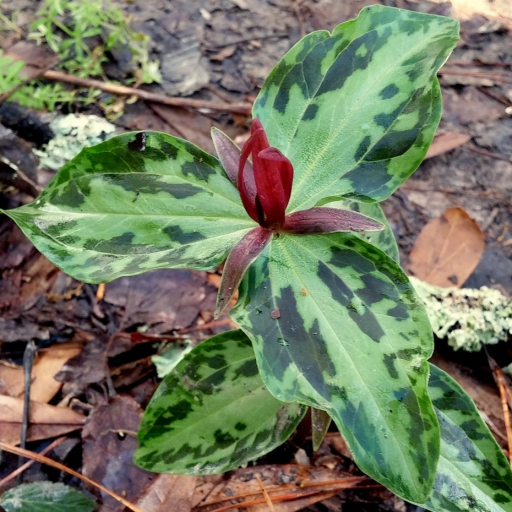
Often called the Mississippi River Wakerobin or the Stinking Trillium, this native wildflower is a true gem of the Deep South’s shaded woodlands. It gets its dramatic scientific name, foetidissimum (meaning "the most foul-smelling"), from its pungent aroma—which mimics the scent of rotting meat to attract its primary pollinators: carrion flies. In the early spring, it emerges from the damp earth like a dark, silent sentinel of the forest floor.
🔍 How to Identify
- 🍃 Mottled Foliage: The plant features three broad, stalkless leaves that are beautifully marbled with irregular splashes of silver, pale green, and deep bronze, allowing it to blend into the fallen leaf litter.
- 🍷 Sessile Blooms: Unlike "nodding" trilliums, these flowers sit directly on the leaves without a stalk. The three narrow, upright petals are typically a deep, velvety maroon or chocolate-purple.
- 📏 Stature: It is a relatively low-growing perennial, usually reaching only 6 to 12 inches in height, often appearing in small, concentrated colonies near river basins.
🏡 In Your Garden
- 🍂 The "Duff" Factor: This plant thrives in "woodland gold"—soil that is rich in decaying leaf mold and organic matter. It prefers the dappled shade of deciduous trees, where it can soak up the early spring sun before the canopy fills in.
- ⏳ Slow & Steady: Trilliums are famous for their slow growth. It can take several years for a young plant to reach flowering age. Because they grow from fragile underground rhizomes, they "resent" being moved; choose a permanent, quiet spot where they won't be disturbed by heavy tilling.
- 💧 Dormancy Logic: As a spring ephemeral, the plant will naturally die back and disappear by mid-summer. Don't panic when the leaves turn yellow and vanish; it is simply retreating underground to save energy for next year.
⚠️ Safety & Toxicity
- 🚫 Toxicity Status: Low to Moderate toxicity.
- 🐾 Details: The plant contains saponins, which can cause significant digestive upset (nausea, vomiting, and diarrhea) if the leaves or rhizomes are ingested. It is best kept away from curious pets and children who might be tempted by its unique appearance.
✨ Fun Fact
🐜 Ant Farmers: This plant relies on a process called myrmecochory. Its seeds have a fleshy, fat-rich attachment called an elaiosome. Ants find these "treats," carry the seeds back to their underground nests to feed their larvae, and then discard the actual seed in their "trash piles"—which happen to be perfectly fertilized, protected spots for a new Trillium to grow!

Detailed Care Instructions
To water this plant, it is important to monitor the soil moisture level and ensure it does not dry out completely. Watering should be done gradually and evenly to saturate the root zone without causing waterlogging or runoff. It is recommended to water deeply once or twice a week, depending on weather conditions and soil type, and to avoid getting water on the leaves to prevent fungal infections. A good way to check if the plant needs watering is to stick your finger into the soil and feel for moisture. If it feels dry to the touch, it's time to water. It is also beneficial to apply a layer of mulch around the base of the plant to retain moisture and prevent weeds.
Trillium Foetidissimum plant prefers growing in a soil rich in organic matter with a slightly acidic to neutral pH level. It thrives in soils that are well-draining and moist, but not waterlogged. Soil that is too compact or heavy can hinder root growth and cause health problems for the plant. It is also important to avoid soil that is rich in nitrogen, as this can lead to too much leaf growth and negatively impact flower production. Instead, a balanced fertilizer or compost can be used to provide necessary nutrients. Overall, a well-draining soil with good moisture retention and added organic matter is ideal for healthy Trillium Foetidissimum growth.