Plant Overview
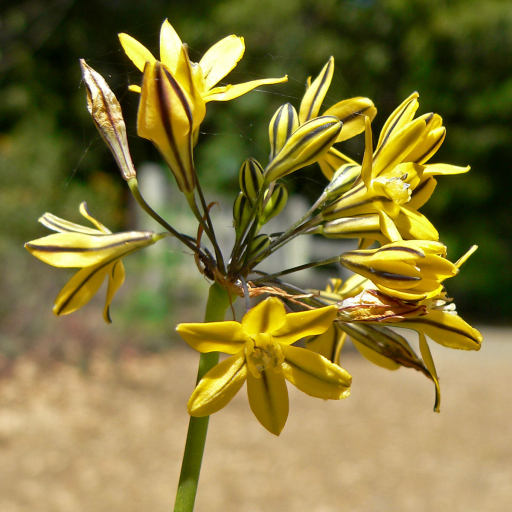
Often called the Yellow Pretty Face or Coast Range Triteleia, Triteleia lugens is a hidden gem of the California and Oregon foothills. This elegant wildflower emerges like a bright sunburst against the drying grasses of late spring, signaling the transition into the golden days of summer. It is a resilient "geophyte," meaning it spends most of its life hidden underground as a hardy corm, waiting for the perfect moment to decorate the landscape with its starry golden clusters.
🔍 How to Identify
- 🌼 The Blooms: It features star-shaped flowers that grow in an umbel—a cluster where all the flower stalks radiate from a single point like the ribs of an umbrella.
- 🖋️ The Mid-Vein: Each petal is distinctively marked with a dark, brownish-purple mid-vein running down the center, which gives the flower its "dark-mouthed" or "pretty face" character.
- 🌱 The Foliage: The leaves are long, narrow, and grass-like; interestingly, they often begin to wither and turn brown just as the flowers start to open, focusing all the plant's energy on the bloom.
🏡 In Your Garden
- 🏜️ Drainage is Vital: Native to rocky slopes and oak woodlands, this plant absolutely detests "wet feet." If you are planting it at home, use a gritty, well-draining soil mix to mimic its hillside habitat and prevent the corm from rotting.
- 💤 Summer Dormancy: Do not be alarmed when the plant disappears! After flowering, the Yellow Pretty Face goes into a deep summer sleep. It requires a completely dry period during its dormancy, so avoid watering the area once the stems have turned brown.
⚠️ Safety & Toxicity
- ✅ Generally Safe: Triteleia lugens is not known to be toxic to humans or common household pets like cats and dogs.
- 🐾 Digestive Caution: While not poisonous, the bulbs (corms) are rich in starch. If a curious pet digs them up and consumes a large quantity, it may cause mild stomach upset or lethargy simply due to the unusual fiber intake.
✨ Fun Fact
🥣 Ancient Snacks: While we treat them as ornamentals today, the corms of many Triteleia species were historically a significant food source for Indigenous peoples in the Western United States. They were often slow-roasted in earth ovens, resulting in a sweet, nutty flavor similar to a roasted chestnut!

Detailed Care Instructions

Place in a bright room that is sun drenched almost all day. Or directly in a south-facing window.

Some plants require more regular watering than others, which should be done every few days. It's critical to maintain the soil moist all of the time. The water requirements of the same plant placed in pots with varying sizes will differ. Because the water in the smaller pot evaporates faster than the water in the larger pot, it will require more watering. Regardless of pot size, the surface should constantly be maintained moist.








