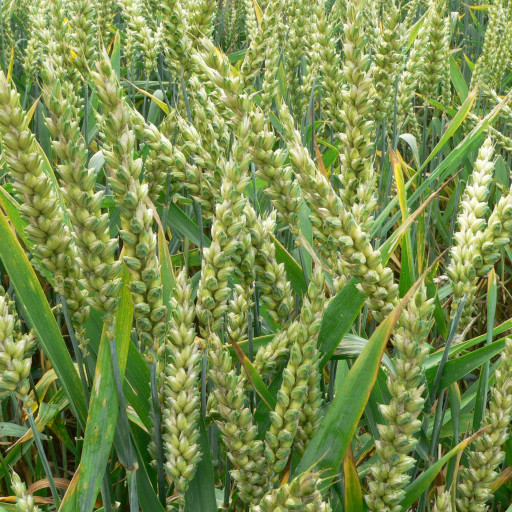
Plant Overview
Known globally as "Common Wheat" or "Bread Wheat," Triticum aestivum is arguably the most influential plant in human history. This golden grass originated in the Fertile Crescent thousands of years ago and has since become the primary starch source for a huge portion of the world's population. While usually seen in massive agricultural fields, it is increasingly popular in "edible landscapes" and decorative dried floral arrangements.
🔍 How to Identify
- 🌾 The Seed Head (Spike): The plant’s crowning glory is a dense, upright cluster of spikelets where the grains develop. Depending on the variety, these may have long, hair-like bristles called "awns" (bearded wheat) or be smooth (beardless wheat).
- 🍃 The Foliage: Long, slender, blade-like leaves emerge from the stem. They have a rough texture if you rub them the wrong way and feature parallel venation typical of the grass family.
- 🦒 The Stem (Culm): The stalks are hollow, cylindrical, and divided by "nodes" (joints). They start a vibrant blue-green and fade to a brilliant, papery gold as the plant reaches maturity.
🏡 In Your Garden
- ☀️ Sun & Space: Wheat is a sun-obsessive. It requires wide-open spaces with maximum light exposure to strengthen its stalks; otherwise, the plants may "lodge" (fall over) under the weight of their own grain heads.
- 🌱 Soil Strategy: It prefers well-drained loamy soil. While it’s surprisingly drought-tolerant once established, it hates "wet feet." Excessively soggy soil during the early growth stages can lead to root rot and poor grain development.
- ✂️ The Annual Cycle: Because it is an annual grass, wheat has a "one and done" lifecycle. Once the grain is harvested or the plant turns fully golden and brittle, it will not regrow the following year.
⚠️ Safety & Toxicity
- ✅ Status: Generally non-toxic and safe for humans and pets.
- 🐾 Physical Irritant: For curious pets (dogs and cats), the "awns" or bristles on bearded varieties can be a nuisance. These sharp fibers can get stuck in fur, ears, or between paw pads, occasionally causing minor irritation or infection if not removed.
- 🍞 Dietary Note: While the plant itself isn't toxic, the seeds are the primary source of gluten, which is a significant allergen for humans with Celiac disease or gluten sensitivity.
✨ Fun Fact
Common Wheat is a "hexaploid" organism, meaning it has six sets of chromosomes—the result of three different wild grass species naturally hybridizing in ancient times. This complex genetics is what makes it so adaptable to different climates across the globe!

Detailed Care Instructions
| Soil Ph | Slightly Acidic |
| Humidity | Dry |
| Invasive | Weed |
| Lighting | Full Sun |
| Soil Type | Organic, Sterile Potting Mix |
| Difficulty | Medium |
| Plant Type | Annual |
| Hibernation | Cold Period |
| Mature Size | Harvest When Seedlings Are About 7 Inches Tall |
| Temperature | 15°C - 27°C |
| Sun Exposure | Full Sun By The End Of The Process |
| Hardiness Zones | 4-9 |
To grow Triticum aestivum, commonly known as wheat, follow these steps:
- Select a suitable location: Wheat plants require a sunny location with at least six hours of direct sunlight per day. The soil should be well-draining and fertile.
- Prepare the soil: Clear the planting area of any weeds or debris. Till the soil to a depth of about 6-8 inches and amend it with organic matter like compost or well-rotted manure to improve its fertility.
- Choose the right variety: There are different varieties of wheat available, so select the one that suits your growing conditions and harvest preferences. Common varieties include hard red winter wheat, hard red spring wheat, soft red winter wheat, and durum wheat.
- Planting: Wheat can be sown directly into the ground or started indoors as transplants. If starting indoors, plant wheat seeds in trays or pots about 4-6 weeks before the last frost date. Transplant them outdoors when the soil temperature reaches around 50°F (10°C). If sowing directly, scatter the seeds evenly over the prepared soil and lightly rake or hoe them into the soil, ensuring proper seed-to-soil contact.
- Watering: Wheat requires consistent moisture, especially during the germination and heading stages. Water the plants regularly, keeping the soil moist but not waterlogged.
- Fertilization: Wheat plants benefit from a balanced fertilizer application during their growth. Apply a nitrogen-rich fertilizer like a 10-10-10 blend in early spring, following the package instructions.
- Weed control: Keep the area around the wheat plants free of weeds, as they can compete for nutrients and water. You can accomplish this by regular hand weeding or using mulch to suppress weed growth.
- Disease and pest control: Monitor the plants for signs of common wheat pests and diseases such as rust, aphids, or Hessian flies. If needed, apply organic or chemical control methods as per recommended guidelines.
- Harvesting: Wheat is usually ready for harvest when the stems turn golden yellow and the seeds become hard. Cut the wheat stalks near the base with a sickle or scythe and bundle them together. Hang the bundles in a well-ventilated area to dry and thresh the grain once it is completely dry.
Remember to check with your local agricultural extension office or gardening resources for specific recommendations and guidelines that may be applicable to your region.

Place in a window with dappled sun or a spot in the middle of a room. Or directly in a window facing west or east.

To water Triticum Aestivum plant, it is important to check the moisture level in the soil. The soil must be kept moderately moist but not waterlogged.
One approach is to water deeply but infrequently. This can be done by thoroughly soaking the soil with water until it reaches a depth of at least 6 inches. Wait until the top inch of soil feels dry to the touch before watering the plant again.
Another way is to use a drip irrigation system that releases water slowly and directly to the roots of the plant. This can ensure that the soil stays consistently moist without becoming waterlogged.
It is important to avoid watering the plant too much as this can lead to root rot and other diseases. Additionally, it is best to water the plant in the morning or evening when the temperature is cool to prevent water evaporation and scorching of the leaves.
To fertilize this plant, apply a balanced fertilizer with equal amounts of nitrogen, phosphorus, and potassium. Apply the fertilizer in early spring just before planting, and again when the plant reaches its vegetative growth stage. Avoid over-fertilizing as this can lead to reduced growth and yield. Additionally, ensure that the plant is adequately watered to aid in nutrient uptake and growth.
For optimal growth and development, Triticum Aestivum requires a growing medium with a good balance of nutrients and drainage. A loamy soil that is slightly acidic with a pH range of 6.0 to 7.5 is the most suitable, as it offers good drainage and aeration while retaining moisture. This type of soil can be prepared by mixing equal parts of sand, silt, and clay.
In addition to the soil structure, it is important to consider the soil's nutrient content. Triticum Aestivum requires soil with adequate amounts of nitrogen, phosphorus, and potassium. The soil can be improved by adding organic matter such as compost, manure, or leaf litter, which not only provides nutrients but also improves soil structure.
To ensure healthy growth and root development, the soil should be well-drained and free of any compaction or clay soil. This can be achieved by adding coarse sand or perlite to the soil mixture. Additionally, it is important to avoid soils that contain excessive amounts of salts, which can harm the plant.
Overall, a well-draining, nutrient-rich, and slightly acidic soil mixture is essential for the successful growth of Triticum Aestivum.
Triticum Aestivum can be propagated using vegetative propagation through a process called cloning. This involves taking stem cuttings from a healthy and mature plant, ideally in the spring or early summer when the plant is actively growing. The cuttings should be about 4-6 inches long and include several nodes.
The cuttings should be planted in a mixture of soil and sand, kept moist but not waterlogged, and placed in a warm and sunny location. It's important to keep the soil moist and check for any signs of wilting or stress, and transfer the cuttings to a larger container as they grow.
Alternatively, Triticum Aestivum can also be propagated through seed propagation. This involves collecting seed heads from mature plants and planting the seeds in soil or trays. The seeds should be covered with soil and kept moist until they germinate.
Once the seedlings have grown to a few inches tall, they can be transplanted into larger containers or out into the garden. It's important to keep the seedlings moist and provide them with adequate sunlight and nutrients.
Common pests of the wheat include Spider mites, aphids, thrips. Make a habit of checking your wheat frequently for pests so that any infestations can be caught and managed early.








