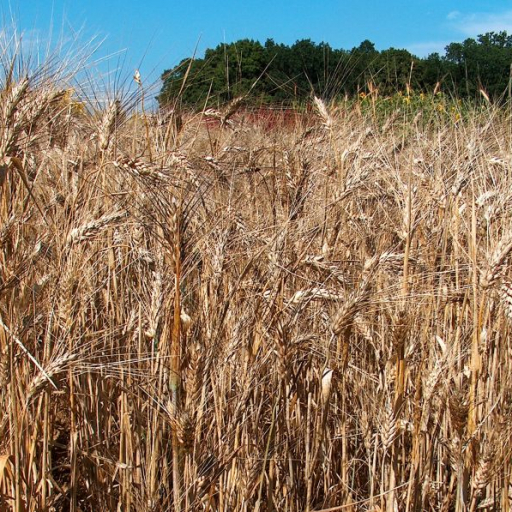
Plant Overview
Often called "Pasta Wheat" or "Macaroni Wheat," Durum is the golden powerhouse of the Mediterranean. It is the hardest of all wheat species, specifically bred over millennia to produce the perfect grit for semolina. While bread wheat is grown for fluffiness, Durum is celebrated for its strength, amber color, and its "al dente" soul.
🔍 How to Identify
- 🌾 The "Beard": Unlike some smoother grains, Durum features long, stiff bristles called "awns" that extend from the seed head, giving the field a fuzzy, ancient appearance.
- 📏 The Spike: The seed head (spike) is compact and thick, holding heavy, hard kernels that are more translucent and elongated than common bread wheat.
- 🌿 Sturdy Stalks: It grows on thick, hollow stems that stand tall and resilient, typically reaching 2 to 4 feet in height depending on the variety.
🏡 In Your Garden
- ☀️ Sun-Drenched Roots: This plant is a child of the sun. It thrives in hot, dry climates with low humidity. In fact, too much rain during the ripening stage can actually damage the quality of the grain.
- 🌱 Deep Foundation: Durum develops a vigorous root system that allows it to find water deep in the earth. This makes it a fantastic choice for "dryland farming" where irrigation is scarce, as it is much more drought-tolerant than its soft-wheat cousins.
⚠️ Safety & Toxicity
- 🥖 Gluten Alert: While completely non-toxic and a staple food, Durum is exceptionally high in gluten. It is strictly unsafe for those with Celiac disease or gluten intolerance.
- 🐾 Pet Safety: The plant itself is non-toxic to cats and dogs. However, if you grow it at home, be mindful of the "awns" (the bristles); these can occasionally become lodged in a pet's paw, ear, or throat if they decide to forage in the stalks.
✨ Fun Fact
The name "Durum" comes directly from the Latin word durus, meaning "hard." It is so physically tough that it cannot be ground by the same methods used for bread flour—it must be crushed between heavy steel rollers to break it down into the golden semolina used for pasta!

Detailed Care Instructions
Growing Triticum durum, also known as durum wheat, requires the right conditions and care. Here are some steps to help you grow this plant:
- Climate: Triticum durum thrives in areas with warm temperatures, full sun, and long growing seasons. The ideal temperature range is 70-75°F (21-24°C) during the day and 55-60°F (13-16°C) at night.
- Soil: The plant prefers well-draining, fertile soil with a pH between 6.0 and 7.5. Prepare the soil by removing weeds and loosening it to a depth of at least 8 inches. You can add organic matter like compost or well-rotted manure to improve the soil structure.
- Planting: Triticum durum is typically grown from seeds. Plant the seeds in early spring when the soil temperature reaches around 50°F (10°C). Sow the seeds about 1 inch deep, spacing them 4-6 inches apart. If you have a larger area, you can also broadcast the seeds.
- Watering: Keep the soil consistently moist but not waterlogged. Water deeply once a week, providing about 1 inch of water. However, reduce watering towards the end of the growing season as the plant matures.
- Fertilization: Triticum durum requires nitrogen for healthy growth. You can apply a high-nitrogen fertilizer before planting or top-dress the plants with nitrogen-rich fertilizer during the growing season. Follow the instructions on the fertilizer package for proper application.
- Weed control: Regularly remove weeds that compete with the durum wheat for resources. Ensure that the plant has enough space to grow and access to sunlight.
- Disease and pest control: Monitor the plants for any signs of diseases or pests like rust, aphids, or armyworms. If necessary, consult local agricultural extension services or professionals for appropriate treatment options.
- Harvesting: Harvest the durum wheat when the stalks turn yellow and the grain kernels are hard and fully mature. Cut the stalks at the base, bundle them, and hang them in a well-ventilated area to dry. Once the kernels are thoroughly dry, you can thresh them to separate the grain from the chaff.
Remember to follow any specific guidelines for your region or consult with local agricultural experts for the best practices regarding durum wheat cultivation.
To water Triticum Durum plant, ensure that the soil is moist and well-drained. Water the plant deeply, allowing the water to penetrate to the roots. Avoid watering the plant too frequently, as this can lead to waterlogging and root rot. In hot weather, water the plant regularly to prevent the soil from drying out. It is best to water the plant in the morning or evening when the temperature is cooler, as this will help the plant to absorb more water. Use a watering can or hose with a gentle flow to avoid damaging the plant. Finally, avoid getting water on the leaves, as this can lead to plant diseases.
For optimal growth and yield, apply a nitrogen-based fertilizer at a rate of 50-60 kg per hectare at the time of sowing. Two further applications of nitrogen-based fertilizer should be made at stem elongation and at heading, each at a rate of 50-60 kg per hectare. In addition, phosphate and potassium-based fertilizers should be applied at a rate of 20-30 kg per hectare at the time of sowing. It is important to avoid over-fertilization which can harm the plant and the environment.
The ideal soil for Triticum Durum plant is a well-draining and nutrient-rich soil with a pH range of 5.5 to 7.5. It prefers soil that is slightly alkaline with good amounts of organic matter. Clay, loam, and sandy soil is suitable for the plant growth. The soil also needs to be well-aerated, as this plant requires oxygen for the root growth. Additionally, it is important to keep the soil consistently moist but not waterlogged, as excessive moisture can lead to root rot. Fertilizing the soil with balanced nutrients in the form of compost or slow-release fertilizers is important for plant growth and development.
Triticum Durum can be propagated asexually or sexually. Asexual propagation can be achieved through division of rhizomes or by taking stem cuttings. To propagate by division of rhizomes, the plant should be dug up and the clumps should be separated into smaller sections. Each section should contain a portion of the roots and stems. These sections can then be planted in a new location and watered regularly until they are established.
To propagate by stem cuttings, select healthy stems that are free of disease and pests. Cut them from the plant and dip the base of each cutting in a rooting hormone before planting it in well-draining soil. Keep the soil moist and place the cutting in a warm, bright location away from direct sunlight. In a few weeks, new roots should begin to grow from the base of the cutting.
Sexual propagation can be achieved by harvesting the seeds from mature plants. The seeds should be sown in well-draining soil during the appropriate growing season for the plant. Keep the soil moist and place the seedlings in a warm, bright location away from direct sunlight. As the seedlings grow, they can be transplanted into larger pots or directly into the ground.








