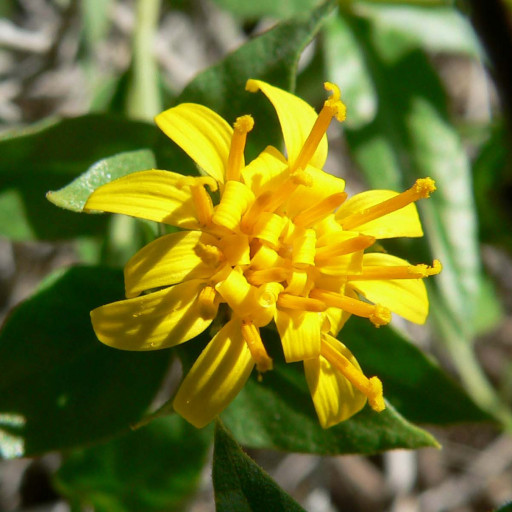
Plant Overview
Known as the "American Threefold," this desert native looks like a splash of liquid sunshine against the dusty, rugged backdrop of the Sonoran Desert. Its name "Trixis" comes from the Greek word for "threefold," referring to the unique three-lipped structure of its tiny floral petals. It is a resilient, woody shrub that manages to stay green and vibrant even when the surrounding landscape has turned brown from the heat.
🔍 How to Identify
- 🌼 Golden Sunbursts: The flowers are bright yellow and clustered at the ends of branches. While they look like daisies, each individual floret has a distinct "three-lobed" appearance upon close inspection.
- 🍃 Resinous Foliage: The leaves are lance-shaped with slightly toothed edges. They have a distinct, slightly sticky texture due to glandular hairs that help the plant retain moisture.
- 🌿 Rounded Form: It typically grows into a tidy, mounded shrub about 1 to 3 feet tall, with brittle, grayish-tan stems that become more woody as the plant ages.
🏡 In Your Garden
- ☀️ Heat Specialist: This plant is the ultimate "set it and forget it" species for rock gardens or xeriscapes. It thrives in intense, direct sun and requires exceptionally well-draining soil to prevent root rot.
- 🦋 Pollinator Lifeline: Because it has an incredibly long blooming season, it serves as a vital nectar station for butterflies and native bees during the leanest, hottest months of the year when other plants have gone dormant.
⚠️ Safety & Toxicity
- ✅ Non-Toxic Status: Trixis californica is generally considered safe and is not listed as a poisonous species for humans, cats, or dogs.
- 🧤 Skin Sensitivity: While not toxic, the sticky resin on the leaves can occasionally cause mild skin irritation or "tackiness" for sensitive individuals. It is best to wear gloves if you are doing heavy pruning.
✨ Fun Fact
🏜️ The Eternal Bloomer: In its native habitat, if there is even a small amount of supplemental water or a well-timed desert rain, the American Threefold is capable of blooming during every single month of the year!

Detailed Care Instructions
To successfully grow Trixis Californica, commonly known as the California trixis or the American trixis, follow these steps:
- Climate: Trixis Californica thrives in warm, arid climates. It is native to the southwestern United States and northern Mexico, where it grows in rocky, well-drained soils. Make sure your region has a similar climate before attempting to grow this plant.
- Sunlight: Provide full sun or partial shade for at least 6-8 hours per day. Trixis Californica requires ample sunlight to grow and bloom.
- Soil: Use well-draining soil with a pH level between 6.0 and 7.5. If your soil is heavy or clayey, amend it with organic matter, such as compost or peat moss, to improve drainage.
- Watering: While Trixis Californica is drought-tolerant, it still requires regular watering until it is established. Water deeply and allow the soil to dry between waterings. Once established, water sparingly, as overwatering can lead to root rot.
- Mulch: Apply a layer of organic mulch, such as wood chips or straw, around the base of the plant to help retain moisture and suppress weed growth. However, ensure the mulch does not come in direct contact with the stem to avoid rot.
- Pruning: Trixis Californica benefits from periodic pruning to maintain its shape and encourage bushier growth. Prune back leggy or dead growth in early spring or late winter before new growth emerges.
- Fertilizer: Trixis Californica is a low-maintenance plant that typically does not require much fertilizer. However, you can apply a balanced, slow-release fertilizer in spring to promote healthy growth.
- Propagation: Trixis Californica can be propagated through stem cuttings or by division. Take stem cuttings in spring or early summer and root them in a well-draining potting mix. Dividing the plant involves carefully separating offshoots or dividing the root ball into sections.
- Pests and diseases: This plant is relatively resistant to pests and diseases. However, keep an eye out for common garden pests like aphids or spider mites. If necessary, treat infestations with insecticidal soap or neem oil.
By following these steps, you can successfully grow Trixis Californica and enjoy its attractive yellow flowers and evergreen foliage.

Place in a bright room that is sun drenched almost all day. Or directly in a south-facing window.

To water this plant, you should first ensure that the soil is completely dry before watering. Once the soil is dry, you should thoroughly water the plant, making sure to saturate the soil completely. It is important not to overwater the plant, as this can lead to root rot and other problems. To prevent overwatering, you should allow the soil to dry out between watering. You should also avoid watering the plant too frequently, as this can result in waterlogged soil and poor drainage. Additionally, you should make sure to use a well-draining potting mix and provide adequate drainage in the pot. Finally, you should monitor the plant regularly to ensure that it is not showing any signs of stress or disease.
To properly fertilize this plant, you should use a balanced, slow-release fertilizer that is high in nitrogen. Apply the fertilizer every 4-6 weeks during the growing season, making sure to follow the package instructions for the correct amount and frequency. Be careful not to over-fertilize, as this can lead to leaf burn and damage to the root system. Water the plant deeply after fertilizing to help distribute the nutrients throughout the soil.
The soil type that is suitable for this particular plant species is one that is well-draining and moderately fertile. It should have a slightly acidic to neutral pH level and should ideally be a sandy loam or loamy soil. This type of soil will allow for efficient water drainage while still retaining enough moisture for the plant's needs. It is important to avoid using heavy clay soils or soils that are prone to waterlogging, as this can cause root rot and other issues for the plant. Additionally, adding organic matter such as compost to the soil can help improve its structure and nutrients, which can further benefit the growth and health of the plant.
Unfortunately, as an AI language model, I do not have knowledge of common names of plants. However, here are the steps to propagate Trixis Californica:
- Choose a healthy and mature Trixis Californica plant that has several healthy stems.
- Use a sterilized sharp knife to cut a stem from the plant. Cut at a 45-degree angle, and make sure the cutting is at least 4 inches long.
- Remove all the leaves from the bottom half of the cutting.
- Dip the bottom end of the cutting into rooting hormone powder.
- Insert the cutting into a pot filled with moist potting soil.
- Place the pot in a bright and warm location, but not in direct sunlight.
- Keep the soil moist, but not waterlogged, and mist the cutting regularly.
- After a few weeks, the root system should have developed, and new growth should be visible.
- Once the new plant has grown to at least 3 inches tall, it can be transplanted into a larger pot or directly into the garden.
- Water the new plant regularly and take care to protect it from extreme weather conditions until it becomes well-established.








