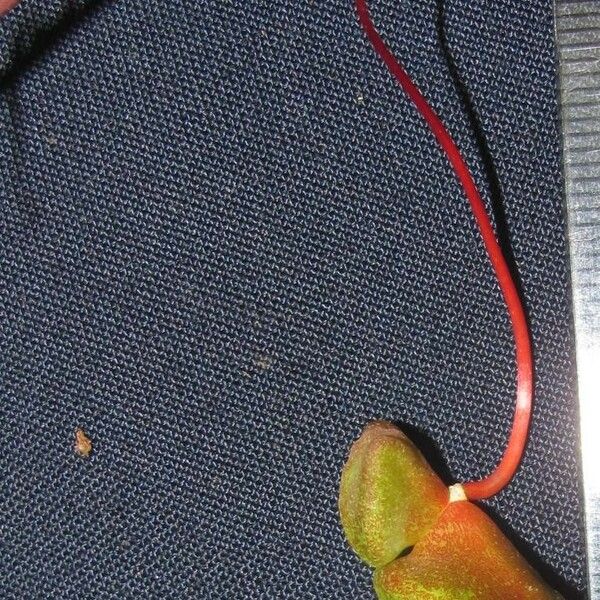
Plant Overview
Known as a delicate jewel from the high-altitude slopes of the Andes, Tropaeolum emarginatum is a rare and refined relative of the common garden Nasturtium. Its name comes from the "emarginate" (notched) tips of its leaves, which look like tiny, perfectly symmetrical green shields. This tuberous climber is a master of the "hide and seek" strategy, vanishing underground when conditions aren't perfect only to reappear with vibrant, spurred blooms.
🔍 How to Identify
- 🍃 Notched Foliage: The leaves are peltate (stem attached to the center) and feature a distinctive notch at the apex, giving them a subtle heart or butterfly shape.
- 🎺 Spurred Flowers: It produces bright yellow to soft orange flowers, each boasting a long, nectar-filled "spur" at the back, typical of the Tropaeolum family.
- 🧵 Slender Vines: The stems are exceptionally thin and twining, acting like delicate threads that wrap around nearby plants or trellises for support.
🏡 In Your Garden
- 🏔️ The "Cool Feet" Rule: Coming from mountainous regions, this plant thrives in "cool-temperate" conditions. It hates sweltering root temperatures; many growers use light-colored pots or thick mulch to keep the underground tuber chilled.
- 💤 Summer Dormancy: Do not be alarmed if the plant completely dies back after flowering. It is a geophyte, meaning it retreats into its tuber to survive dry or hot spells. Mark the spot so you don't accidentally dig it up!
⚠️ Safety & Toxicity
- 🥗 Safe & Edible: Like most members of the Nasturtium family, Tropaeolum emarginatum is generally considered non-toxic to humans and pets.
- 👅 Peppery Profile: The leaves and flowers contain mustard oils, giving them a spicy, radish-like flavor. However, because this is a specialty ornamental, ensure it hasn't been treated with systemic nursery pesticides before considering it for a salad.
✨ Fun Fact
In the 19th century, tuberous Tropaeolum species were so highly prized by Victorian "plant hunters" that they were often grown in glass "theaters"—special display cases designed to show off their intricate climbing habits to dinner guests.

Detailed Care Instructions

Place in a bright room that is sun drenched almost all day. Or directly in a south-facing window.

Some plants require more regular watering than others, which should be done every few days. It's critical to maintain the soil moist all of the time. The water requirements of the same plant placed in pots with varying sizes will differ. Because the water in the smaller pot evaporates faster than the water in the larger pot, it will require more watering. Regardless of pot size, the surface should constantly be maintained moist.








