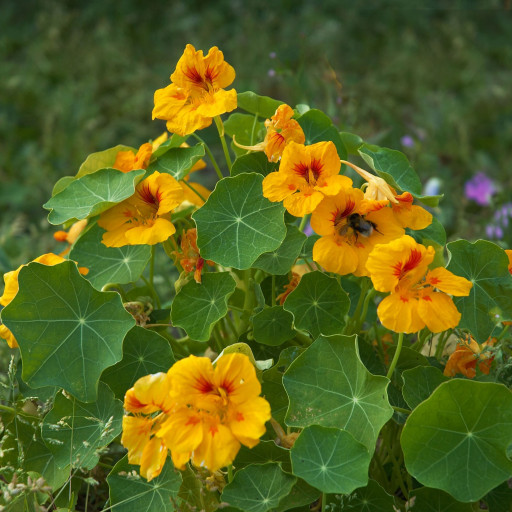
Plant Overview
Often called the "Indian Cress" or "Monk's Cress," the Nasturtium is a vibrant traveler from the Andes Mountains. With its cheerful, trumpet-shaped blooms and shield-like leaves, it has been a staple in cottage gardens for centuries. Beyond its beauty, it was once used by Victorian gardeners as a symbol of "patriotism" and is a beloved culinary herb known for its zesty, peppery kick.
🔍 How to Identify
- 🍃 Leaf Shape: Distinctly circular, "peltate" leaves where the stem attaches to the center, making them look like tiny, emerald-green lily pads or umbrellas.
- 🌺 The Flower Spur: Funnel-shaped flowers in fiery shades of orange, yellow, and red, featuring a long, nectar-filled "spur" poking out from the back.
- 🌿 Growth Habit: Depending on the variety, they either form neat, mounded bushes or vigorous, sprawling vines that can climb up to 10 feet in a single season.
🏡 In Your Garden
- 🍽️ The "Tough Love" Rule: Nasturtiums are one of the few plants that thrive on neglect. If you plant them in overly rich, fertilized soil, they will produce massive leaves but hide their flowers under the foliage. They bloom best in "poor" or sandy soil.
- 🛡️ Nature’s Bodyguard: Gardeners often use them as a "trap crop." They are highly attractive to aphids, which sounds like a bad thing, but it actually lures the pests away from your more delicate vegetables like beans and roses.
- 🌦️ Cool Climates: While they love the sun, they are sensitive to extreme heat and may stop blooming or wilt during the peak of a scorching summer, bouncing back once the temperature drops.
⚠️ Safety & Toxicity
- 🥗 Status: Edible and non-toxic for humans. In fact, the leaves, flowers, and even the young green seeds (which can be pickled like "poor man’s capers") are packed with Vitamin C.
- 🐶 Pet Safety: Nasturtiums are generally considered non-toxic to dogs, cats, and horses by the ASPCA. However, as with any plant, ingestion of large amounts may cause mild stomach upset or vomiting in curious pets.
- 🌱 Allergy Note: While rare, the mustard oils that give the plant its peppery taste can occasionally cause minor skin irritation for those with hyper-sensitive skin.
✨ Fun Fact
The leaves of the Nasturtium are famous for the "Lotus Effect." They are so water-repellent that droplets will bead up into perfect silver spheres and roll off, carrying dust and dirt with them—leaving the leaf perfectly clean and dry even after a heavy rain!

Detailed Care Instructions
| Color | Orange |
| Soil Ph | 6 To 8 |
| Humidity | Normal |
| Invasive | Weed |
| Lighting | Full Sun |
| Soil Type | Average, Medium Moisture, Well-Draining |
| Bloom Time | May To September |
| Difficulty | Medium |
| Plant Type | Annual Flower |
| Mature Size | 1 To 10 Feet Tall And 1 To 3 Feet Wide |
| Native Area | Central And South America |
| Temperature | 5°C - 25°C |
| Sun Exposure | Full Sun |
| Hardiness Zones | 2 To 11 (Annual) |
To grow Tropaeolum Majus, commonly known as nasturtium, you can follow these steps:
- Start seeds indoors: Plant nasturtium seeds in small pots or trays filled with seed-starting soil indoors, about 4-6 weeks before the last frost date in your area. Place the seeds about 1/2 inch deep in the soil. Keep the soil moist and in a warm location.
- Transplant outdoors: Once all danger of frost has passed and the seedlings have grown to about 3-4 inches tall, transplant them outdoors. Choose a sunny location with well-draining soil.
- Prepare the soil: Nasturtiums prefer fertile, well-draining soil. Before transplanting, prepare the soil by loosening it and adding organic matter, such as compost or aged manure, to improve fertility and drainage.
- Planting spacing: Space the seedlings about 10-12 inches apart to allow for their sprawling growth habit. Make sure to water the newly transplanted seedlings thoroughly.
- Watering: Keep the soil consistently moist, but be careful not to overwater. Nasturtiums prefer slightly dry conditions, so allow the soil to dry out slightly between waterings.
- Fertilizing: Nasturtiums are relatively low-maintenance plants and do not require much fertilization. However, you can apply a balanced organic fertilizer once or twice during the growing season to promote healthy growth and flowering.
- Pruning and training: Nasturtiums can be trained to climb or left to sprawl. If you want them to climb, provide support such as trellises or fences and periodically train the vines. If you want them to sprawl, you can let them spread along the ground or cascade from containers and hanging baskets.
- Pests and diseases: Nasturtiums are generally resistant to pests and diseases. However, aphids can sometimes be a problem. You can control aphids by spraying the plants with a strong stream of water or by using insecticidal soap if necessary.
- Harvesting: Nasturtiums produce vibrant, edible flowers that can add a peppery flavor to salads and other dishes. You can start harvesting the flowers once they are fully open. The leaves can also be eaten and have a peppery taste.
By following these steps, you can successfully grow Tropaeolum Majus, and enjoy its colorful flowers and attractive foliage throughout the growing season.

Place in a bright room that is sun drenched almost all day. Or directly in a south-facing window.

Watering of this plant should be done regularly, making sure that the soil is always moist but not waterlogged. The frequency of watering will vary depending on the temperature and humidity in the environment. During hot and dry weather, the plant may need to be watered daily. The water should be poured slowly and directly onto the soil, avoiding wetting the leaves or flowers. It is important to avoid letting the plant sit in standing water as this can cause the roots to rot. Checking the top layer of soil for dryness can be a good indication of when to water the plant.
To fertilize this plant, use a balanced fertilizer with equal amounts of nitrogen, phosphorus, and potassium. Apply the fertilizer once every two weeks during the growing season. Dissolve the fertilizer in water and apply it to the soil around the base of the plant, being careful not to get any on the leaves. Use the recommended amount of fertilizer according to the packaging instructions. Avoid over-fertilizing as this can lead to burnings or yellowing of the leaves.
For optimal growth of this plant, it is recommended to use a well-draining soil mixture that is free of heavy clay or other soil types that hold onto excess water. The soil should be rich in nutrients and organic matter, such as compost or aged manure, and have a pH level between 6.0 and 7.0. Adding perlite or sand to the soil mixture can also improve drainage. The plant prefers moist soil conditions but should not be overwatered, as this can lead to root rot. Overall, a well-draining, nutrient-rich soil mixture with a slightly acidic to neutral pH range is ideal for this plant's growth and health.
To propagate this plant, you can take cuttings from the stem near the base of the plant using clean and sharp gardening shears. Make sure to choose a healthy stem in the morning when the plant is well hydrated. Remove any leaves from the bottom third of the stem and dip the cut end into rooting hormone powder to encourage rooting. Place the stem into a pot of moist soil. Cover the pot with a clear plastic bag to create a humid environment and keep the soil moist. Once the new plant begins to grow, gradually expose it to more light until it can be moved to a permanent location.
Common pests of the garden nasturtium include Spider mites, aphids, whiteflies, larvae. Make a habit of checking your garden nasturtium frequently for pests so that any infestations can be caught and managed early.








