Plant Overview
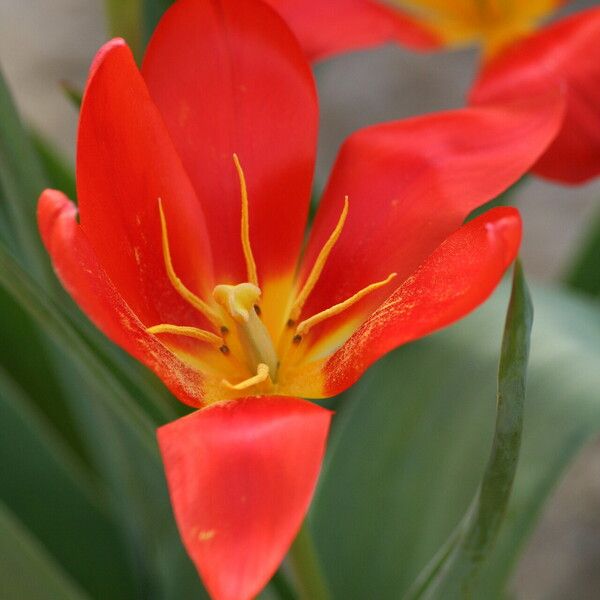
Often referred to as Butkov’s Tulip, this rare botanical species is a true ruby of the Central Asian mountains. Unlike the mass-produced, giant tulips found in florist shops, Tulipa butkovii is a rugged wild species that has evolved to survive the harsh, rocky terrain of the Tien Shan range. It is prized by collectors for its intense color and its ability to bring a touch of untamed wilderness to a rock garden.
🔍 How to Identify
- 🌷 The Bloom: Features striking, deep crimson or blood-red flowers. The petals (tepals) are typically pointed, giving the bloom a star-like appearance when it opens wide in the midday sun.
- 🍃 The Foliage: The leaves are broad, grayish-green, and often display a distinct wavy or "undulating" edge. In some specimens, you may find subtle dark mottling or purple streaks on the leaf surface.
- 📏 Growth Habit: This is a "dwarf" or botanical tulip, standing much shorter than garden hybrids. It usually reaches only 6 to 10 inches in height, making it look tucked-in and sturdy.
🏡 In Your Garden
- 🏔️ Mimicking the Mountains: Because it originates from stony slopes, this tulip demands "perfect" drainage. If its roots sit in soggy soil during the winter, the bulb will likely rot; it thrives best in rockeries or raised gravel beds.
- ☀️ The Summer Bake: To flower again the following year, the bulb needs a dry, warm dormant period. After the leaves wither in late spring, avoid watering the area heavily—the bulb prefers to "bake" in dry soil to mimic its native arid summer.
⚠️ Safety & Toxicity
- 🐾 Toxic to Pets: Like all tulips, Tulipa butkovii contains tuliposides. These compounds are toxic to dogs, cats, and horses, particularly if the bulb itself is dug up and chewed.
- 🧤 Gardener’s Rash: Some people may experience "Tulip Finger," a mild skin irritation or allergic reaction, when handling the bulbs extensively. Wearing gloves during planting is recommended for those with sensitive skin.
✨ Fun Fact
- 📜 The Cradle of Tulips: While we often think of tulips as Dutch, species like Tulipa butkovii prove their true heritage lies in the rugged mountains of Uzbekistan and Kazakhstan. These wild ancestors provided the genetic "building blocks" for the thousands of colorful hybrids we see across the world today!

Detailed Care Instructions








