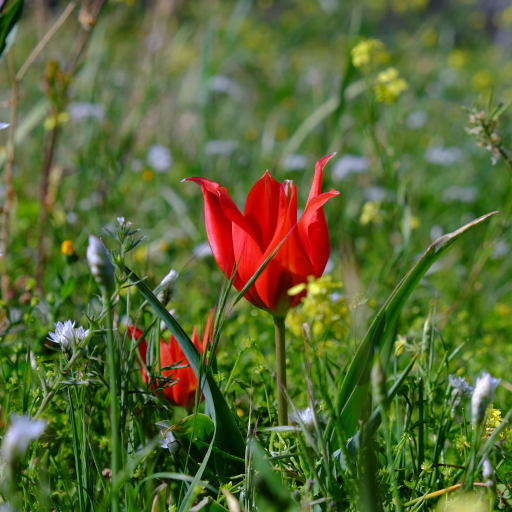
Plant Overview
Known as the "Medoş Tulip" or the Black Tulip of Cyprus, this rare beauty is a crown jewel of the Mediterranean. It is a strictly endemic species, found only on the island of Cyprus, where its deep, blood-red blooms signal the height of spring. Shrouded in local pride, this tulip is more than just a flower; it is a protected national symbol that transforms wild fields into carpets of velvet crimson.
🔍 How to Identify
- 🌷 Petal Color: Deep burgundy to dark crimson flowers that can appear almost black in certain light, often featuring a rich, velvety texture.
- 🖤 Internal Markings: If you look inside the cup, you’ll find a striking black, star-shaped blotch at the base of the petals, neatly outlined by a thin, glowing yellow border.
- 🍃 Wavy Foliage: The leaves are long, grey-green, and have distinctively wavy (undulate) edges that usually sprawl close to the ground.
🏡 In Your Garden
- 🗺️ Wild Heritage: This is not your average garden-center tulip. In the wild, it thrives in cereal fields and among limestone rocks, meaning it requires exceptionally well-drained, "lean" soil rather than rich, soggy potting mix.
- 🛡️ Conservation Status: Because it is an endangered and protected species, it is strictly illegal to pick or dig up Tulipa cypria in its native habitat. If you are lucky enough to source bulbs from a certified specialist, they require a "summer bake"—a period of hot, bone-dry dormancy—to mimic the scorching Cypriot summer.
⚠️ Safety & Toxicity
- 🐾 Toxic to Pets: Like most members of the Tulipa genus, this plant contains tuliposide and tulipalin A. It is toxic to cats, dogs, and horses, especially if the bulb (the most concentrated part) is unearthed and chewed.
- 🖐️ Skin Irritation: Some gardeners may experience "Tulip Itch," a mild form of contact dermatitis, when handling the bulbs. It is always best to wear gloves during planting.
✨ Fun Fact
Every year, the village of Polemi in Cyprus hosts a dedicated "Tulip Festival" to celebrate the blooming of Tulipa cypria. It is one of the few places in the world where you can see these rare flowers growing in such density that the fields appear to be bleeding red.

Detailed Care Instructions
To grow Tulipa Cypria (also known as Cyprus tulip), you can follow these steps:
- Choose a suitable location: Tulipa Cypria thrives in full sun or partial shade. Ensure that the area has well-draining soil.
- Prepare the soil: Dig the soil up to a depth of around 12 inches and loosen it. Add organic matter like compost to enhance the soil's fertility and drainage.
- Sow the bulbs: Tulipa Cypria is usually grown from bulbs. Plant the bulbs in the soil with their pointed ends facing up. Space them about 4-6 inches apart and at a depth of 6-8 inches.
- Watering: Water the bulbs after planting them to provide them with moisture. Afterward, water the plants regularly but avoid overwatering, as excessive moisture can cause rotting.
- Fertilization: Apply a slow-release bulb fertilizer or a balanced granular fertilizer to help nourish the plants. Follow the instructions on the packaging for proper dosage and timing.
- Mulching: Add a layer of mulch around the plants to help retain moisture and suppress weed growth. Keep the mulch at a depth of 2-3 inches, leaving a small area around the emerging plants free of mulch to prevent rotting.
- Protect from pests: Tulipa Cypria can be susceptible to aphids and snails. Keep an eye out for these pests and take appropriate measures to control them.
- Winter care: After the foliage turns yellow and dies back, you can gently remove it. Tulipa Cypria bulbs are hardy and can withstand the winter without requiring any extra protection. However, if you live in an area with severe winters, adding a layer of mulch or straw can provide some insulation.
- Propagation: Tulipa Cypria can multiply through offsets or bulb division. Once the bulbs have multiplied and matured, you can carefully dig them up during their dormant period, separate the offsets, and replant them.
Remember to consult a local gardening expert or check specific guidance in your region for any additional instructions based on your climate and growing conditions.
To ensure the proper growth and health of this plant, it is important to water it regularly. When watering, ensure that the water seeps into the soil and reaches the root system. This can be done by either watering the plant directly at the base or by placing a small saucer beneath the pot to catch any excess water.
It is important not to overwater the plant, as this may cause the roots to rot and lead to plant death. A good way to monitor the soil's moisture level is to touch the soil with your fingers. If the soil feels dry to the touch, it is an indication that it needs watering.
In addition to watering, it is important to ensure that the plant receives adequate sunlight and nutrient-rich soil. This will support healthy growth and ensure the plant reaches its full potential.
To fertilize this plant, first wait until after it has finished flowering. Then, use a slow-release fertilizer and sprinkle it around the base of the plant. Water thoroughly to allow the fertilizer to soak into the soil. Repeat this process once every year in the early spring before new growth appears. Avoid fertilizing in excessive amounts as it can harm the plant.
Tulipa Cypria plant requires well-draining soil that is moderately fertile, with a pH level of 6.0 to 7.5. The ideal soil mixture for this plant should consist of equal parts of sand, loam, and peat moss. It is important to avoid using soil that is heavy and compacted, as this can lead to waterlogging and root damage. Additionally, nutrient-rich, organic materials like compost or well-rotted manure should be added to the soil to enhance its fertility. This will help the plant to grow healthy and produce more blooms. The soil should also be kept moist but not waterlogged, and should be allowed to dry out slightly between watering.
Tulipa Cypria can be propagated through the following steps:
- Collect the bulbs from healthy plants during the dormant period, which is typically in late summer to early autumn.
- Store the bulbs in a cool, dry place until they are ready for planting or propagation.
- Prepare the planting site by digging a hole that is twice as deep as the bulb and loosening the soil.
- Place the bulb in the hole with the pointed end facing upward, and fill in the soil around it, making sure it is covered by at least 2 inches of soil.
- Tulipa Cypria can also be propagated by division. Dig up the plant and gently separate the bulbs from each other. Each new bulb should have a portion of the stem and leaves attached.
- Plant the new bulbs immediately or store them in a cool, dry place until they can be planted.
- Water the bulbs thoroughly after planting or division, and keep the soil moist but not waterlogged.
- Tulipa Cypria bulbs should be planted in a sunny location with well-draining soil. They can grow in USDA hardiness zones 4-7.
- The plant will require regular water and fertilizer to encourage healthy growth and blooming.
- In the fall, after the foliage has died back, dig up the bulbs, separate them, and replant them in a new location or in the same spot.








