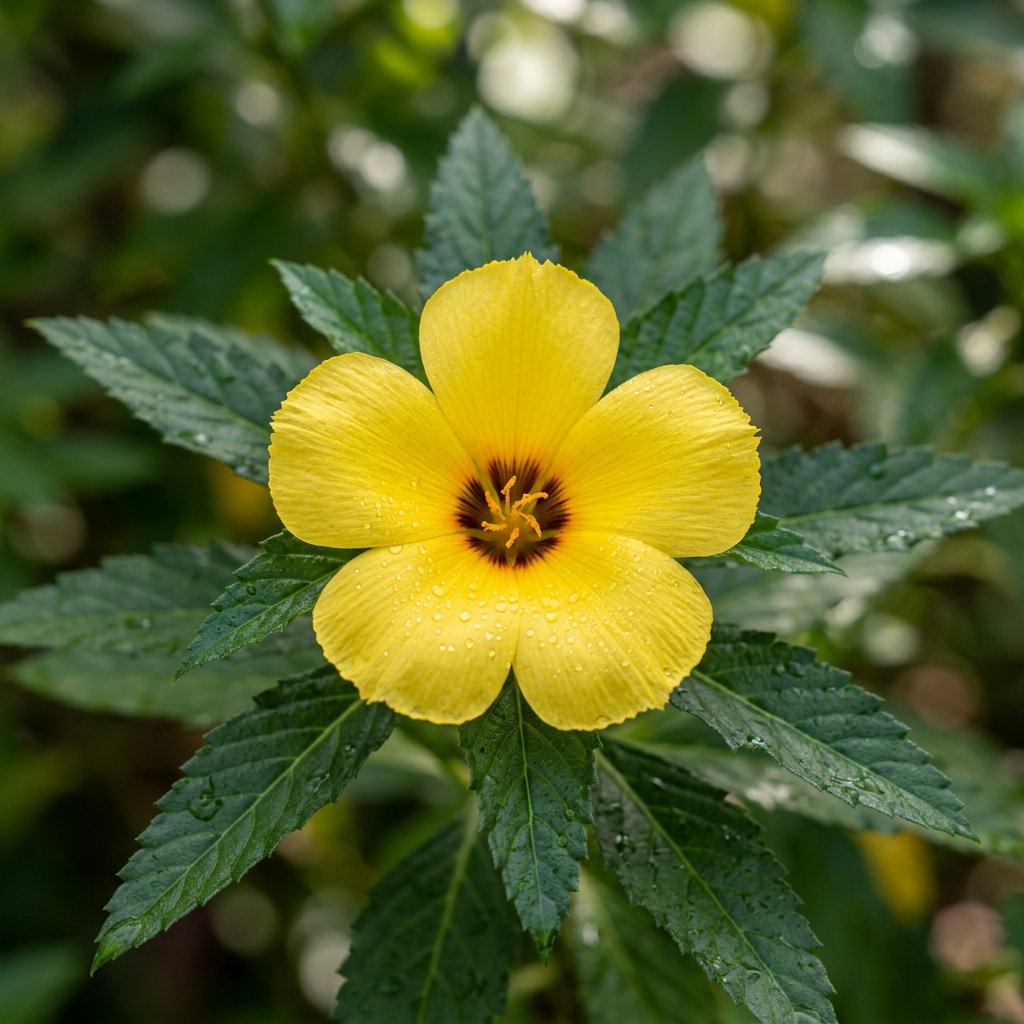
Plant Overview
Often called the "Yellow Alder" or "Sage Rose," this tropical beauty is a sun-worshipper that brings a splash of gold to any landscape. Native to the Caribbean and Central America, it is beloved for its resilience and its cheerful "morning person" personality, as it wakes up with the sunrise and rests by the afternoon. It is a hardy survivor that thrives where other plants might struggle under the heat.
🔍 How to Identify
- 🌼 Sunny Blooms: Large, five-petaled flowers in a vibrant, butter-yellow hue that sit nestled directly against the foliage.
- 🍃 Elm-Like Leaves: Dark green, lance-shaped leaves with deeply serrated (toothed) edges, which are remarkably similar to the leaves of an Elm tree—this is why its species name is ulmifolia.
- 🪴 Bushy Habit: A compact, woody perennial shrub that typically grows in a dense, rounded mound, reaching about 2 to 3 feet in height.
🏡 In Your Garden
- 🦋 Pollinator Magnet: This plant is a favorite for sulfur butterflies and bees, acting as a high-energy refueling station in any wildlife-friendly garden.
- ☀️ Drought Warrior: Because it has a deep root system and a love for the sun, it is incredibly drought-tolerant once established. It prefers well-draining sandy soil and hates "wet feet," so it's perfect for those who occasionally forget the watering can.
⚠️ Safety & Toxicity
- 🐾 Pet Safety: The Yellow Alder is generally considered non-toxic to cats, dogs, and horses, making it a "worry-free" addition to family backyards.
- 🌱 Skin Sensitivity: While not poisonous, the serrated leaves can be slightly scratchy; sensitive gardeners may want to wear gloves when pruning to avoid minor skin irritation.
✨ Fun Fact
🕒 Nature's Clock: The Yellow Alder is a "photonastic" plant, meaning its movement is triggered by light. Its flowers typically burst open around 6:00 AM and tuck themselves away by noon or early afternoon, acting as a living clock for your morning garden walks!

Detailed Care Instructions
| Lighting | Full Sun |
To grow Turnera Ulmifolia plant, also known as Yellow alder or Ramgoat dashalong, follow these steps:
- Choose a suitable location: Turnera Ulmifolia thrives in full sun to partial shade. Select a well-draining spot in your garden that gets at least 6 hours of direct sunlight per day.
- Prepare the soil: The plant prefers rich, loamy soil. Amend the soil with organic matter such as compost or well-rotted manure to improve drainage and provide nutrients.
- Planting: Dig a hole slightly larger than the root ball. Gently remove the plant from its container and place it in the hole, ensuring the top of the root ball is level with or slightly above the soil surface. Backfill the hole with soil, gently firming it around the plant.
- Watering: Water the newly planted Turnera Ulmifolia thoroughly to settle the soil and support root establishment. Afterward, water the plant regularly to keep the soil moist but not waterlogged. Aim for weekly deep watering during dry periods.
- Fertilizing: Apply a balanced, slow-release fertilizer according to the package instructions during the growing season, generally in spring and again in mid-summer. Avoid using excessive amounts of fertilizer, as it may lead to leggy growth.
- Pruning: Prune your Turnera Ulmifolia plant in early spring to remove any dead or damaged branches and to maintain its desired shape. This plant responds well to pruning and can be cut back to encourage bushier growth.
- Protection: Protect the plant from freezing temperatures, as Turnera Ulmifolia is sensitive to frost. If you live in a region with cold winters, consider growing it in a container that can be brought indoors during the winter months.
- Pest and disease control: Keep an eye out for common pests, such as aphids and spider mites. Regularly inspect the plant for signs of infestation and treat as necessary using organic pest control methods.
- Propagation: Turnera Ulmifolia can be propagated through stem cuttings or by collecting and sowing its seeds. Take stem cuttings in spring or early summer, dip them in rooting hormone, and place them in a well-draining potting mix. Keep the soil moist and provide indirect light until roots develop.
By following these steps, you can successfully grow Turnera Ulmifolia plant in your garden.

Place in a window with dappled sun or a spot in the middle of a room. Or directly in a window facing west or east.

To water this plant, it is important to pay attention to its specific needs. Keep the soil moist but not waterlogged, and avoid letting it completely dry out between waterings. When watering, aim to soak the soil thoroughly, but avoid getting water on the leaves as this can lead to fungal diseases. Take into consideration the plant's location, the temperature, and humidity levels in the environment, as these factors can affect its water needs. Adjust your watering schedule accordingly and monitor the plant closely for any signs of stress or overwatering.
For this plant, it is important to fertilize it with a balanced fertilizer that contains equal amounts of nitrogen, phosphorus, and potassium. Apply the fertilizer in early spring, before the growing season begins, and again in mid-summer. To avoid root burn, make sure to water the plant before and after applying the fertilizer. Be sure to follow the instructions on the fertilizer package for the correct amount to use and how frequently to apply.
The appropriate soil for Turnera Ulmifolia should be rich in nutrients, well-draining, and slightly acidic. It is essential to use soil that has good water retention capacity and aeration because these plants prefer moist soil but cannot tolerate waterlogged conditions. The soil pH range should be within 6.0 to 7.5 for optimal growth. The use of organic matter is highly recommended, including compost and peat moss, to enhance soil fertility and promote healthy growth. It is important to avoid using heavy, clayey soil as it may retain too much moisture and limit root development. Instead, a soil mixture that contains equal parts of sand, loam, and peat moss is ideal for Turnera Ulmifolia.
To propagate this plant, take a stem cutting of about 2-3 inches in length during the spring or summer months. Remove the lower leaves from the stem and dip the cut end in rooting hormone. Plant the cutting in a well-draining potting mix and place it in a bright, warm location. Keep the soil consistently moist and mist the leaves regularly to encourage root growth. After a few weeks, new growth should appear, indicating successful propagation.








