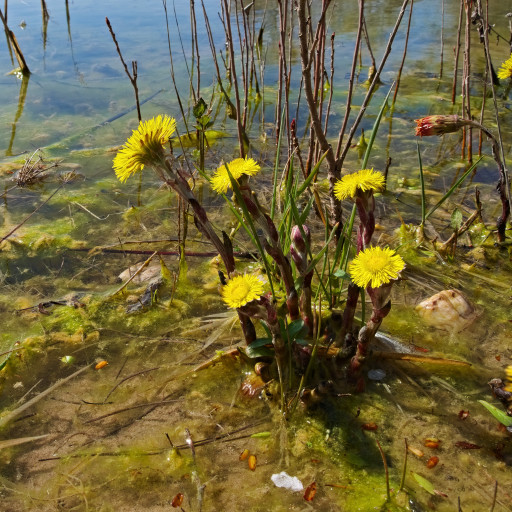
Plant Overview
Meet the "Son-Before-the-Father," an early-blooming wonder that surprises gardeners by sending up bright yellow flowers long before its leaves even think about waking up. Often mistaken for a dandelion at first glance, Tussilago farfara is a resilient perennial with deep roots in ancient herbalism and a curious growth habit that marks the very first signs of spring.
🔍 How to Identify
- 🌼 Early Flowers: Look for bright yellow, daisy-like blossoms that sit atop scaly, reddish-purple stems. Unlike dandelions, these stems are not smooth and do not contain milky sap.
- 🐎 Hoof-Shaped Leaves: The large, heart-shaped leaves only appear after the flowers have withered. Their unique shape resembles the footprint of a small horse, which is how it earned the name "Coltsfoot."
- ☁️ Fuzzy Undersides: The top of the leaf is a smooth, dull green, but the underside is covered in a soft, white, felt-like down that feels almost like velvet to the touch.
🏡 In Your Garden
- 🏗️ The Pioneer Spirit: This plant is a specialist in "bad" soil. It thrives in heavy clay, disturbed ground, and waste areas where other plants struggle. It is often the first thing to grow on a newly cleared construction site or a sliding riverbank.
- 🌱 Tenacious Spread: Coltsfoot spreads through aggressive underground runners (rhizomes). Because these roots can dive deep and travel far, it is often considered invasive in home gardens. If you love its golden spring color, it is best kept in a sturdy container to prevent it from conquering your entire yard.
⚠️ Safety & Toxicity
- 🧪 Liver Warning: While historically used in folk medicine to treat coughs, modern science has identified that the plant contains pyrrolizidine alkaloids. These compounds can be toxic to the liver if ingested in significant amounts or over long periods.
- 🐾 Pets and Kids: Because of the potential for liver toxicity, this plant should not be consumed. Keep a close eye on curious pets or toddlers who might be tempted to nibble on the fuzzy leaves.
✨ Fun Fact
The botanical name Tussilago literally translates to "Cough Dispeller" (from the Latin tussis, meaning cough). In ancient France, the Coltsfoot flower was so synonymous with healing that it was often used as the professional symbol painted on the signs of apothecary shops!

Detailed Care Instructions
| Lighting | Full Sun |
| Toxicity | Poisonous |
To grow Tussilago Farfara, also known as coltsfoot, you can follow these steps:
- Choose a suitable location: Tussilago Farfara prefers moist soil and partial shade. Select an area in your garden that provides these conditions.
- Prepare the soil: Coltsfoot is adaptable to various soil types, but it prefers well-draining soil. Prepare the soil by removing weeds, rocks, and other debris. Loosen it using a garden fork or tiller.
- Sow the seeds: Coltsfoot can be propagated from seeds, or you can purchase young plants from a local nursery. If starting from seeds, sow them in spring or early fall. Plant the seeds about ¼ inch deep and space them 12-18 inches apart.
- Water regularly: Keep the soil consistently moist, but avoid waterlogging. Water the plants regularly during dry spells, especially during the establishment period.
- Mulch the soil: Apply a layer of organic mulch around the plants to conserve moisture, suppress weed growth, and protect the roots during extreme temperatures.
- Fertilize sparingly: Coltsfoot does not require much fertilizer. However, you can apply a balanced, slow-release fertilizer once a year in early spring to support healthy growth.
- Control pests and diseases: Tussilago Farfara is generally resistant to pests and diseases. However, keep an eye out for common issues such as aphids or powdery mildew. Use organic pest control methods or consult with a local garden center for appropriate treatments if necessary.
- Harvest: Once the Tussilago Farfara plants mature, you can harvest the leaves and flowers for various medicinal purposes. Harvest leaves before flowers appear, typically in early spring.
Remember, Tussilago Farfara can spread rapidly through its rhizomes, so consider planting it in containers or using barriers to prevent it from taking over your garden.

Place in a window with dappled sun or a spot in the middle of a room. Or directly in a window facing west or east.

One way to water this plant is to first inspect its soil moisture level by sticking your finger about 1 inch into the soil. If the soil feels dry, it's time to water. Use room temperature water and pour it gently onto the soil around the base of the plant until the soil is moist but not waterlogged. Allow any excess water to drain out of the pot or saucer. Avoid getting water on the leaves or flowers, as this can cause damage or disease. The frequency of watering will depend on factors such as the size of the plant, the size of its pot, and the environmental conditions in which it is growing. It's important to avoid both overwatering and underwatering, as either can lead to plant stress or death.
Tussilago Farfara plants thrive best with regular fertilization during the growing season. Apply a balanced fertilizer with a higher nitrogen ratio in early spring and again in midsummer for optimal growth. Avoid over-fertilizing, as this can cause burnt or damaged foliage. Always water the plant thoroughly before and after fertilizing to prevent stress. Follow manufacturer’s instructions for dosage and application frequency.
The ideal soil for Tussilago Farfara plant should be well-draining, with a pH level of 6.5 to 7.5. The soil should be rich in organic matter and provide good aeration to the roots of the plant. Sandy loam or loam soil would be suitable for this plant. It is important to avoid using heavy clay soils or soils that tend to retain water for long periods, as this can lead to root rot. Additionally, the soil should be kept moist but not waterlogged, and the plant should be placed in a location that receives partial to full sunlight.
To propagate this plant, you will need to identify a healthy and mature stem that has developed a root system. Once you have located this stem, carefully cut it from the parent plant. Then, prepare a well-draining soil mixture in a pot that is deep enough for the stem to be planted completely. Place the stem in the soil, making sure roots are covered and well-supported. Water the plant generously and place it in a shaded area to allow it to adjust to its new environment. Over time, the plant will begin to grow and develop its own root network, allowing it to thrive on its own.








