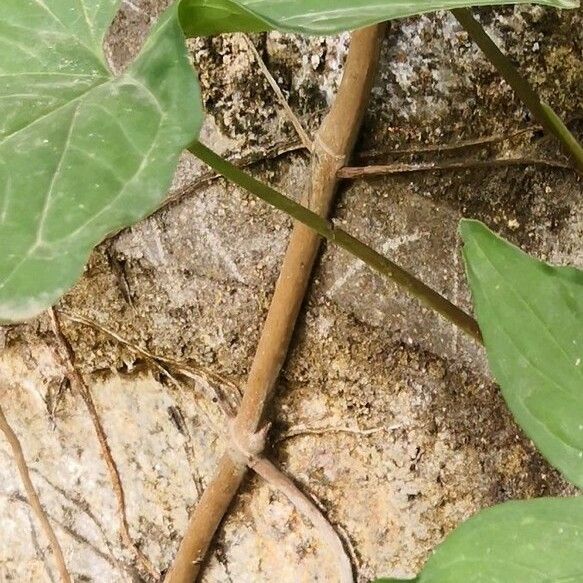
Plant Overview
Often called the Dwarf Voodoo Lily or Bengal Arum, this plant is a pint-sized drama queen of the Aroid family. Native to the tropical regions of East Asia, it is famous for its striking, velvet-like flowers that look like they belong in a gothic fairytale. While it’s prized by collectors for its unique silhouette and ease of growth, be prepared—this beauty has a bit of a "stink" when it's looking for love.
🔍 How to Identify
- 🍃 Leaf Shape: Features distinctive heart or arrowhead-shaped (sagittate) leaves that grow on long, slender stalks emerging directly from an underground tuber.
- 🍷 The Bloom: A deep maroon to almost black "spathe" (a hood-like modified leaf) that curls back to reveal a dark, spear-like "spadix" in the center.
- 📏 Size: A compact grower, usually reaching only 6 to 12 inches in height, making it a "dwarf" compared to its massive Titan Arum cousins.
🏡 In Your Garden
- 🌑 The Dormancy Dance: This plant grows from a tuber and typically goes dormant in the cooler months. If the leaves yellow and die back, don't throw it away! It is simply resting; stop watering and keep the pot in a dry spot until new growth appears in spring.
- 💧 Soil & Moisture: It thrives in rich, humic soil but is highly susceptible to tuber rot if left in standing water. Think "jungle floor"—consistently moist but very well-draining. It loves high humidity, making it a great candidate for a shaded patio or a bright bathroom.
⚠️ Safety & Toxicity
- 🚫 Status: Highly Toxic. Like most members of the Araceae family, every part of the plant contains needle-like calcium oxalate crystals.
- 🐈 Details: If bitten or ingested by pets or children, it causes immediate intense burning, swelling of the mouth and throat, and digestive distress. The sap can also cause contact dermatitis, so it is best to wear gloves when dividing the tubers.
✨ Fun Fact
- 🪰 Smelly Strategy: To attract its favorite pollinators—carrion flies and beetles—the flower emits a pungent scent similar to rotting meat. Fortunately for indoor gardeners, the "perfume" usually only lasts for the first day the flower opens!

Detailed Care Instructions
| Humidity | Normal |
| Lighting | Part Sun |
| Toxicity | Poisonous |
| Difficulty | Medium |
| Hibernation | Cold Period |
| Hardiness Zones | 7 - 10 |
To grow a Typhonium Blumei plant (also known as the "Silver-sword Philodendron" or "Elephant Ear Begonia"), follow these steps:
- Select a healthy plant: Choose a young plant with healthy leaves and no signs of pests or diseases.
- Lighting: Place your Typhonium Blumei plant in bright, indirect light. Avoid direct sunlight, as it can scorch the leaves.
- Temperature: Typhonium Blumei plants prefer warm temperatures between 65-80°F (18-27°C). Avoid placing the plant in areas with extreme temperature fluctuations or cold drafts.
- Watering: Keep the soil moist but not waterlogged. Water the plant when the top inch of soil feels dry. Ensure adequate drainage to prevent waterlogging, as this can cause root rot.
- Humidity: These plants prefer higher humidity levels, so mist the leaves regularly or place a humidifier nearby. You can also place the pot on a tray of water with pebbles to increase humidity.
- Fertilization: Feed the plant monthly during the growing season (spring and summer) with a balanced liquid fertilizer, following the manufacturer's instructions.
- Repotting: As the plant grows, you may need to repot it into a larger container with well-draining soil. Repotting is typically done every 1-2 years.
- Pruning: If your Typhonium Blumei becomes leggy or unruly, you can prune it back to maintain its shape. Prune any dead or yellowing leaves regularly.
- Propagation: You can propagate Typhonium Blumei plants by taking stem cuttings and placing them in water until roots develop. Once the roots are established, transfer the cutting to a pot with well-draining soil.
- Pests and diseases: Watch out for common houseplant pests such as aphids, mealybugs, and spider mites. If you spot any pests, isolate the plant and treat it with an appropriate insecticide or insecticidal soap.
Remember to be patient with your plant, as it may take some time to adjust to its new environment and begin growing vigorously.

Place in a window with dappled sun or a spot in the middle of a room. Or directly in a window facing west or east.

Typhonium blumei is a tropical plant that requires careful watering. To keep this plant healthy, you should avoid over-watering or under-watering it.
One way to determine if your plant needs water is to check the soil. Stick your finger about an inch deep into the soil. If the soil is dry at this depth, it's time to water the plant.
When watering your Typhonium blumei, pour water slowly into the soil until it begins to drain out of the drainage holes at the bottom of the pot. Be sure to empty the saucer beneath the pot to prevent the roots from becoming waterlogged.
During the winter months, you should water your Typhonium blumei less frequently, as the plant will require less water during this time.
To fertilize the Typhonium Blumei plant, mix a balanced liquid fertilizer with water according to the package instructions. Apply the fertilizer solution to the soil around the base of the plant, being careful not to get any on the foliage. Fertilize the plant once every two weeks during the growing season, and reduce fertilization during the dormant period. Always water the plant thoroughly after fertilizing to avoid burning the roots.
For optimal growth and health of this particular plant species, it is best to use a well-draining soil mix that is rich in nutrients, such as a mix of peat moss, perlite, and vermiculite. This type of soil allows for proper moisture retention while still allowing excess water to drain away, helping to prevent overwatering and root rot. Additionally, it is important to ensure that the soil has a slightly acidic pH level, ideally between 5.5 and 6.5, to provide the best growing conditions for this plant. Regular fertilization with a balanced liquid or granular fertilizer can also help to support healthy growth and flowering.
To propagate this plant, you can start by selecting a mature and healthy plant with strong roots and leaves. Cut the stem of the plant, making sure to include at least one node or bud. Place the cutting in a jar filled with water, making sure that the bottom of the stem is submerged. Change the water every 3-4 days to prevent bacteria growth. After a few weeks, you should see roots starting to form. Wait until the roots are about 2 inches long before transferring the cutting to soil. Use a well-draining potting mix and place the cutting in a warm, bright location with indirect sunlight. Water the plant regularly, but avoid overwatering as this can lead to root rot. With proper care, your new plant should start to grow and thrive.








