Plant Overview
Often called the "Dwarf Voodoo Lily," Typhonium roxburghii is a master of tropical drama and disguise. Emerging from the forest floors of Southeast Asia, this curious member of the Arum family is famous for its dark, velvety blooms that look like something pulled from a gothic fairy tale. While it stays low to the ground, its striking silhouette and strange reproductive habits make it a favorite for collectors of the weird and wonderful.
🔍 How to Identify
- 🍃 The Leaves: Sharp, arrow-head shaped (sagittate) leaves that are a vibrant, glossy green. They grow on slender stalks directly from an underground tuber.
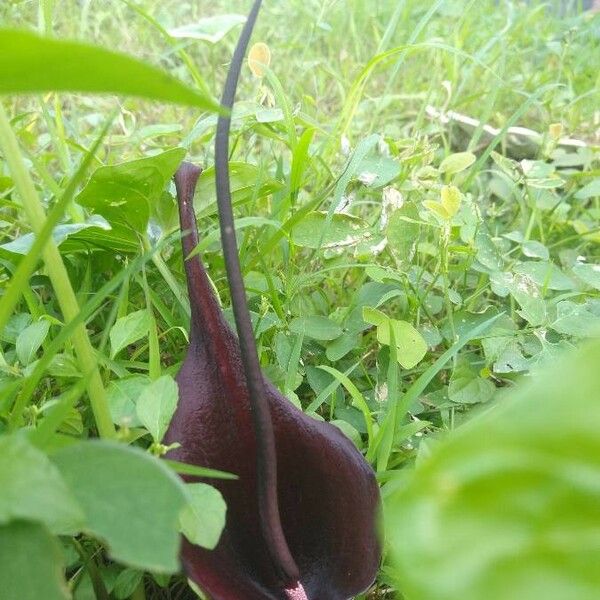
- 🍷 The Spathe: A deep, maroon-to-purplish "hood" (spathe) that curves gracefully, often revealing a dark, velvety interior.
- 🦯 The Spadix: A long, thin, whip-like rod (the spadix) that extends from the center of the bloom, often reaching out beyond the hood like a dark finger.
🏡 In Your Garden
- 💧 The Sleeping Tuber: Don't panic if your plant suddenly disappears! This species is tuberous and often goes dormant during dry or cold spells. It’s not dead; it’s just resting underground until the humidity returns.
- 🪰 The Scent of Science: If you notice a faint smell of decaying matter, your plant is healthy! It produces this "perfume" specifically to trick carrion flies into visiting the flower for pollination. It is best kept in a well-ventilated area or a corner of the garden where you can admire the look without the aroma.
⚠️ Safety & Toxicity
- 🚫 Status: Toxic to humans and pets.
- 🧪 Details: Like many Arums, it contains calcium oxalate crystals. If any part of the plant is chewed or swallowed, it causes intense stinging and swelling of the mouth and throat. The sap can also cause mild skin irritation for those with sensitive skin, so wearing gloves during repotting is a smart move.
✨ Fun Fact
To ensure successful pollination, Typhonium roxburghii actually generates a small amount of heat (thermogenesis) within its bloom. This heat helps disperse its "rotting" scent further into the air, effectively creating a biological smoke signal for local flies!

Detailed Care Instructions
To grow Typhonium roxburghii (also known as Indian pennywort or rutland arum), you can follow these steps:
- Seed collection: Collect mature seeds from a healthy Typhonium roxburghii plant. The seeds are usually small and brown in color.
- Preparation of seeds: Soak the seeds in water for a few hours to soften the seed coat. This will help with germination.
- Germination process: Sow the seeds in a well-draining potting soil mixture. Make sure to cover them lightly with a thin layer of soil.
- Ideal conditions: Place the pots in a warm and humid location, such as a greenhouse or a warm room with indirect sunlight. Maintain a temperature of around 70-85°F (21-29°C) for optimal germination. The soil should be kept consistently moist but not waterlogged.
- Transplanting: After germination, which usually takes around 2-4 weeks, you can transplant the seedlings into individual pots or a prepared garden bed. The recommended spacing for planting is about 8-10 inches apart.
- Lighting requirements: Typhonium roxburghii prefers partial shade to full shade. Avoid exposing the plants to direct sunlight, as it can scorch the leaves.
- Watering and soil care: The soil should be kept consistently moist but not waterlogged. Water the plants when the top inch of soil feels dry. Use well-draining soil, rich in organic matter.
- Fertilization: Feed the plants with a balanced fertilizer during the growing season to promote healthy growth. Follow the instructions on the fertilizer packaging for the correct application rate.
- Pest and disease control: Monitor the plants regularly for any pest or disease issues. Common pests include aphids, spider mites, and snails. Treat any infestations promptly with appropriate organic or chemical controls.
- Harvesting: Typhonium roxburghii produces edible tubers once mature. The tubers can be harvested around 6-8 months after planting. Gently dig around the base of the plant to avoid damaging the tubers.
Note: Typhonium roxburghii can be toxic if consumed raw, so it should be cooked thoroughly before eating. It is recommended to consult a knowledgeable source or expert before consuming any wild plant.

Place in a window with dappled sun or a spot in the middle of a room. Or directly in a window facing west or east.

To water this particular plant, it's important to pay attention to the soil moisture level. Before watering, check the top inch of soil to make sure it's dry to the touch. When watering, use room temperature water and saturate the soil evenly. Avoid letting water collect in the saucer or pot, as this can lead to root rot. It is recommended to water this plant once a week during the growing season, and reduce watering in the colder months.
- Choose a well-draining potting mix and a pot with drainage holes.
- Water the soil before fertilization to prevent burning the roots.
- Use a balanced fertilizer with equal amounts of nitrogen, phosphorus, and potassium.
- Dilute the fertilizer according to the instructions on the package.
- Apply the fertilizer to the soil around the base of the plant and water thoroughly.
- Fertilize once or twice a month during the growing season (spring and summer).
- Reduce fertilization during the dormant season (fall and winter).
- Avoid over-fertilizing as it can cause nutrient burn and damage the plant.
It is recommended to use a well-draining soil mix that is rich in organic matter and has a slightly acidic to neutral pH for this plant. It is important to avoid using heavy soil mixes that can retain water as this can lead to root rot. A mix of peat moss, perlite, vermiculite, and sand is a good option. It is also recommended to add a slow-release fertilizer to the soil mix to provide the plant with essential nutrients.
To propagate this plant, you will need to carefully extract the bulbs from the soil and separate them into individual pieces. Each piece should have at least one healthy shoot and a portion of the root system.
Next, you will need to prepare a potting mix that is well-draining and rich in organic matter. Plant each bulb piece in a separate container, making sure that the soil is evenly moist but not waterlogged.
Place the pots in a warm, brightly lit area that receives partial shade, and keep the soil consistently moist. The bulbs should begin to sprout new leaves and roots within a few weeks.
Once the plants have established themselves, you can gradually decrease the frequency of watering and move them to a location that receives more direct sunlight. With proper care, these plants can grow into beautiful specimens that will add visual interest to any indoor or outdoor landscape.








